Why the Ganges Treaty must not fail
December, 1996. It was a winter morning in Dhaka, Bangladesh. I was a university student back at the time, my studies nearing completion. The newspaper I took in my hand was splashed with a photo of the then-Foreign Minister of the Awami League government, Abdus Samad Azad, who was beaming, a piece of paper hoisted high in his hand. The headlines splashed across the front page shouted: "Historic Water Treaty between India and Bangladesh."
That morning in December 1996 felt like a new dawn for Bangladesh. After decades of "water wars" and the devastating impact of the Farakka Barrage, Bangladesh finally had a 30-year roadmap for the Ganges. It was more than a technical document; it was a symbol of hope that two neighbours could share the lifeblood of the delta with equity and respect.
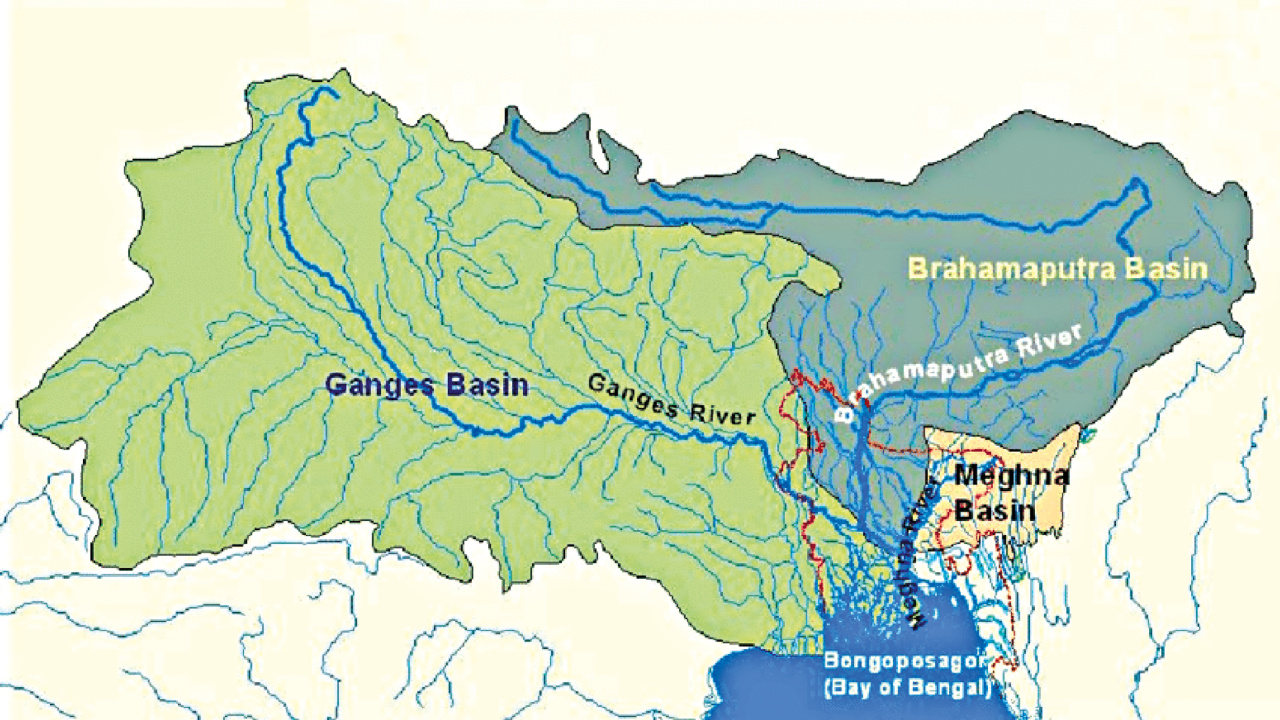
Today, as we look out over the same landscape called Bangladesh, transformed by climate change and geopolitics, we find the same treaty is set to expire in December 2026. The renewal of the Ganges Water Sharing Treaty is not just a diplomatic formality; it is a battle for the future of water security, food sovereignty, and the very ecological survival of Bangladesh.
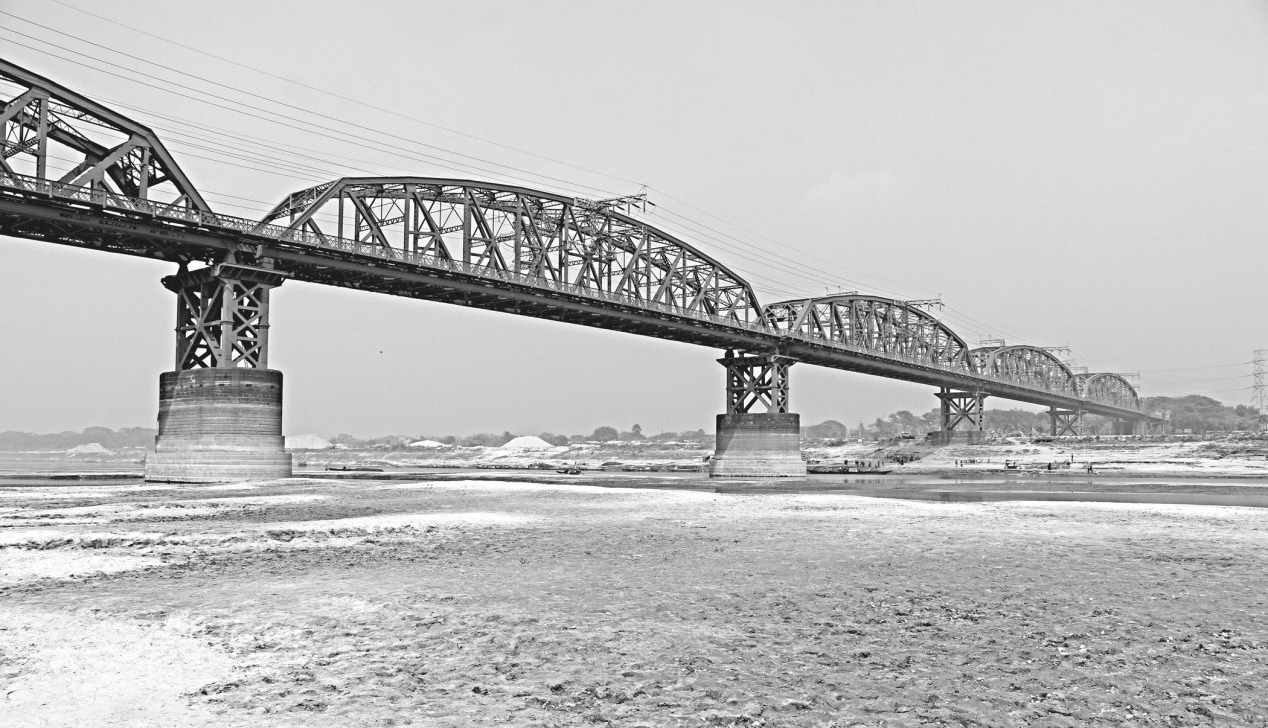
The 1996 Treaty was significant because it established a volumetric sharing formula at the Farakka Barrage during the "lean season" (January to May). For 30 years, it has provided a baseline of predictability. However, the world of 1996 is gone. Today, India's massive upstream expansion—large-scale dams in Sikkim and extensive irrigation projects in West Bengal—has fundamentally altered the river's hydrology.
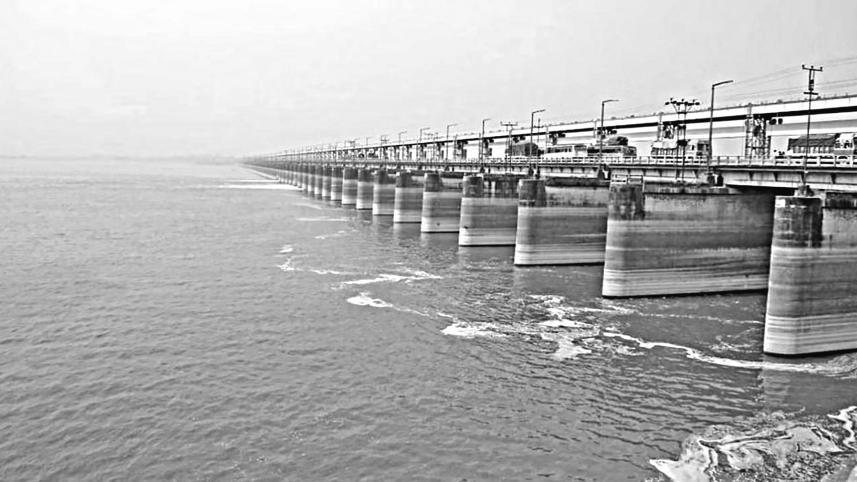
Photo: Star
During the dry season, the flow reaching Bangladesh has dwindled to levels that threaten our agriculture and increase salinity in the Southwest. Conversely, during the monsoon, the sudden release of water from upstream barrages leads to catastrophic flooding. Bangladesh has become a victim of a "yo-yo" effect: parched in the winter, drowned in the summer.
A new political reality: Beyond the Hasina era
The timing of this renewal coincides with a tectonic shift in our domestic politics. For fifteen years, the regime of Sheikh Hasina operated as a client state of New Delhi. From 2009 to 2024, the Awami League government provided India with everything it asked for—transit, transhipment, and security cooperation—often at Bangladesh's expense. In return, India provided the diplomatic and political shield that allowed a brutal dictatorship to sustain itself through three consecutive rigged elections.
With the fall of that regime in August 2024 and the subsequent election of a new government in February 2026, the dynamic has changed. While the interim government faced a frostier reception from New Delhi mourning its lost ally, the newly elected government, led by the BNP, offers a chance for a pragmatic reset. The recent visit of Indian External Affairs Minister S. Jaishankar to the funeral of former Prime Minister Khaleda Zia was a significant gesture, signalling that New Delhi realises it can no longer put all its eggs in one basket. There is a quiet optimism that a deal can be reached, but it is an optimism tempered by deep-seated distrust.
The spectre of water weaponisation
One of the most dangerous trends in regional diplomacy is the weaponisation of water. In India, a highly charged political atmosphere—often fueled by extremist rhetoric against Bangladesh—threatens to stall the treaty. There are voices in the Indian domestic sphere that suggest water should be used as a lever to "manage" a Muslim-majority neighbour that is no longer under the thumb of a preferred autocrat.
We have already witnessed the consequences of this shift in India's 'water-sharing' philosophy in its dealings with Pakistan. The memory of the April 2025 Pahalgam attack remains fresh—a tragedy that emanated from a heinous terror attack and prompted New Delhi to take the unprecedented step of holding the 1960 Indus Waters Treaty in 'abeyance.' By effectively suspending one of the oldest and most resilient water-sharing agreements in the world, India demonstrated that it is willing to use downstream water security as a lever for political and security compliance. In light of this, the fears in Bangladesh regarding the Ganges renewal are not merely hypothetical; they are grounded in a newly established regional precedent where 'blood and water' are no longer kept separate.
We must categorically reject this strategy of weaponising the war. Water is a fundamental human right. To hold the flow of a transboundary river hostage to political whims is a threat to regional stability. A fair and transparent renewal of the Ganges Treaty must include guaranteed minimum dry-season flows. Bangladesh cannot survive on "surplus" water alone; Bangladesh needs a treaty that accounts for the ecological flow required to keep the delta alive.
The Teesta Gordian knot and the master plan
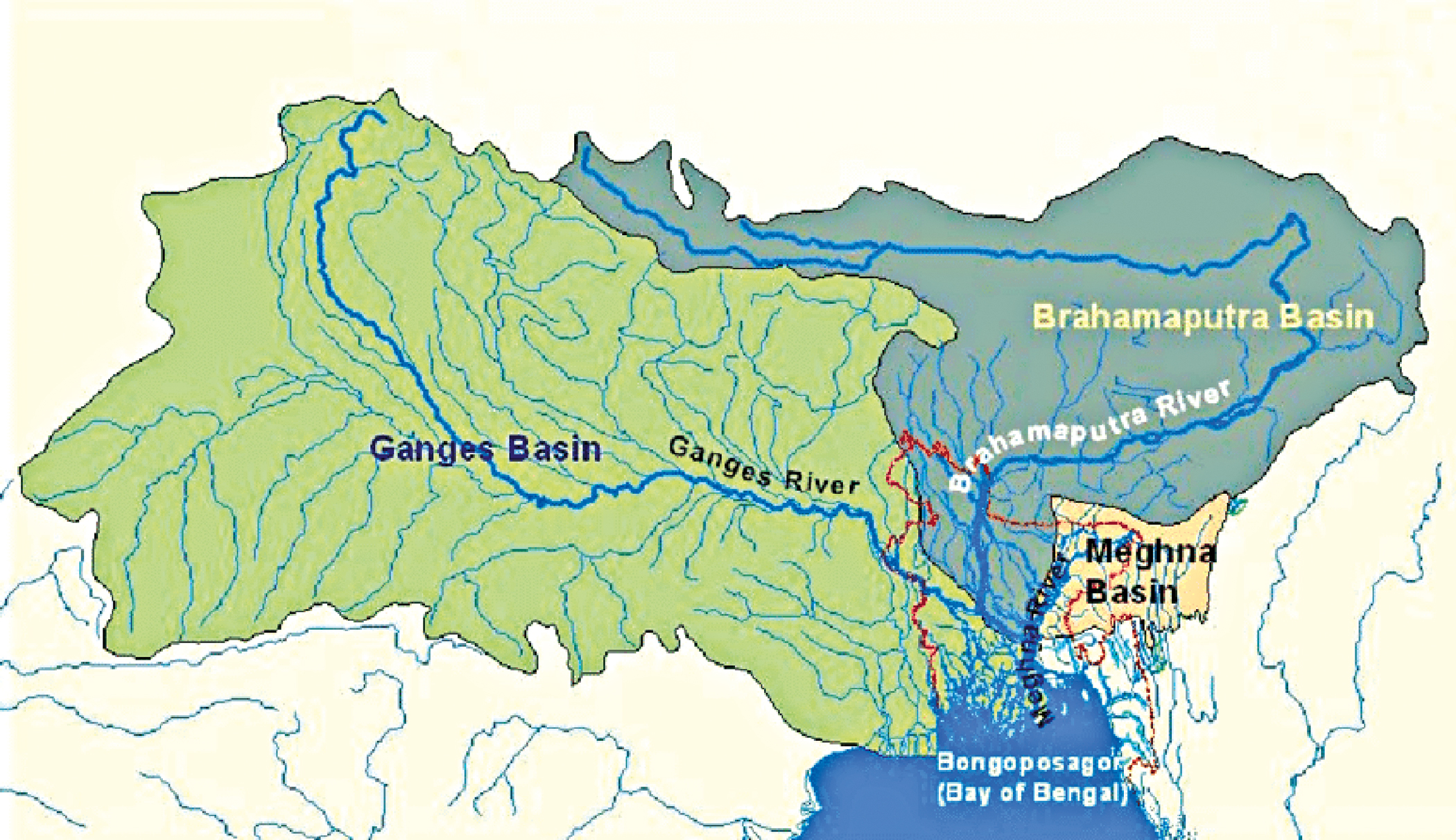
While the Ganges Treaty is the immediate priority, the ghost at the table is always the Teesta. The history of the Teesta is a masterclass in diplomatic failure. In 2011, a deal was ready to be signed, only for West Bengal Chief Minister Mamata Banerjee to block it at the eleventh hour. Since then, the Teesta has become a dry bed for much of the year, devastating northern Bangladesh.
As highlighted in recent research by the Observer Research Foundation (ORF), the Teesta dispute is a cocktail of geopolitics, myth, and hard economics. India's unilateral control of the Gazoldoba Barrage has effectively turned the Teesta into a seasonal stream in Bangladesh.
Faced with this perpetual stalemate, Bangladesh has moved towards a strategic alternative: the Teesta River Master Plan (TRMP). This is not just a technical project; it is a declaration of sovereignty. By dredging the river, building reservoirs, and managing the basin internally, Bangladesh can reclaim control over its water resources. If India does not sign a treaty, Bangladesh has to ensure its own survival. Implementing the Master Plan is the most practical solution to enhance agricultural productivity and reduce the risk of flash floods, which have become an annual nightmare for farmers in Bangladesh.
The recent diplomatic mission by Foreign Minister Khalilur Rahman to New Delhi from April 7 to 9, 2026, has left observers with a sense of cautious ambiguity regarding the path forward. It should be noted that civil society in Bangladesh remains wary of Khalilur, particularly following the controversial trade deal with the United States just three days before the national election.
During this visit, while there appeared to be some progress in the energy sector, the core issue of the Ganges Treaty renewal remained shrouded in more guarded language. Indian officials seemed to favour a measured approach, offering a broader spirit of cooperation without yet providing specific technical assurances or a clear commitment on the treaty's revised terms.
Khalilur himself remained relatively reserved on the fine details while emphasising the gravity of the moment by framing the treaty as a "life and death" matter for Bangladesh and describing its outcome as the ultimate "test" of the evolving bilateral relationship. This reticence from the Indian side may not necessarily be a sign of "hardball" tactics, but rather a reflection of the delicate, early stages of a relationship that is only just beginning to find its footing again. Nevertheless, for the citizens of the delta, the lack of a definitive breakthrough leaves a palpable sense of uncertainty as the 2026 deadline draws ever closer.
A message to New Delhi: Build ties with people, not parties
India must understand that it has earned deep resentment among ordinary Bangladeshis by unequivocally supporting the Hasina dictatorship for a decade and a half. The perception that India traded our democratic rights for its own security interests is pervasive.
The renewal of the Ganges Treaty represents a golden opportunity for India to rebuild its relationship with Bangladesh's 170 million people. It is a chance to move from a "regime-to-regime" alliance to a "people-to-people" partnership. A fair treaty—one that respects the sovereignty of the downstream neighbour and provides clear, transparent guarantees of water flow—would do more for regional security than any amount of security transit or trade deals.
Bangladesh should seek nothing more than its equitable share of the water that nature has provided and advocate for a treaty that is climate-resilient, ecologically sound, and diplomatically fair. Bangladesh should also call upon India to recognise that a stable, water-secure Bangladesh is the best neighbour it can hope for.
Let the headlines of December 2026 not just be about a "Historic Treaty," but about a "Just and Lasting Peace"—one written for the people, by the people, and for the survival of the river that binds the South Asian neighbours.
Rushad Faridi is assistant professor at the Department of Economics at the University of Dhaka. He can be reached at rushad.16@gmail.com
Send your articles for Slow Reads to slowreads@thedailystar.net. Check out our submission guidelines for details.
Can Bangladesh afford not to invest in Bhola’s gas?
Bangladesh’s renewable policy: Still too little but not too late
Prabhat Patnaik speaks / Why the Global South must rethink export-led growth
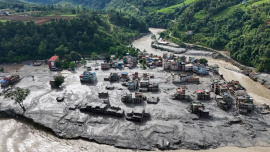
Bhotekoshi flood: Another warning from the Himalayas. Are we listening?
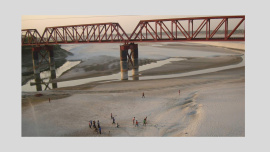
Renewing the Ganges Water Sharing Treaty: What should Bangladesh do?

What it really costs to live in Dhaka
Why Nepal’s devastating floods should no longer surprise us

What kind of doctors does Bangladesh need?
Why aren’t we talking about the health risks of battery rickshaws?