The unanswered questions of the Ganges Barrage

Two senior engineers of the Bangladesh Water Development Board (BWDB)—one a retired Director General and the other a retired Additional Director General—have responded to my article titled “Background of the Padma (Ganges) Barrage Project,” published in Prothom Alo on May 18. Their response was published in The Daily Inqilab on May 25. I welcome their response. Discussions of this kind are necessary before moving forward with such a large project.
However, at the very outset, the engineers engage in objectionable conduct: personal attacks. They try to convince readers that, because I am an economist, I do not have the expertise to discuss rivers. According to them, I should limit myself to economics only.
In fact, that is what I too wanted to do. But seeing the incessant activities of the BWDB that are disrupting Bangladesh’s river system, I was compelled to pay attention to rivers. I felt this need even during the 1974 flood. However, after the 1988 flood, I began studying and writing about rivers in earnest. Following the publication of numerous articles in national and international journals, Oxford University Press published my 481-page book Rivers and Sustainable Development in 2020, drawing upon river experiences from around the world. Eleven renowned experts served as reviewers of the manuscript, and they all praised it. In particular, they found the conceptual framework I developed and presented in the book for analysing river policies—contrasting “Commercial” versus “Ecological” approaches to rivers and the resulting “Cordon” versus “Open” approaches for delta regions—to be a new, original, and useful contribution to the river policy discourse.
Using this framework, I wrote the 821-page book Water Development in Bangladesh – Past, Present, and Future, analysing the experiences of nearly all major BWDB projects in Bangladesh. The book was published by Eastern Academic in 2022. In 2023, a Bangla version of the book, Bangladeshe Pani Unnayan, was also published by Eastern Academic. Therefore, before alleging that I lack expertise in rivers because I am an economist, the engineers would have done better to consider these facts. Let us avoid such personal attacks and instead remain focused on the logic and merit of the arguments.
The BWDB engineers raise seven issues in their article. I will therefore respond to them in the order in which they appear on their list.
1) Their first objection concerns the naming of the barrage. Claiming that “there are established methods for determining water shares in international rivers based on the 1997 UN Convention on the Non-Navigational Uses of International Watercourses,” they allege that “linking the naming of the barrage with water-sharing issues appears to be a malicious attempt.” Frankly, it is difficult to understand either the meaning or the basis of this allegation.
First, after referring to it as the “Ganges Barrage” for decades, the authorities have now started to call it the “Padma Barrage.” They themselves owe an explanation to the people. Second, even the latest Feasibility Report (FR) of the project describes the 1996 Ganges Water Sharing Treaty as a “propelling factor” behind the proposal to build the barrage. Haven’t the engineers read the FR, or do they think the BWDB itself is engaged in a “malicious attempt”?
Third, for many years, I, along with other river experts and organisations, have been demanding that Bangladesh sign the 1997 UN Convention. Unfortunately, no government has done so. The current government has not taken any initiative in this regard either. How, then, can the two engineers rely on benefits from a convention that Bangladesh has not signed and that India is certainly not going to sign?
Fourth, I myself wrote in my article that “by whatever name the proposed barrage is called, the idea remains the same.” In other words, I do not consider the name important in assessing the barrage’s impact on Bangladesh. So where exactly do the engineers find “malice” in all this?
2) The second allegation is that I wrote that previous feasibility studies of the Ganges Barrage were conducted “only” to determine the barrage site. According to them, such a statement is inaccurate and would mislead the public. Yet I wrote that those studies were conducted “primarily” for site selection. I hope the engineers understand the difference between the words “only” and “primarily.” Notably, the FR itself states that several studies conducted between 1963 and 2002 had as their “prime focus” the selection of the barrage site. So, whose statement is correct?
3) The engineers claim that my statement—“Like the previous government, the current government has approved a mega-project worth 33,474 crore taka without giving the public an opportunity to know, understand, and express opinions”—is incorrect. They argue that the project was adopted only after “public consultation, information disclosure, and impact assessment.”
To check this claim, I revisited the BWDB website. Nowhere could I find the current FR (let alone the reports of earlier studies). How, then, are people supposed to learn about the project and offer opinions? How does the non-disclosure of the FR conform to the engineers’ claim of “information disclosure”?
4) The fourth allegation is that my question—“Are transparency, accountability, and public participation in decision-making merely empty words?”—constitutes “an attempt to create confusion among the public regarding one of the nation’s most important projects.” This is a serious accusation, no doubt! But how were transparency, accountability, and public participation in decision-making ensured when the FR, on the basis of which the BWDB is proceeding, was not made available to the public, and no opportunity for parliamentary hearings and discussion was provided?
5) Regarding the causes of waterlogging in the Bhabadaha area, the engineers state that “during the dry season, upstream water flow into the area ceases.” They also add that even during the monsoon, the area does not receive “adequate upstream flow.” As we shall see below, this second statement is a significant confession, though the engineers seem to fail to grasp its significance.
6) The engineers state that during the monsoon, the gates of the Farakka Barrage are generally open and that the “main and distributary rivers” of the Ganges in Bangladesh become full of water and overflow into the surrounding areas. In my May 18 article, I therefore asked why Ganges water does not reach the Bay of Bengal through its distributaries during the monsoon. By raising this question, I intended to initiate a discussion about the relationship between monsoon water use and the problem of dry-season water scarcity. Clearly, the engineers failed to understand this implication and line of reasoning. Instead, they seem to think that I do not understand that the proposed barrage is not intended to increase monsoon water availability!
Meanwhile, the engineers make two mistakes here. First, the claim that the Ganges distributaries are “brimming” with water during the monsoon and the claim that Bhabadaha lacks “adequate flow” during the monsoon cannot both be true. What is actually true is the latter: Ganges water does not flow to its distributaries even during the rainy season. Their second mistake lies in identifying the cause of this failure. They put forward “encroachment and pollution” as the cause. However, these are not the primary causes. It is the countless obstructions built on the distributaries by the BWDB and other public agencies (and in some cases private actors) that prevent the Ganges flow from reaching these distributaries.
7) Referring to the Baral River, the engineers claim that local people constructed an earthen dam there between 1980 and 1983, that is, even before the BWDB built the sluice gate at Charghat in 1984–85. What actually happened is that the BWDB itself first constructed the earthen dam to facilitate the construction of the sluice gate. Moreover, to direct the Ganges flow towards the 24-foot-wide Charghat sluice gate, the BWDB narrowed the Baral from the Padma to Charghat. Soon, sediment accumulated in front of the sluice gate like a termite mound, and the entrance to the Baral became blocked. As a result, the Ganges water could not enter the Baral even during the monsoon, leading to its “death.”
Almost the same fate befell the Ichamati River, another distributary on the left bank of the Ganges in Bangladesh. This river was “enclosed” within the Pabna Irrigation Project, and a sluice gate was constructed at its mouth on the Ganges. Not unexpectedly, the sluice gate became inoperable, disconnecting the river from the Ganges and also leading to its demise.
Yet, instead of removing the obstructions, the BWDB is now enthusiastic about dredging. To that end, it has prepared a large project to dredge rivers such as the Baral, Musa Khan, and Narod. But this is like cutting a tree at the root and watering its branches. If dredging is carried out without removing the obstructions, the benefits of dredging will soon disappear. Many such experiences have already accumulated. Conversely, if the obstructions are removed, monsoon flows of the Ganges will naturally carry sediment away and deepen river channels. The need for artificial dredging will decline.
It is a pity that the government is proceeding with the Ganges Barrage project despite many unanswered questions.
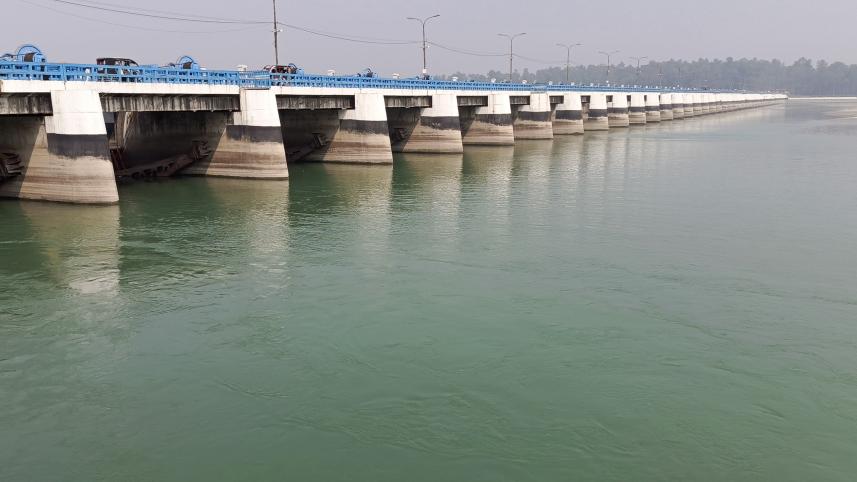
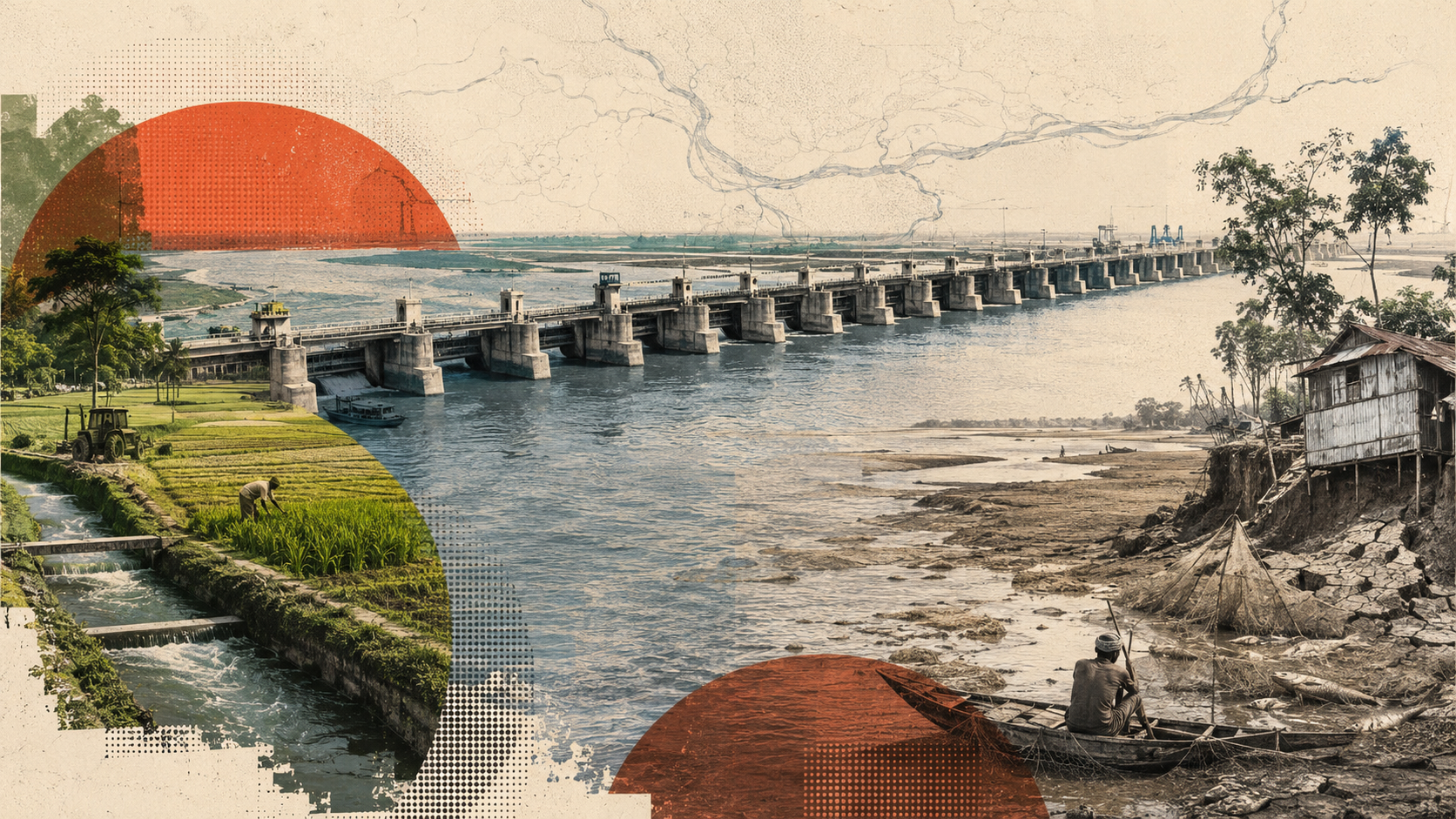
First, how will the proposed barrage be able to supply 800 cumec of water to the five upstream Ganges distributaries, namely Hisna-Mathabhanga, Garai-Madhumati, Chandana-Barasia, Baral, and Ichamati, without reducing the Ganges flow downstream of Pangsha?
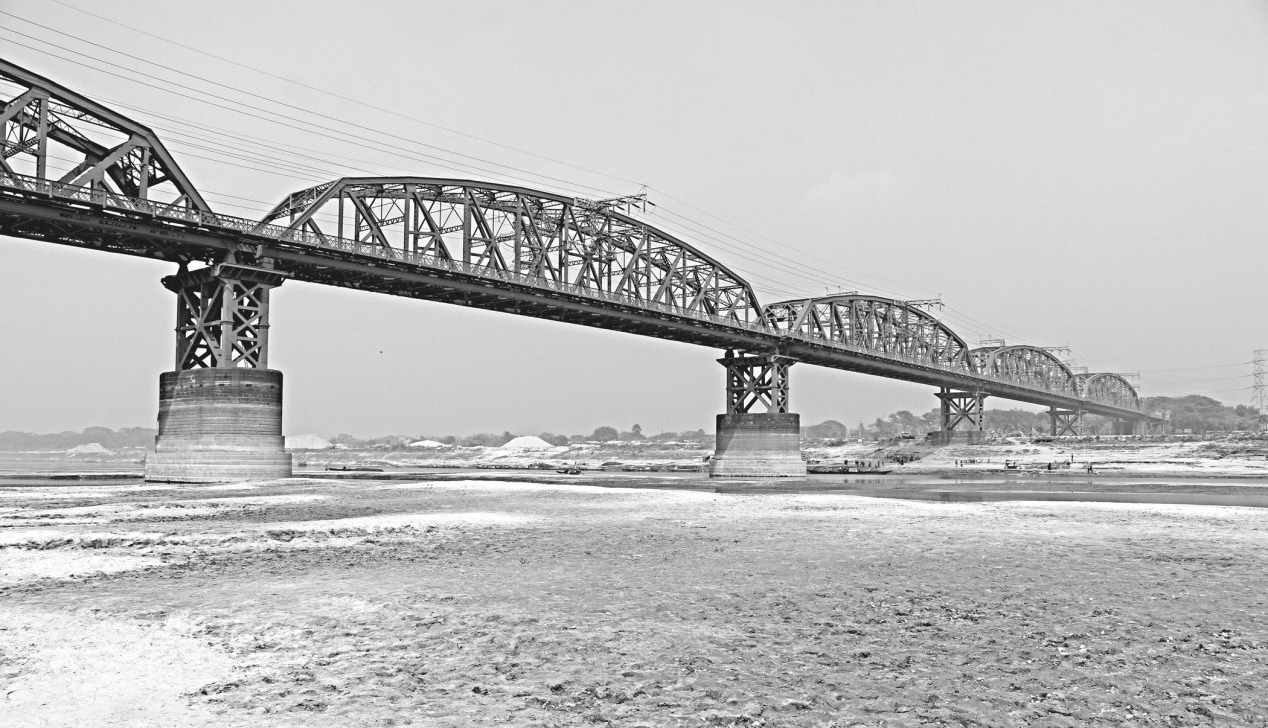
The notion that the proposed Barrage will only conserve the summer flow and use it for augmenting the winter flow in the upstream Pangsha area is not correct. The FR itself assumes a “pond capacity” of 2.891 billion cubic metres (BCM), based on a water level of 12.5 metres created by the barrage. This is equivalent to roughly two days’ worth of monsoon flow of the Ganges. The rest of the Ganges’ monsoon flow will pass away. Suppose that the lean season (January–May) begins with 2.891 BCM in store and that the 800 cumec is supplied only from this storage, while the rest is allowed to pass at the pre-Barrage rate. The stored water will be exhausted in 42 days! After that, it will not be possible to maintain the withdrawal of 800 cumec without an equivalent reduction in the Pangsha-downstream flow. No wonder the FR too shows much lower post-Barrage Pangsha-downstream flow as compared with the pre-Barrage situation. Hence, what the proposed Barrage will mostly do is reallocate the lean-season flow away from the Pangsha-downstream area to the Pangsha-upstream area. Thus, the proposed Barrage cannot but entail a serious reduction in the Ganges flow downstream of Pangsha.
Second, shouldn’t the physical, environmental, and socio-economic impacts of the reduction in Pangsha-downstream flow be taken into account in judging the merit of the proposed Barrage? The reduction will certainly cause deformation of the Ganges in its Pangsha-downstream stretch in much the same way as has been witnessed in the Teesta River following the construction of Bangladesh’s Teesta Barrage at Dalia in the 1980s (completed in 1990). The Teesta’s experience also shows that river-bed gradient configurations do not allow possible backwater flow from the Jamuna River to withstand the negative effects of water diversion on the Pangsha-downstream Ganges either.
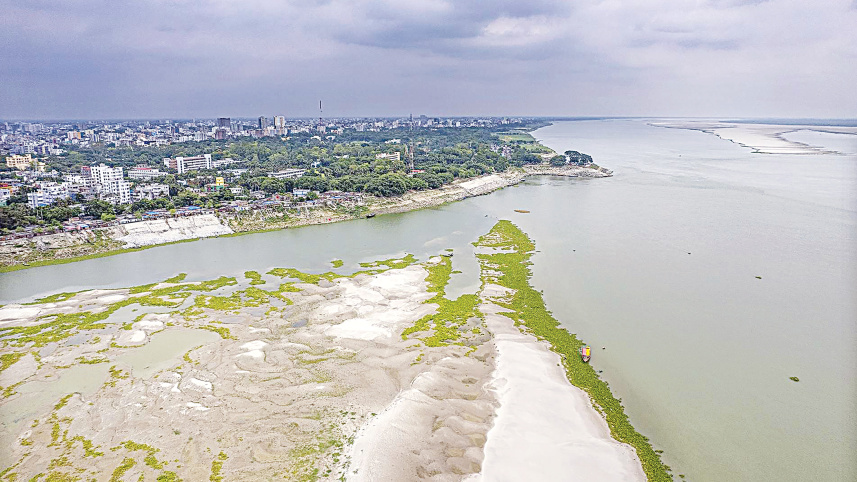
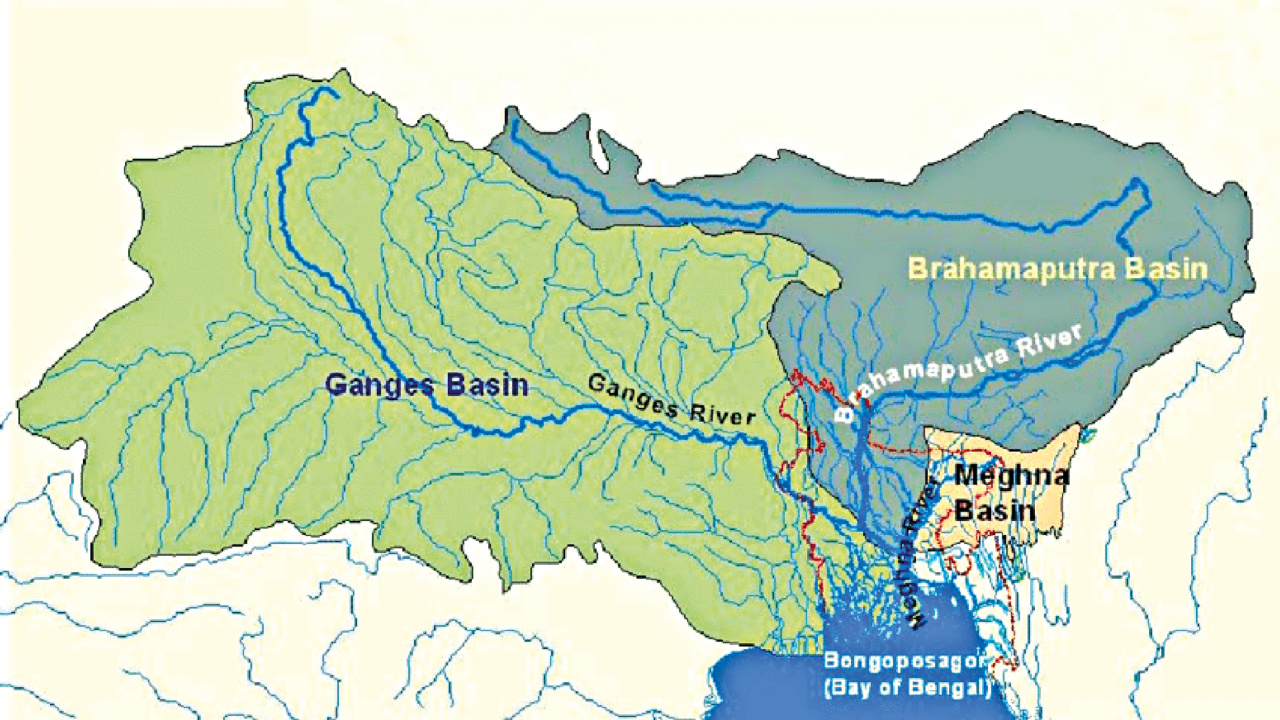
The negative impact will extend to the Padma River and its distributaries, particularly the Arial Khan River, which in turn is the main source of water for most of the rivers of Barishal Division.
Finally, it will impact the Meghna estuary, harm delta development, and increase salinity intrusion in the Meghna Basin. Yet, these negative impacts do not receive adequate attention in the FR. Why? Are these areas not parts of Bangladesh?
Third, how can we be sure that raising the dry-season water level to 12.5 m (by the Barrage) will actually cause water to flow down the distributaries? Even with the Farakka diversion, the Ganges water level under the Hardinge Bridge in the wet season ranges from 11.8 to 13.5 metres. Yet, as noted above, the Ganges water does not flow through the distributaries because of the numerous obstacles that the BWDB and other government organisations, as well as private establishments, have created on these rivers. The first task, therefore, should be to free all the rivers, particularly the distributaries of the Ganges. Last year’s example of the Baral River showed clearly that simply raising the gates of the Charghat sluice gate allowed Ganges water to flow into the Baral River after being blocked for about 40 years. Why do the authorities not want to begin with these small, low-cost, but effective steps?
Fourth, is it correct to be so dismissive of the upstream siltation problem, as the FR appears to be? Despite declining to about half because of Farakka and other upstream dams and barrages in India, the Ganges still brings about 400 million tonnes of sediment to Bangladesh. The under-sluices of the proposed Barrage are almost certain to prove inadequate and become clogged, as has been the case with most BWDB sluice gates across the country. This will lead to siltation, river-bed elevation, bank erosion, and flooding on both sides of the river from Pangsha to Pankha (Rajshahi).
Bangladesh should sign and ratify the 1997 Convention and make vigorous preparations for robust negotiations with India in order to increase Bangladesh’s share of the lean-season flow of the Ganges following the expiry, in a few months, of the current Ganges Water Sharing Treaty.
The BWDB engineers may rather concentrate their minds on answering these big unresolved questions rather than worrying about whether an economist can have something useful to say about river policies.
The government should put the Barrage project on hold and ask the water ministry to investigate the questions raised above, release the full FR for public review, and organise public discussion, giving dissenters adequate opportunity to speak.
The government should also ask the ministry to take on the task of freeing all the rivers from obstructions, both frontal and lateral. Once freed, monsoon river water will flow through them, flush the sediment, deepen the channels, and end waterlogging. Eight-month-long seasonal and removable embankments can be used to store monsoon flows for use during the dry season and also to help recharge groundwater tables. Similar seasonal embankments can also be used to prevent saline intrusion during the dry season. Seasonal dams are what our ancestors devised to cope with the seasonality of Bangladesh’s river flows. It is tragic that foreign consultants failed to see the appropriateness of seasonal dams and instead pushed Bangladesh towards permanent embankments and similar structures, which proved to be a havoc for our river system.
Meanwhile, Bangladesh should sign and ratify the 1997 Convention and make vigorous preparations for robust negotiations with India in order to increase Bangladesh’s share of the lean-season flow of the Ganges following the expiry, in a few months, of the current Ganges Water Sharing Treaty. It is therefore a time for national unity and not for inter-regional divisions triggered by a proposed barrage of questionable merit.
Note that if the Ganges Barrage is built and proves to be a mistake, little will be possible to do to rectify it. We already have the tragic example of Bangladesh’s Teesta Barrage, which failed to counter the effects of upstream water diversion at Gajaldoba by India and transformed the once narrow, deep, meandering Teesta into an unnecessarily wide, shallow, braided river. Bank erosion has ruined thousands of families. As a result, plans are now being considered for a costly project to restore the Teesta to its previous state. It is of the utmost importance to avoid the repetition of this tragic experience on a much grander scale in the case of the Ganges.
Dr Nazrul Islam is a Professor at the Asian Growth Research Institute and a former Head of Development Research at the United Nations.
Send your articles for Slow Reads to slowreads@thedailystar.net. Check out our submission guidelines for details.

Can Bangladesh bring its hilsa back?
Can the new strategy achieve Bangladesh’s renewable energy targets?

André Wink speaks / What we get wrong about the Indo-Islamic world
Bengali Muslims and the ghosts of India's citizenship politics
Bangladesh’s solar growth: Will the incentives be enough?

The missing link in Bangladesh's innovation economy
Dhaka’s battery rickshaw problem is economic, not just about traffic

The staircase between our mothers and care
Is Bangladesh prepared for the next food shock?