Should political parties be publicly funded?


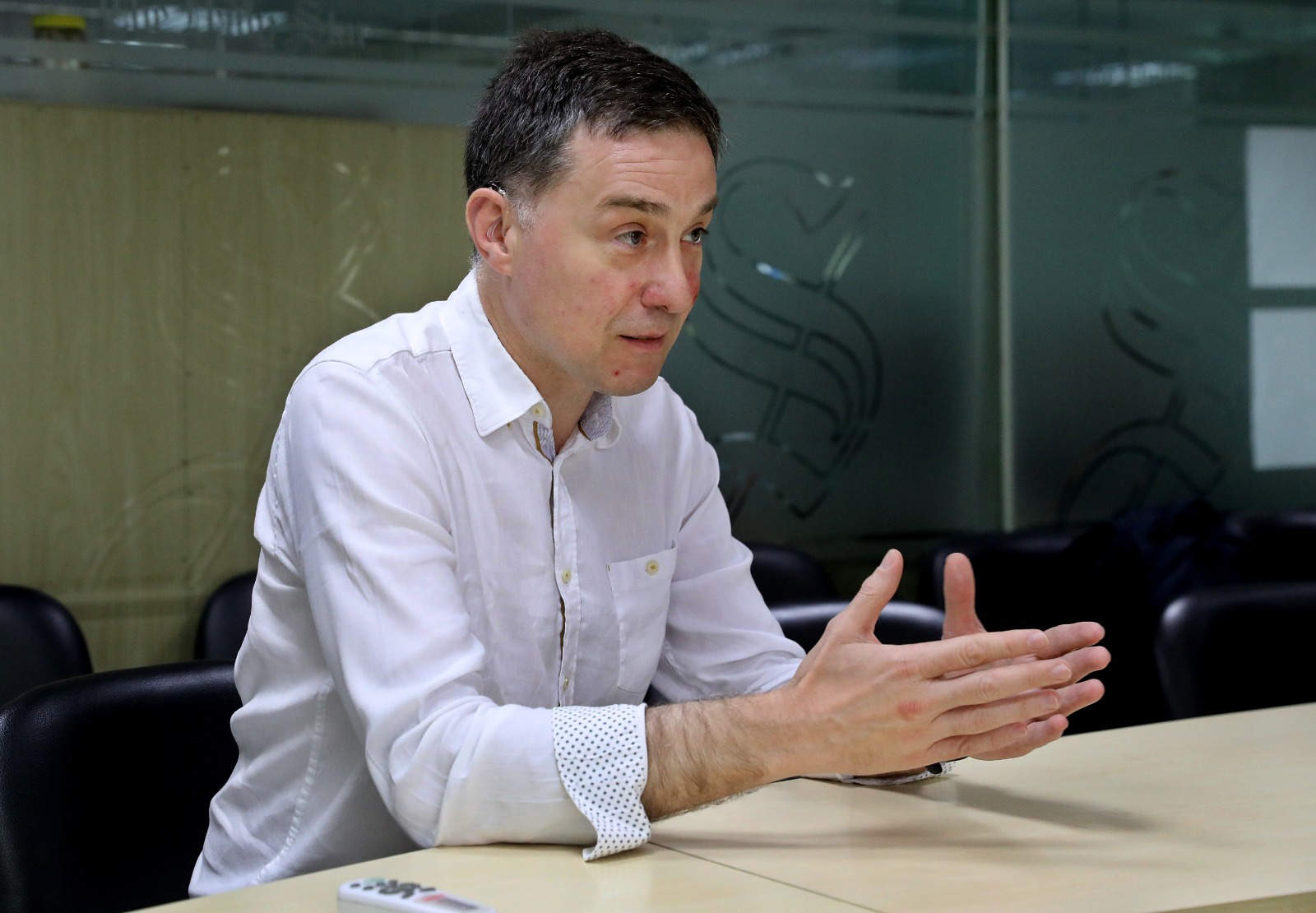
Dr Fernando Casal Bértoa, Associate Professor at the University of Nottingham and a political scientist specialising in party systems and political finance, speaks to Khairul Hassan Jahin and Miftahul Jannat of The Daily Star about the political dynamics following Bangladesh's July 2024 uprising, the influence of money in politics, and the institutional reforms needed to make political funding more transparent and accountable. Dr Fernando recently visited Bangladesh at the invitation of the Applied Democracy Lab (ADL) of the University of Dhaka.
The Daily Star (TDS): How do you assess Bangladesh's July uprising, and how would you evaluate the quality of the country's most recent election?
Fernando Casal Bértoa (FCB): I think the July uprising can be clustered together with some of the pro-democratic movements and changes we have seen around the world lately. We have Nepal, a neighbouring country, where you also see important political changes. We have countries like Armenia in 2018, where significant democratic changes occurred. Serbia and Georgia are also trying to bring about this type of change. So, I would assess them very positively because the end goal of good governance is democratic government. In this sense, I think this is very, very good.
As for the election, international reports show there have been significant improvements in how elections are held. Of course, there may still be some issues that could be improved, but it was freer and fairer than any election since the 1990s; the 2008 election was probably the last comparable one. So, it has been the closest to a free and fair election that you have had in the last twenty years.
TDS: Let us turn to political finance, an area you have studied extensively. How effective is public funding as a tool for strengthening democracy and reducing corruption, and why should taxpayers support financing political parties?
FCB: First of all, we should remember that public funding is not a panacea; it is not a remedy in itself. You need a comprehensive approach to party finance. It is not only about introducing public funding; it is also about managing black money, controlling private funding, and having appropriate, independent oversight that can enforce the regulations.
When you look at the academic literature, you see that public funding has many positive effects on democracy. It has been shown to strengthen the organisation of political parties because having resources allows you to expand, build better headquarters, and establish your own newspaper and research institution. It also allows for the institutionalisation of the party system because a consolidated democracy needs a stable party system, a stable relationship between the parties, and public funding supports the continuity of parties. You cannot have a stable party system without strong political parties.
Another important effect is combating corruption. Because public funding comes from the state, these are state subsidies; they are completely traceable from origin to destination. We know where the money comes from and how it is spent, which helps reduce corruption. And we know Bangladesh has a serious corruption problem.
Public funding also helps promote the participation of women in politics, as part of it can be used for activities directed at social minorities within parties, including women, youth, and persons with disabilities. These are important benefits, consistent across academic studies worldwide.
People should understand that it is better to pay for democracy today than to fight for it tomorrow.
As for why people should pay: without political parties, there is no democracy. In principle, a democracy without parties is possible; there are a few examples, such as Tuvalu, Nauru, or Palau, but those are essentially island states, not big countries. Bangladesh is a very large country; you cannot have democracy without political parties here. People should understand that it is better to pay for democracy today than to fight for it tomorrow.
It is a good way to maintain a system that has been proven beneficial over the years because with democracy you also get economic development, an independent judiciary, gender equality, and lower corruption, not to mention the famous rule that democracies do not go to war with one another, which reduces violence and social unrest. To have democracy, you must have parties, and money, as Professor Stanbury once wrote, in the mother's milk of politics; you cannot have politics without money. Don't voters pay taxes for an army, good public health, and good schools? Then it would be good to pay for political parties too.
Moreover, one thing voters do not realise is that, in a public funding system where allocation is based on vote share, they are not only voting to get their candidate elected; they are also voting to finance their party. In a way, they are contributing to the good health of their country and its democracy. There is nothing more beautiful than participating in the strengthening of democracy.
TDS: What is your view on foreign, corporate and anonymous donations to political parties? Should they be restricted or banned, and what do international best practices suggest?
FCB: When you look at the international guidelines and best practices from a comparative perspective, foreign donations are, in fact, the first thing banned in almost every country in the world. The idea is to avoid foreign interference in your politics and your elections. That said, this does not mean international organisations, such as the United Nations or bodies dedicated to promoting democracy, should be barred from helping parties become stronger organisations, not to win votes but to build capacity. Foreign donations should be banned to prevent interference because foreign states have no legitimate interest in your national politics.
Corporate donations should also be banned for two reasons. First, companies do not serve the public interest. When you, your friends or your family vote, you are looking for what is best for the country, even if you disagree on how to get there. Corporate donations focus only on the interests of their owners or associates. Second, corporate donations break the principle of one person, one vote: the owner of a company would, in effect, donate twice, once as an individual and once through the company, which violates equal participation.
With anonymous donations, we clearly need to know who is funding parties because that is what enables accountability. If a big oligarch is financing a party I like, I might not like that and may decide to vote differently. Transparency in party finance matters because otherwise parties can be financially captured by people pursuing their private interests rather than the public good.
So, a corporation wanting to donate anonymously would be breaking two principles at once. First, anonymity: there should be no anonymous donations. Some countries do allow small donations; if you give twenty euros to a party, nobody is going to make a fuss, but a corporation is never going to donate twenty euros. Second, as I said, corporate donations should never be permitted in the first place. This goes completely against good practice. Increasingly, many countries also require that donations be made only through the banking system: every single transaction by a party, including expenditures, has to go through a bank, so cash donations become impossible. I understand Bangladesh is very much a cash economy, and if you imposed this overnight, the parties would run dry, so you need a careful balance. But for corporate donations specifically, I am completely against them.
TDS: Why is transparency in party finance so important for democratic governance? What information should political parties be required to disclose, what kind of oversight body is needed to enforce the rules, and what role can the media and citizens play in ensuring accountability?
FCB: On transparency, there are different levels: the level of the oversight authority and the level of parties' own reporting. The Bangladesh experience is that this control has been extremely deficient. It may be a lack of independence in the electoral management body; it may be a lack of resources, whether financial, because the budget depends on the state, or human, with too few people to carry out the checks. But most likely, the legislation itself is also very deficient. So, it is a problem at the roots, in the original law, as well as in its practical implementation.
From a comparative perspective, the institutions that have worked best at overseeing political finance are anti-corruption agencies or special agencies dedicated exclusively to party finance. The better arrangement would be this: the Election Commission ensures that elections are free and fair, while party finance is handled by an institution that is properly independent and well resourced.
One, you need enough public funding to create a level playing field among parties. Two, you must control private finance by banning foreign, family and corporate donations and setting spending caps to balance private and public money. Spending caps are essential: if you provide public funding and limit private funding while leaving spending uncapped, parties will say, public money is not enough and private money is limited, but we can still spend much more, which pushes them towards black money. Three, you need proper transparency, with parties reporting income and expenditure annually, itemised and public, and all reports audited. Four, an oversight authority with sufficient powers and staff to investigate and impose sanctions because, at the end of the day, without the stick, the carrot does not work.
The role of the media and citizens is essential. Political-finance reforms around the world are often driven by multiple factors, but one of the most important is financial scandal. And who brings scandals into the open? The media. By creating a pro-reform environment, they can influence legislation.
This is also why the transparency of the oversight authority matters so much. How do the media uncover these scandals? Through whistleblowers, through investigative reporting, and by analysing the reports that parties are obliged to make public. When I was doing fieldwork in Poland, the reporting was public: one party was paying a million zloty, about 250,000 euros, for the security of its leader; another spent heavily on drinks at social gatherings; another paid for research of not very good quality. Because this was public, the media could show who was benefiting from that money, and voters could decide their political preferences accordingly.
If you do not know how parties spend their money or where it comes from, you are making blind choices, and that is not democracy.
The media do not have to tell people whom to vote for, but if they put everything in the open, citizens can make informed choices. That is the aim of democracy: voters choose freely, but with good knowledge. If you do not know how parties spend their money or where it comes from, you are making blind choices, and that is not democracy. So, the media play three roles at once: informing the public, supporting oversight, and driving legislative reform.
TDS: What would an effective and transparent political-finance framework look like in Bangladesh, and what wider political and institutional reforms would be needed to support it?
FCB: The priority is a system that respects transparency while also respecting donors' right to privacy. You need a balance: you must know who is donating and how much, but you must also avoid harmful consequences. Secondly, the system must work promptly, and transparency must be timely. If I only learn about parties' finances four or five years later, that is useless: my choices today would rest on outdated information, and the election may already be over. My vote last time might have been different had I known, a year before, that a major oligarch had funded a party.
Thirdly, it has to be done in a user-friendly manner, which means two things. It must be easily accessible; if parties file mountains of paper, and I have to go physically to the Election Commission and dig through boxes, it is useless; even for a reporter like you, who has the time and is paid for it, it would be far too time-consuming. Fourthly, it has to be published on a website. And it has to be understandable; if they bury everything in dark, technical accounting language, people will not grasp what it means. Those are the four priorities for a genuinely beneficial, transparent system.
All of this leads to bigger institutional reforms. First, you need a separation of powers and an independent judiciary. This is essential because, without it, everything we have discussed collapses: the election commission may be independent and impose sanctions, but the party will go to the courts, and if it controls the judiciary, the commission's decision will be overturned.
Second, first-past-the-post is the worst electoral system you can have. It produces very personalised parties, which is bad for building strong organisations; it is the worst system for women's representation; and it also wastes a great many votes, leaving voters unrepresented in parliament. You might argue that one of its virtues is reducing the number of parties, but look at how many parties you currently have in parliament. Even that supposed benefit has not worked in Bangladesh.
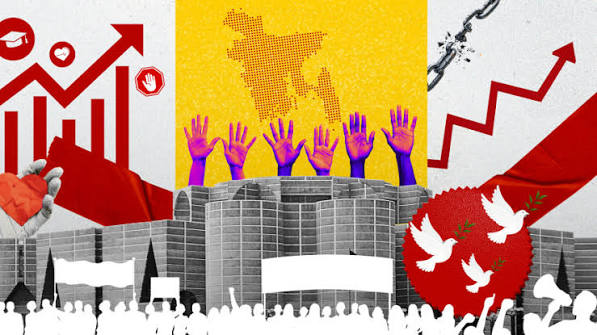
However, the opportunity is here for Bangladesh now. You have a government that calls itself a reform government and has a constitutional majority, meaning it can change things. You are also at the beginning of the electoral cycle, which is the moment for reform; you cannot reform six months before an election. This is the time to discuss the problems to work out the potential solutions and guidelines, and to talk to the parties so they can reach a compromise. Even with a constitutional majority, important reforms, including a party law, need a reasonable compromise. If the opposition rejects basic democratic rules, then you proceed without them, but reforms should be as comprehensive as possible.
Armenia is a positive example. In 2018, it also had a dominant party system in which one party had ruled for years. After their revolution, they changed the legislation. I had the chance to help; I was one of those who helped to draft the party law there, which covers party finance as well as party registration and dissolution. We produced a very good law, to the point that the Venice Commission, the Council of Europe body that evaluates members' legislation, issued a very positive legal opinion on the changes. So, there are positive examples, and Bangladesh could be one of them.
A proper reform needs three things, like the human body: a brain, a heart and muscles. The brain is good legislation; the heart is the political will to act, and the muscles are the oversight and control mechanisms needed to implement it.
In fact, Bangladesh could become a beacon within South Asia. No country in the region, except Sri Lanka, has public funding or a really sound regulatory framework for political finance, and even Sri Lanka funds only elections, not parties' regular statutory activities. So, Bangladesh has a chance to put itself at the forefront of democracy in the region. Look at Malawi: the fifth-poorest country in the world, which, having approved a Party Law in 2018 that included also public funding for political parties, has just become a democracy for the first time, according to Freedom House. The question is political will. As my dear friend Dr Marcin Walecki used to say: a proper reform needs three things, like the human body: a brain, a heart and muscles. The brain is good legislation; the heart is the political will to act, and the muscles are the oversight and control mechanisms needed to implement it.
Send your articles for Slow Reads to slowreads@thedailystar.net. Check out our submission guidelines for details.
Can Bangladesh bring its hilsa back?
Can the new strategy achieve Bangladesh’s renewable energy targets?

André Wink speaks / What we get wrong about the Indo-Islamic world
Bengali Muslims and the ghosts of India's citizenship politics
Bangladesh’s solar growth: Will the incentives be enough?
The missing link in Bangladesh's innovation economy
Dhaka’s battery rickshaw problem is economic, not just about traffic
The staircase between our mothers and care
Is Bangladesh prepared for the next food shock?