A patent is not a company: The missing link in Bangladesh's innovation economy
Bangladesh is simultaneously developing both ends of its innovation economy. On the research side, institutions such as BUET are beginning to formalise the journey from laboratory to market. Its Research and Innovation Centre for Science and Engineering now includes a technology transfer office and startup incubator designed to support IP protection, licensing, commercialisation, and spinout formation, and this year convened a national workshop on research commercialisation and technology transfer. On the financing side, thirty-nine commercial banks launched the Bangladesh Startup Investment Company with an initial Tk 425 crore fund, while Startup Bangladesh introduced a Tk 400 crore fund of funds to attract professional venture managers.
But ideas and money are the two ends of a pipeline. Neither solves the hard problem in the middle, which is turning a promising technology into a company worth financing. A patent shows that something may be inventive. A trade licence shows that an entity exists. Neither tells us whether a viable company has been built. That conversion is a discipline in its own right. It is called company building, and Bangladesh has not yet built that capability at sufficient scale or institutionalised it across the innovation system.
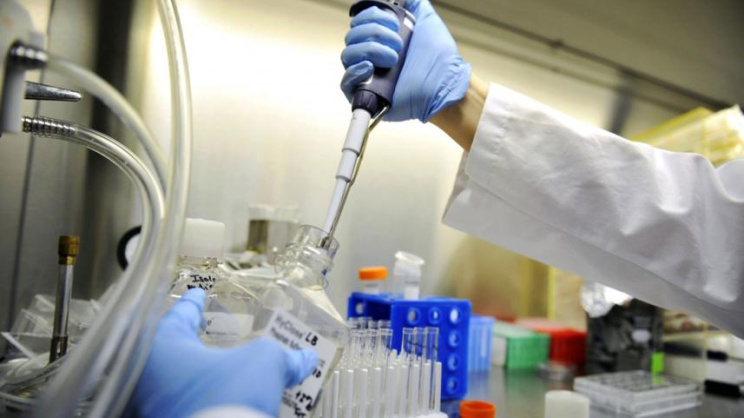
Not a shortage of ideas
The reflex is to say Bangladesh does not innovate enough. I would argue that the data say something more interesting. In the 2025 Global Innovation Index, Bangladesh ranked 106th out of 139 economies, which might suggest that Bangladesh lacks a strong innovation economy. Look closer. The country ranked 115th on innovation inputs but 95th on innovation outputs, and the report itself notes that Bangladesh produces more innovation than its level of investment would predict. The weakest pillars, however, are not creativity or infrastructure. They are human capital and research, at 133rd, and business sophistication, at 129th.
Read plainly, the index suggests that Bangladesh holds more latent inventive capacity than its commercialisation system can absorb. The figures suggest that Bangladesh’s problem is not simply the supply of ideas. Part of the constraint lies in the machinery that connects knowledge to enterprise.
Some of that machinery is being assembled. Universities are opening technology transfer offices. Incubators are multiplying. Startup programmes run competitions and demo days. Each does something real. Technology transfer can move intellectual property out of a university. Incubation can support a founder. Venture capital can finance a company. None of them, however, answers the first question: What company, if any, should be built around this technology?

What company building means
Consider a researcher at a Bangladeshi university who develops a promising diagnostic, drug candidate, chip design, or new agricultural input, and the science checks out. Now a different set of questions arises. Is the invention protectable, who owns it, and is there freedom to operate? Of the several things this technology could become, which application should be pursued first? Who actually pays for it, and is the problem it solves valuable enough for an investor to bite? What single experiment would de-risk the concept by removing the largest remaining uncertainty? What evidence will a regulatory agency demand before the product can reach a patient or a farmer? How much capital is needed to reach the next milestone that changes the answer to any of the above questions? Does the founding team have the commercial, regulatory, and operating skills the plan requires? And what, deliberately, should not be pursued?
Company building is the discipline of answering these questions in the right order, so that technical possibility becomes a coherent investment proposition before scarce capital is committed. It is not science, though it depends on science. It is not consulting, because the builder owns the outcome. It is not investing, because the work happens before there is anything to invest in. The company builder works across the interfaces where scientists, lawyers, regulators, customers, and financiers meet, and where projects usually die.
I have spent my career across academic science and biotechnology in Silicon Valley, from the research bench to the corporate side, and I have watched excellent science turn out to be only the opening move. Indication selection, intellectual property, development milestones, regulatory strategy, manufacturing, and capital planning often determine whether the science ever becomes an enterprise. The molecule is necessary. It is never sufficient.
Why accelerators are not enough
A fair objection follows. Is this not what incubators already do? For much of the digital economy, yes. A software founder can build, launch, measure and iterate cheaply. Feedback arrives in weeks. The standard accelerator, with its pitch decks, mentor sessions and twelve-week cycles, evolved for exactly that world, and it works there.
A system that measures success by the number of startups formed will confuse company formation with commercialisation and overuse the startup route simply because it is the most visible outcome.
Deep technology runs on a different clock. A diagnostic, a therapeutic, a semiconductor design or a new material must pass through validation, patenting, regulatory pathway design, and further validation before the first meaningful revenue appears. Feedback loops are measured in years, and experiments cost real money. The further a technology sits from immediate commercial validation, the more the company's architecture matters before it scales. A demo day cannot substitute for a development plan.
There is a second point, and it is the uncomfortable one. Not every patent needs a startup. Some technologies should be licensed to an existing firm. Some should be partnered. Some should be developed further inside the university. Some should be combined with other intellectual property before they can support a business. And some should be stopped. A mature innovation system can make all five decisions. A system that measures success by the number of startups formed will confuse company formation with commercialisation and overuse the startup route simply because it is the most visible outcome.
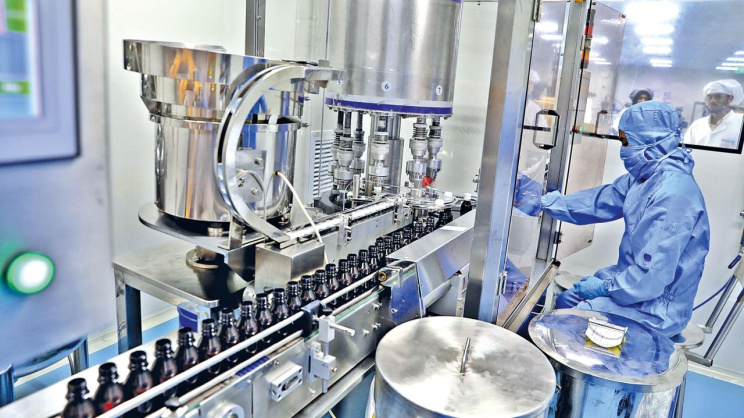
What India learned
Bangladesh does not need to invent this from scratch. India faced the same gap and developed a response. The Biotechnology Industry Research Assistance Council (BIRAC), created in 2012, treated biotech commercialisation as a problem requiring specialised infrastructure rather than general encouragement. Its BioNEST programme now supports 73 bio-incubators with wet labs, pilot facilities and regulatory guidance, alongside 3,151 incubatees, 1,300+ IP filings and 800+ commercialised products and technologies. Its ignition grants fund researchers to reach proof of concept, with funding released against milestones rather than promises. Since 2014, India's bioeconomy has grown from roughly $10 billion to over $160 billion in 2024. BIRAC did not produce that growth alone, but it helped build the translational infrastructure that allowed more science to reach the market.
Singapore took additional steps. A*STAR does not just fund research and wait; it actively groups companies around research assets, connecting scientists with commercial operators, industry partners and investors from the beginning.
Bangladesh should copy neither model wholesale. Its capital base, institutions and industrial structure are different. The transferable lesson is narrower and more important. In both countries, translation became an institutional function. It stopped being something individual scientists were left to improvise.

Three things to build
The temptation in a piece like this is to list ten recommendations. Three serious ones are stronger.
First, build a translational operator network. This does not mean a new agency. It means placing experienced people, including technical executives, entrepreneurs, intellectual property specialists, regulatory experts and product leaders, inside leading universities and research centres as builders in residence. Their mandate should not be to mentor. It should be to decide whether a company should exist and, if so, to help design it. They should work intensively with five technologies rather than superficially with fifty startups. The distinction is the whole point. Depth converts. Breadth congratulates.
Second, fund de-risking, not activity. A risk with new pools of innovation capital is that activity itself becomes the measure of success: more investments, more programmes, more projects kept alive.
The purpose of early innovation funding is not to sustain projects. It is to find out, as cheaply and quickly as possible, which few projects deserve much more capital.
Early translational funding should instead ask one question of every project: What is the next experiment that materially changes our confidence in this opportunity? Funding should be released against explicit stage gates. These should cover the progression from proof of concept through validation, patent filing, product definition and regulatory feasibility to external partnership or investment. The purpose of early innovation funding is not to sustain projects. It is to find out, as cheaply and quickly as possible, which few projects deserve much more capital. That is portfolio discipline, and it is what separates translational systems that compound from those that merely spend.
Third, build sector platforms rather than dozens of shallow incubators. Deep expertise is scarce everywhere and scarcer here. Not every university can host world-class capabilities in patent generation, regulatory science, venture formation and clinical development. These require capital and infrastructure. A hub-and-spoke model can assist here. National platforms in sectors where Bangladesh has plausible strengths, among them pharmaceuticals and biotech, diagnostics and devices, advanced textiles and materials, agritech and climate adaptation, would let a researcher in Rajshahi or Sylhet draw on the same translational machinery as one in Dhaka. The diaspora belongs here too, but not through the tired plea to come home. Rather, Bangladeshi scientists and operators abroad can serve on boards, conduct technical diligence, take on “builder-in-residence” assignments, and connect investors and regulators without relocating. Use the expertise where it sits.

Translation is a capability
Bangladesh is doing the visible things. More attention to university research. More capital, structured more professionally than before. Greater ambition in technology-intensive industries. All of it is necessary. None of it guarantees that ideas and money will find each other in the right configuration, because between them lies a set of professional judgements about products, evidence, markets, teams, milestones and capital that no fund launch or incubator opening can supply.
The country's next economic transition will depend on how reliably it can move knowledge into intellectual property, intellectual property into products, and products into companies that hold value in global markets. Bangladesh does not merely need more startups. It needs the capacity to decide which technologies deserve companies, how those companies should be constructed, and when promising ideas should instead be licensed, redirected or stopped. That discipline is less photogenic than a ribbon-cutting. It will matter more.
Building companies from knowledge is itself a technology. Bangladesh should treat it as one.
Mukhtar Ahmed, PhD, is a biotech executive and strategic advisor.
Send your articles for Slow Reads to slowreads@thedailystar.net. Check out our submission guidelines for details.

Dhaka’s battery rickshaw problem is economic, not just about traffic

The staircase between our mothers and care

Is Bangladesh prepared for the next food shock?

From more power to better power: Rethinking Bangladesh’s energy future

Growing out of LDC status: Bangladesh’s real negotiation at COP31

What is holding back solar in Bangladesh’s garment industry?

Confessions of a finance professor: The danger of putting profits first

The making of a cup of tea: Plantation, empire and the pursuit of quality
Why Bangladesh’s measles outbreak should be a wake-up call