


How reading initiatives in my school made me a better reader
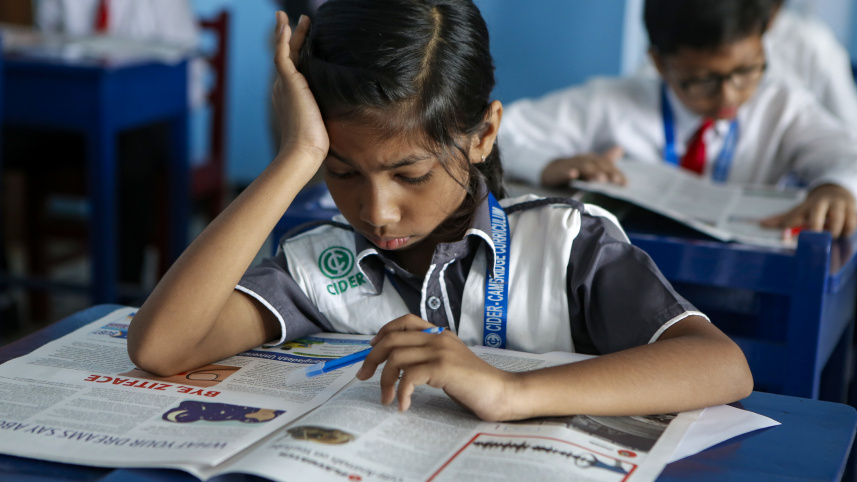
“I cannot remember the books I’ve read any more than the meals I have eaten; even so, they have made me.” – Ralph Waldo Emerson.
Books play a crucial role in shaping individuals during their formative years. Speaking from my own experience growing up, reading books has fostered me into who I am today. Particularly, the reading initiatives in my school, Bishwo Shahitto Kendro's book-reading programme and the British Council’s reading challenge introduced me to many classic novels. Deshe Bideshe, Pather Panchali, Around the World in Eighty Days, Gulliver's Travels, Alice's Adventures in Wonderland, Black Beauty, The Invisible Man, and The Tempest were among many other classics that shaped my reading habits for the better.

The books from these reading initiatives felt like a breath of fresh air compared to the very constrained academic books I had to study for school. After becoming a member of the Bishwo Shahitto Kendro reading initiative with a measly sum of BDT 15, you would receive a reading log with 12 book titles and a checkbox. I still have those pink, green, and yellow reading logs, with their pages fraying at the corners and checkboxes filled. We could borrow one book a week, provided we finished reading, and I would look forward to it every time.

Occasionally, it took me more than a week to finish some books. I remember an instance where I couldn’t even finish one of the books, titled Michael Madhushudan, because I was down with a fever. Since I was approaching the deadline to return the book, my lovely parents stayed up and read the entire book to me, and even in the haze of my fever, I ventured into the tumultuous life of the poet.
These reading initiatives also helped me bond with my classmates—we hunched over our desks during tiffin breaks, discussing and looking through each other's books since we didn’t all always receive the same thing. They not only introduced me to classic Bangla novels but also books translated from foreign languages into Bangla that made reading more accessible and fun, such as Les Misérables and White Fang.
Simultaneously, the British Council Reading Initiative introduced me to classics such as Frankenstein, Dracula, and Sherlock Holmes, among many others. I vividly remember reading Shakespeare's The Tempest. The books also had incredible illustrations, making reading a fun visual experience. I was so absorbed by those books that, without realising it, I had improved my vocabulary and developed better reading comprehension. I could analyse, comprehend, and most importantly, enjoy the stories and poems in my school textbooks in the process. Some of the books had word meanings and vocabulary sections at the end of the book, which helped when I couldn’t grasp the meaning of certain words.
The tests at the end of the year essentially tested our understanding and memory of the book, and if you did well in the exams, you’d be invited to the prize-giving ceremonies and be awarded more books, much to the delight of many other readers and me. That, in turn, introduced me to books like Kidnapped, Deshe Bideshe, and Mumu. The former was given to me by the British Council, and the latter two were prizes from Bishwo Shahitto Kendro.
Over the years, my journey with reading has faced many trials and tribulations, especially with the advent of social media and, of course, having to juggle responsibilities, with less time for reading.
Despite having graduated from school and venturing into adulthood, the Bishwo Shahitto Kendro mobile library initiative in my locality helped me pick up a book every week. As I immersed myself in those books, I almost felt like the fourth-grade version of myself again—marvelling at the way writers weave stories.
Sabrina Sazzad spends her time either daydreaming and/or meeting deadlines. Email her at sabrinasazzad07@gmail.com with tips on how to manage her time better.
 For all latest news, follow The Daily Star's Google News channel.
Comments