


An economic model that predicts the winner of the World Cup
Every four years, something strange happens. People who have not watched a football match since the last World Cup suddenly develop strong opinions about formations and players. I am one of these people. Like many football fans, I inherited my allegiance from family tradition. Unfortunately, that also means rooting for a team that has led me to watching them concede seven goals and then questioning my life choices.
This year, however, I decided to take a more pragmatic approach: instead of supporting my favourite team, why not support the team that is most likely to win?

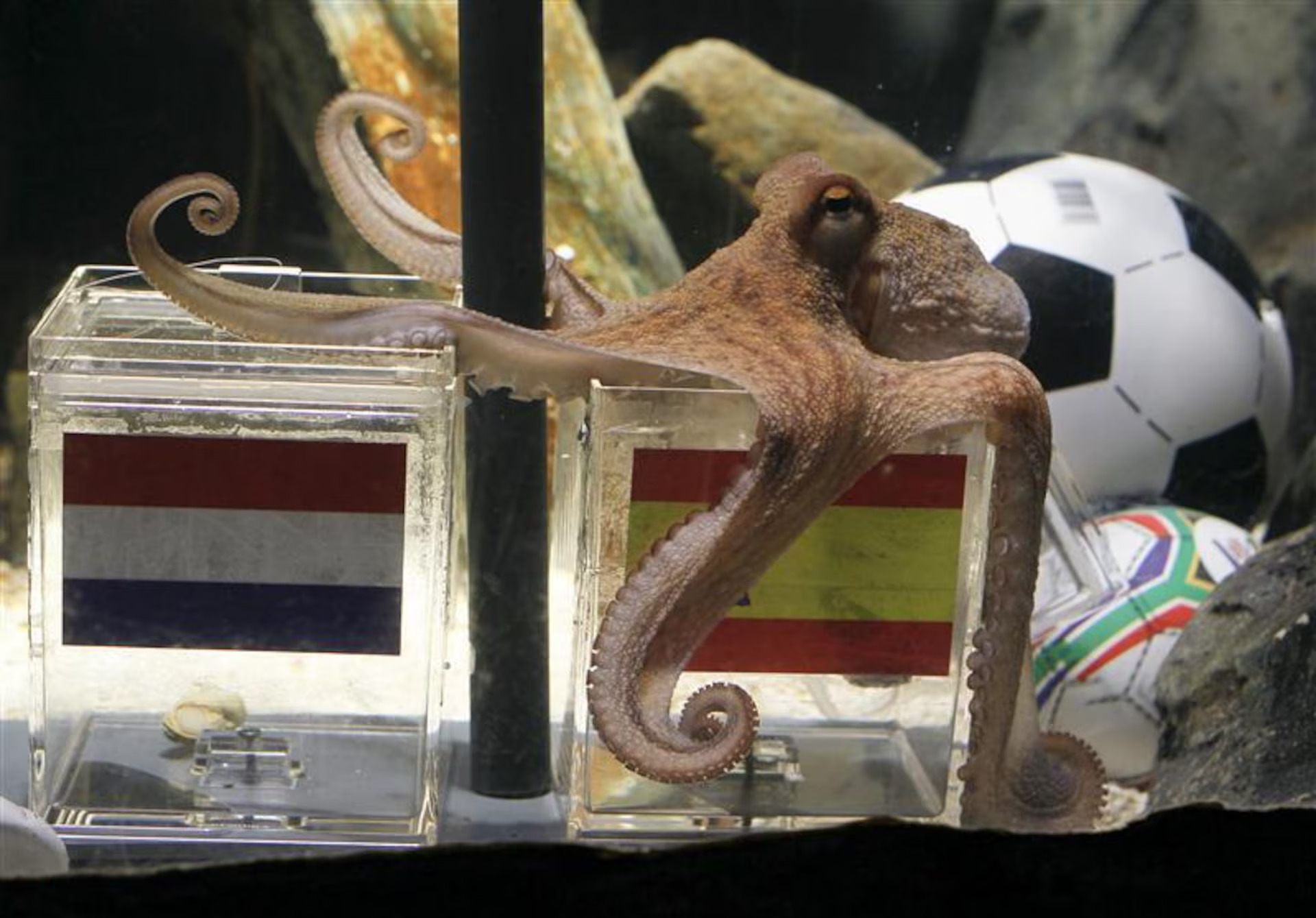
So, I did what any responsible seasonal football fan would do: I searched the internet for answers. Somewhere between bizarre animals, AI simulations, and fan theories, I stumbled upon something unexpected: a forecasting model developed by a German economist that has correctly predicted every World Cup winner since 2014.
The man behind the model is Joachim Klement, an economist and investment strategist who uses a combination of economic and football-related indicators to estimate a nation's chances of lifting the trophy. After successfully identifying Germany in 2014, France in 2018, and Argentina in 2022, his formula has already produced a favourite for the 2026 World Cup.
Before we get to the 2026 result, it is worth pausing on the model’s origins, which add an unexpected irony to its apparent accuracy. It began as satire by Klement, a critique of the unwavering hubris of economists — a profession that has, with admirable consistency, failed to predict recessions while remaining fully confident about the next one. The intention was not to prove that football could be forecast with precision, but to mock the very idea that anything complex could be forecast at all. Yet, the model kept getting it right.
The model itself runs on a combination of indicators that would feel at home in an undergraduate macroeconomics lecture rather than a football punditry desk. FIFA ranking carries the most weight — perhaps the only variable that is directly tied to the game itself. GDP per capita follows, on the assumption that wealthier nations can sustain better infrastructure, coaching systems, and long-term sporting development. Population size enters next, based on the simple logic that larger societies offer a wider pool of potential talent.
Then there is the cultural status of football within a given society, a harder thing to quantify but one Klement insists on anyway, since a nation that treats football as a religion will always produce more of it than one that treats it as a pastime. And crucially, there is a built-in element of randomness, or simply, luck, because Klement was self-aware enough to know that real life refuses to be modelled without some room for chaos. It is, in essence, an economist's attempt to quantify hope using a spreadsheet.
Using these inputs, the model arrives at its 2026 striking forecast: the Netherlands as the outright winners, with the Portugal team as the likely finalists. This is a country that has reached three World Cup finals and lost all three, a record so consistent it borders on tradition. Klement, to his credit, remains unfailingly committed to undermining his own success. He has compared trusting his predictions to playing the lottery, and has gone on record saying that anyone who places a bet because of his model is, in his words, beyond help.
However, where does Bangladesh sit in Klement's model? We have the population density to spare and a climate that, on paper, resembles several footballing nations. What we lack is the GDP per capita, proving that passion alone does not build training academies. Bangladesh, then, sits in the peculiar position of meeting half the model's criteria for football glory while being mathematically disqualified by the other half.
In the end, whether the Netherlands lifts the trophy in July or crumbles in the quarter-finals like every football prediction eventually does, all I can conclude is that I am far more confused about which team to support than I was before I started digging into this topic.
Mueen Walee Maheer is an aspiring polymath who is currently a master of none but a fan of many. Send him a new obsession at mueenwaleemaheer@gmail.com
 For all latest news, follow The Daily Star's Google News channel.
Comments