


We need a new vision for shared rivers in South Asia


The story of transboundary water sharing in South Asia is one of competing fears and intertwined destinies. The Yarlung Zangbo dam, the expiring Ganges treaty, the frozen Teesta deal, and the floundering Indus framework all point to a fragile regional order under hydrological stress. But Bangladesh's future need not be hostage to geography. By learning from global models like the Lancang-Mekong Cooperation (LMC), strengthening its own scientific and diplomatic capacity, and treating water diplomacy as a cornerstone of national security, Bangladesh can shape a more secure, cooperative, and sustainable path forward. In the coming decade, rivers will test not only our technology but also our capacity for trust. For Bangladesh, that test has already begun.
China's construction of the world's largest hydropower project on the Yarlung Zangbo River in Tibet has become one of the most sensitive issues in South Asia lately. This river, known as Brahmaputra in India and as Jamuna in Bangladesh, sustains the lives of hundreds of millions downstream. For Beijing, the project symbolises technological might, energy security, and national pride. But for India and Bangladesh—the two lower riparians—it evokes anxiety over ecological damage, livelihood threats, and shifting power asymmetries. The Yarlung Zangbo dam is thus more than an engineering project; it is a geopolitical flashpoint that may redefine the future of regional water diplomacy.

For Bangladesh, the concern is more existential. As a deltaic nation dependent on more than 50 transboundary rivers, its survival hinges on how upstream countries manage shared waters. Its fertile plains, fish stocks, and sediment flows rely on regular monsoon patterns and predictable river behaviour. Any upstream alterations, such as dams, diversions, or hydroelectric control, risk disrupting this balance. The Yarlung Zangbo project could alter sediment transport and change the hydrological rhythm of the Brahmaputra-Jamuna basin, intensifying both droughts and floods. Moreover, Tibet's high seismic activity raises concerns of dam failure that could unleash flash floods across northern Bangladesh. For a country already vulnerable to climate change, such a scenario compounds potential risk.
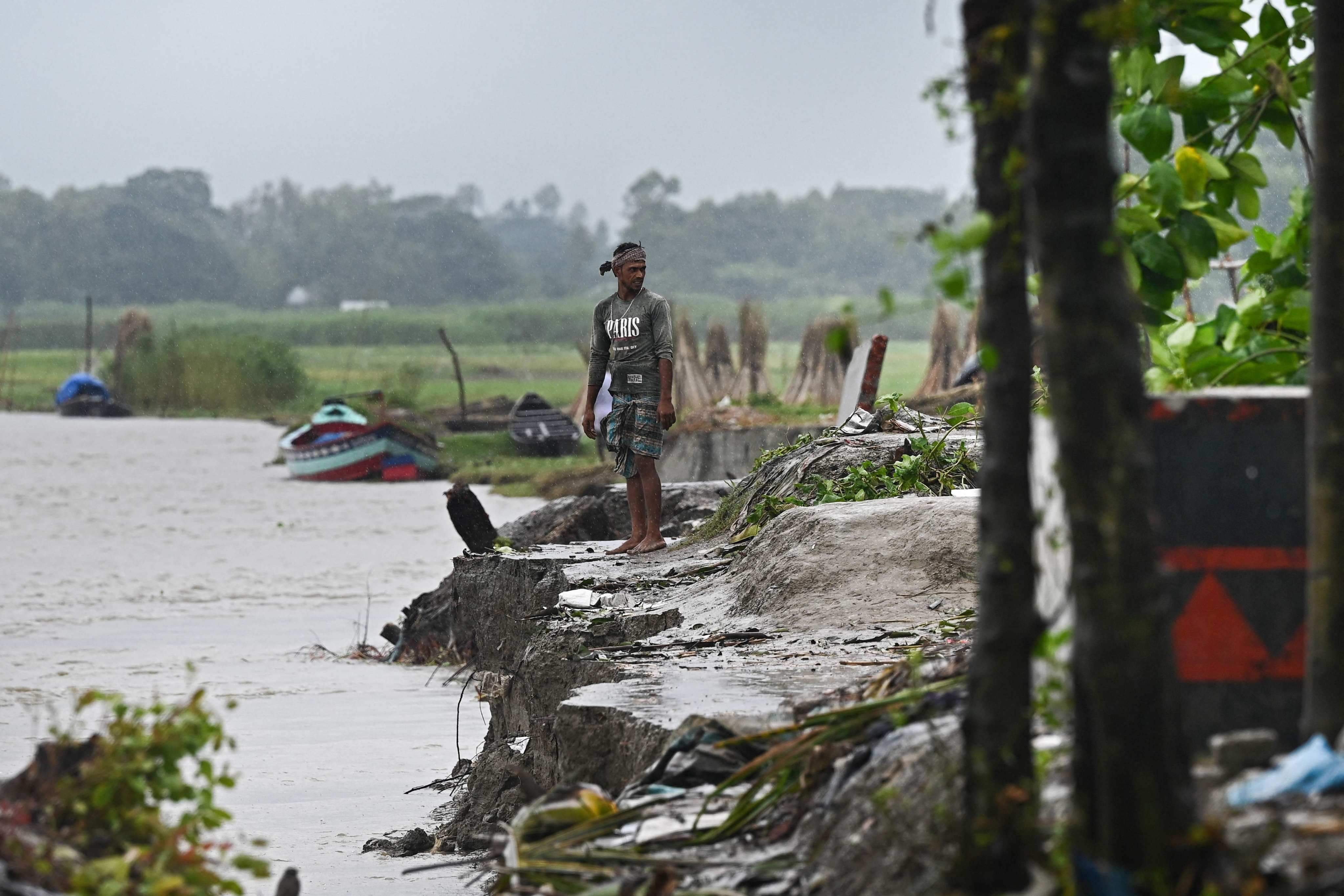
Bangladesh's predicament is part of a broader regional puzzle shaped by competing riparian interests, domestic politics, and the absence of a basin-wide water-sharing mechanism. The 1996 Ganges Water Sharing Treaty between Bangladesh and India was once hailed as a model of transboundary cooperation, although it has faced criticism for failing to guarantee adequate dry-season flows to Bangladesh. The treaty is set to expire in 2026, and negotiations for its renewal still remain uncertain. The interim government has reportedly urged early dialogue, but political transitions and shifting Indian priorities could delay progress. The question is not only whether the treaty will be renewed but also whether it will adapt to our changing climatic, demographic, and geopolitical realities.
The Teesta River, flowing through India's West Bengal and into northern Bangladesh, reflects another unresolved dilemma. Despite years of negotiation, India has not signed the Teesta water-sharing deal due to political resistance from West Bengal. As Bangladesh's northern districts face recurring water shortages, Dhaka has turned to China for help in modernising the Teesta River Management Project. This has raised strategic eyebrows in Delhi, which views it as a sign of Dhaka's deepening alignment with Beijing. Bangladesh, however, insists it is an act of pragmatism, not politics, aimed at managing water scarcity. Nonetheless, Chinese involvement in Teesta, alongside the Yarlung Zangbo megaproject, may transform the Brahmaputra basin into a new frontier of India-China rivalry, with Bangladesh caught in the middle.
Another regional context reinforces the anxieties. In early 2025, India "suspended" the Indus Waters Treaty with Pakistan, an agreement that had endured more than six decades of hostility. That "withdrawal" signals that even long-standing water accords can collapse under geopolitical strain. For Dhaka, this raises critical questions: how durable are the existing water-sharing frameworks? What guarantees exist that upstream commitments will endure when domestic or strategic pressures mount? The Indus precedent suggests that water treaties in South Asia rest on fragile political trust rather than binding institutional mechanisms.
In contrast, China's management of the Lancang-Mekong River, which flows through six Southeast Asian nations, offers valuable lessons. Despite asymmetrical power relations, the LMC framework has established joint monitoring systems, early-warning mechanisms, and basin-level dialogues among member states. The Mekong countries have demonstrated that even with China as the dominant upstream actor, cooperative governance can mitigate tensions and generate mutual benefits. The LMC's focus on data sharing, environmental impact assessment, joint research, and benefit distribution illustrates a pragmatic path towards shared management. While not without challenges, this model shows that cooperation, rather than confrontation, yields better water security for all.
Bangladesh could draw on this experience in several ways. First, it should champion a Brahmaputra Basin Cooperation Mechanism involving China, India, and Bangladesh, modelled loosely on the LMC's institutional structure. Such a platform could facilitate scientific data exchange, coordinate hydrological studies, and develop flood forecasting systems, all of which are essential for climate adaptation. Second, Dhaka should advocate for benefit-sharing arrangements rather than rigid volumetric divisions of water. This could involve joint hydropower development, navigation infrastructure, or ecological restoration projects that generate shared economic gains. Third, Bangladesh could promote environmental diplomacy, emphasising basin-wide ecological health and biodiversity protection as priorities that transcend borders.
Western governments have sometimes expressed concern over China's dam-building spree, citing human rights issues, environmental degradation, and risks to indigenous cultures in Tibet. While these critiques hold some merit, they are largely shaped by strategic considerations. By framing China's projects as environmental threats, Western powers seek to contain Beijing's influence in South Asia. Bangladesh must navigate these competing narratives with caution. It should welcome international support for scientific transparency but resist becoming a pawn in global power rivalries. Its priority must remain securing water flows and resilience for its people.

The interim government has so far adopted a balanced approach, engaging with China for technical cooperation while maintaining dialogue with India over transboundary rivers. BNP and other political parties, meanwhile, criticise India's past unilateralism and call for stronger water sovereignty. Civil society and environmental advocates continue to demand accession to global water conventions and greater scientific openness. In reality, none of these actors can resolve the issue alone. Effective transboundary water management requires long-term political stability and institutional memory, both of which are often disrupted by Bangladesh's polarised politics.
As the Ganges treaty nears expiry and the Teesta project takes shape, Bangladesh's next elected government will need to prioritise water diplomacy as a central pillar of foreign policy. This includes establishing a permanent National Water Diplomacy Council to coordinate inter-ministerial actions, track regional developments, and align environmental, agricultural, and foreign policy goals. The government must also invest in hydrological research, real-time data systems, and satellite monitoring to reduce dependence on foreign information sources.
Crucially, Bangladesh should take the lead in advocating for a South Asian Transboundary Water Cooperation Charter, an umbrella framework inspired by the LMC's cooperative ethos and supported by international partners such as the World Bank and UNESCAP. Such a charter could promote shared research, benefit-sharing principles, and conflict-resolution mechanisms. By linking water management with broader agendas such as energy transition, disaster preparedness, and regional connectivity, Dhaka can transform water from a zero-sum contest into a platform for collective resilience.
Climate change adds further urgency to this mission. Melting Himalayan glaciers, erratic monsoons, and rising sea levels will intensify both floods and droughts in the Brahmaputra and Ganges basins. The future of South Asia's rivers will depend not just on engineering or treaties, but on political imagination, the ability to see water as a shared lifeline rather than a tool of control. The Lancang-Mekong experience proves that even amid asymmetries, dialogue and institutional mechanisms can build trust over time. Bangladesh, positioned at the edge of the delta, must push for the same transformation within its own region.
Professor Sk Tawfique M Haque is director of the South Asian Institute of Policy and Governance (SIPG) at North South University (NSU). He can be reached at tawfique.haque@northsouth.edu.
Md Parvez Hasan Yousuf is a research associate at SIPG at NSU. He can be reached at parvez.yousuf@northsouth.edu.
Views expressed in this article are the author's own.
Follow The Daily Star Opinion on Facebook for the latest opinions, commentaries, and analyses by experts and professionals. To contribute your article or letter to The Daily Star Opinion, see our guidelines for submission.
 For all latest news, follow The Daily Star's Google News channel.
Comments