


Waterway decline demands a smarter logistics strategy, not just dredging

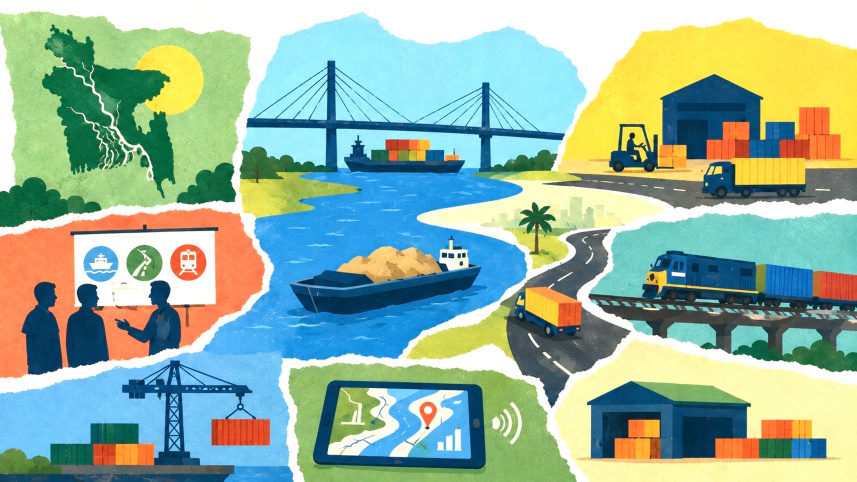
A recent report by this daily, citing concerns raised by the Dhaka Chamber of Commerce and Industry (DCCI), reported that more than 55 percent of Bangladesh’s inland waterways are no longer functional. The DCCI has called for stronger investment in inland waterway infrastructure. The report has rightly renewed attention to one of the country’s greatest natural assets. However, the biggest challenge here is not just the decline of navigable waterways, but the absence of a comprehensive logistics strategy that integrates inland waterways into the national transport and supply chain system.
Bangladesh possesses one of the world’s largest river systems. Public discussions often refer to its historical river network of over 24,000 kilometres. Despite that, roads continue to carry the overwhelming majority of domestic freight. This paradox deserves greater policy attention. But policymakers must keep in mind that river morphology has continuously evolved through sedimentation, erosion, channel migration, and human interventions. Many historical channels can no longer support commercial navigation, nor is restoring them all technically or economically realistic.

Today’s transport planning should be based on operational realities. According to officials at the Bangladesh Inland Water Transport Authority (BIWTA), the country has approximately 8,200 kilometres of navigable waterways during the monsoon, which shrinks to around 6,200 kilometres in the dry season. Only about 1,300 kilometres qualify as Class I waterways, capable of accommodating larger commercial vessels. These commercially navigable corridors, not the historical river geography, should form the basis for future investment and policy decisions.
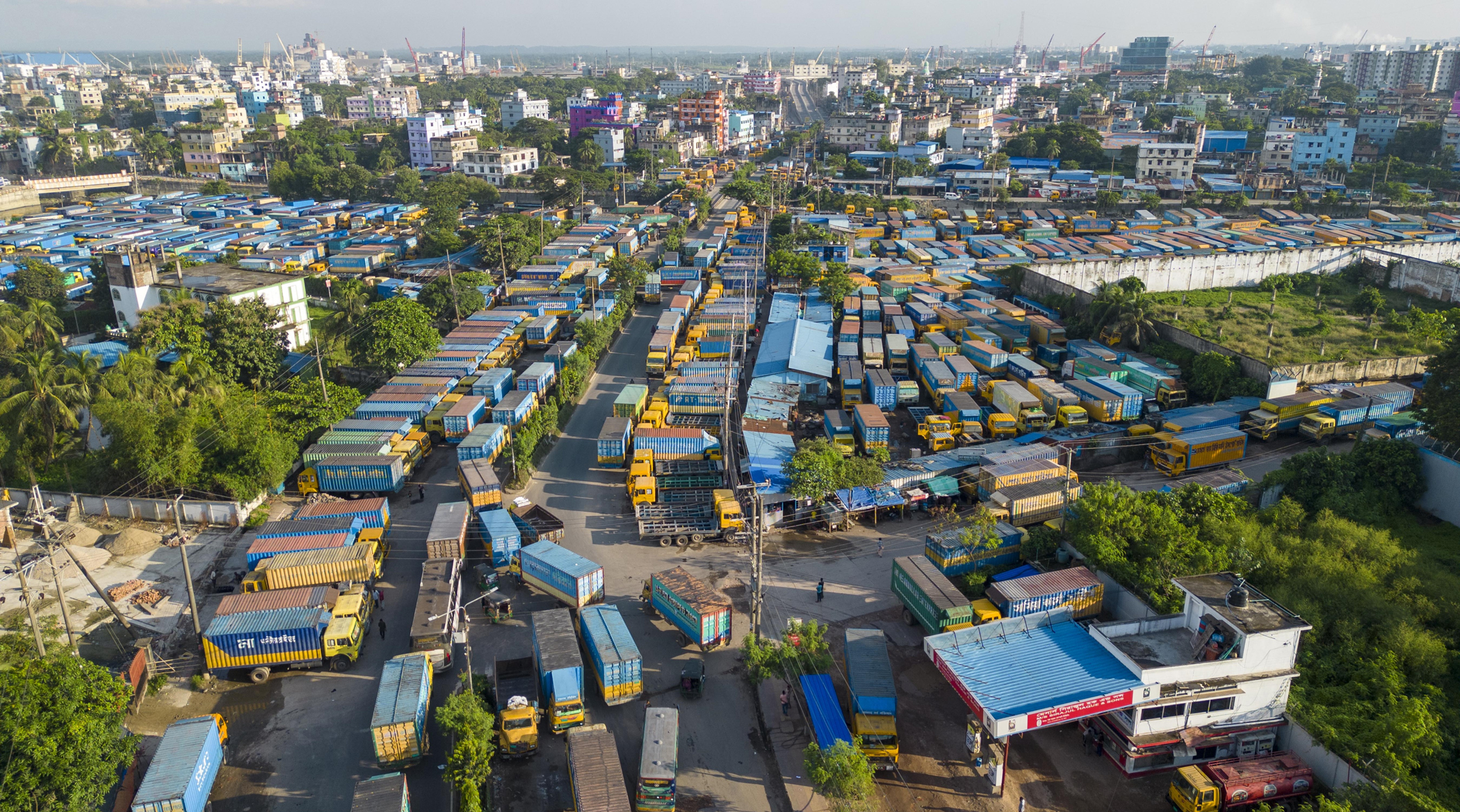
This distinction matters because dredging, although essential, is only one part of the solution. Dredging creates navigation capacity, not logistics demand. Cargo moves because industries produce, farmers harvest, ports generate trade, and consumers create demand. Rivers merely provide one transport corridor within a much larger logistics ecosystem. Without sufficient cargo generation, efficient terminals, and competitive transport services, even well-maintained waterways will remain underutilised. To meaningfully measure the performance of inland waterways, policymakers should look into the volume of cargo transported, logistics costs reduced, transport reliability improved, emissions avoided, and economic activity generated through strategically developed river corridors.
The reality that inland water transport never operates in isolation deserves equally serious consideration. Every shipment transported by river still depends on trucks at both ends of the journey. Goods leave factories by road, arrive at river terminals, move by vessel, and then continue by road to warehouses, factories or consumers. Efficient first-mile and last-mile connectivity determines whether inland water transport becomes commercially attractive.
Hence, rather than competing with roads, inland waterways should complement them within an integrated multimodal transport system. Roads provide flexibility and door-to-door accessibility, while waterways offer advantages for suitable cargo types, bulk commodities, containers and corridors where economies of scale can be achieved. The objective here is bigger than merely moving cargo from one mode to another indiscriminately—it is to use each mode where it performs best.

Germany, Belgium, and the Netherlands have built successful river transport systems on this model. Their competitive advantage lies in the seamless integration of inland waterways with seaports, railways, logistics parks, industrial clusters, and digital freight management systems. Cargo owners choose inland water transport because the entire logistics chain functions efficiently. Bangladesh has invested significantly in dredging, river terminals, and navigation infrastructure, but logistics integration has not advanced at the same pace in the country. Inland waterways continue to be planned primarily as a navigation sector, rather than as a component of the national logistics network.
Digital navigation infrastructure deserves priority as well. Maintaining navigable channels is no longer only about periodic hydrographic surveys or dredging. Modern inland navigation is increasingly becoming dependent on cloud-based hydrographic information systems capable of providing near real-time information on channel depth, available draft, shoaling, water levels, and navigational constraints. Integrated with river information services, such systems would enable vessel operators, terminal managers, and cargo owners to plan voyages more safely, reduce delays, improve fleet utilisation, and enhance supply chain reliability. In the digital era, hydrographic information should be recognised as critical logistics infrastructure.
Bangladesh’s National Logistics Policy 2025 provides an opportunity to reposition inland waterways within a broader multimodal transport strategy. Future investments should focus on commercially significant navigation corridors linked with seaports, inland ports, railways, economic zones, and industrial clusters, rather than attempting to restore every historical river route. Modern river terminals should evolve into multimodal logistics centres equipped with container handling facilities, warehousing, customs services, digital information exchange, and efficient road and rail connectivity. The country should also progressively establish a national cloud-based hydrographic data platform integrated with river information services and future port community systems so that reliable navigational information becomes available to authorised users in near real time.
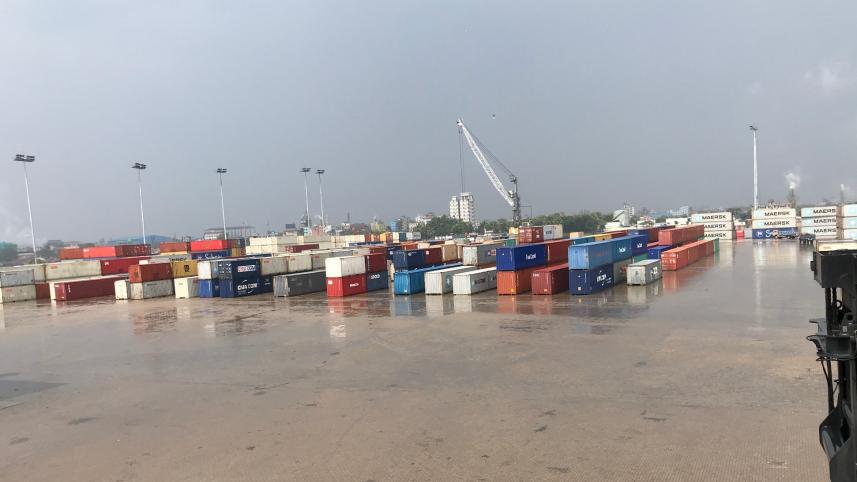
Equally important is stronger institutional coordination. Inland waterways intersect with the responsibilities of multiple ministries and agencies responsible for shipping, ports, roads, railways, customs, trade, and planning. Without integrated planning, digital interoperability and coordinated governance, even substantial infrastructure investments may deliver only a fraction of their potential economic value.
The question is no longer how many kilometres of historical waterways once existed in the country, nor how many kilometres can be dredged every year. The real challenge is how effectively commercially navigable waterways can move containers, agricultural products and industrial inputs and export cargo while reducing logistics costs and strengthening national competitiveness. Just as highways today rely on intelligent traffic management systems, inland waterways require intelligent navigation information systems alongside physical infrastructure. The future of river transport will depend not only on dredgers and terminals but also on multimodal integration, digital navigation and coordinated logistics planning. A logistics strategy that enables its rivers to power the economy is what Bangladesh needs right now.
Ahamedul Karim Chowdhury a maritime, logistics and supply chain policy analyst, is former head of ICD Kamalapur and Pangaon Inland Container Terminal.
Views expressed in this article are the author's own.
Follow The Daily Star Opinion on Facebook for the latest opinions, commentaries, and analyses by experts and professionals. To contribute your article or letter to The Daily Star Opinion, see our guidelines for submission.
 For all latest news, follow The Daily Star's Google News channel.
Comments