


A war in the Gulf, an empty wallet in a Bangladeshi village

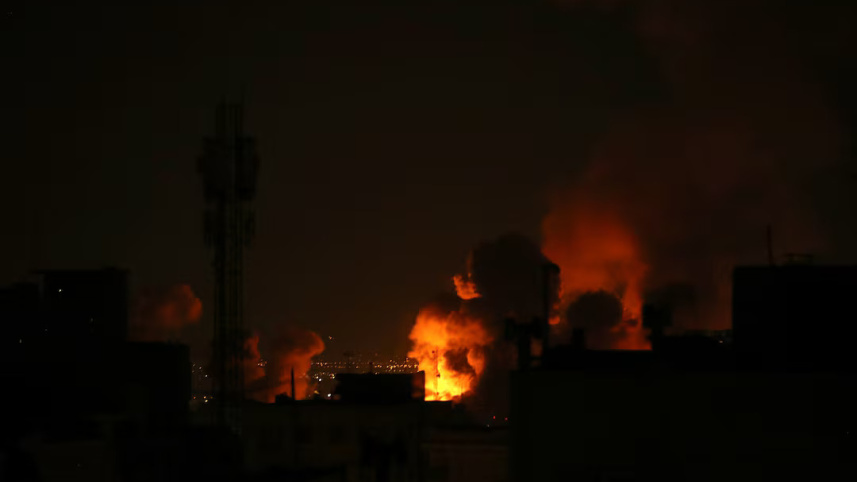
Just over two weeks after Bangladesh voted on February 12, 2026, the Middle East entered open conflict. On February 28, the United States and Israel launched major strikes on Iran. Media reports confirmed the death of Supreme Leader Ayatollah Ali Khamenei in the early phase of escalation. Oil markets moved immediately. The Strait of Hormuz, the narrow corridor through which roughly one-fifth of global oil and LNG supply passes, became a flashpoint. Insurance premiums on vessels transiting the Persian Gulf spiked. Shipping companies began rerouting or suspending sailings, while airports in the region shut down. And across the labour-sending corridors of South Asia, recruitment agents stopped picking up the phone.
Bangladesh is not a participant in this war, but it is a dependent.

The exposure runs through two channels hitting simultaneously. The first is fuel; the country meets most of its fuel demands through imports. When oil prices rise, transport and food costs follow. It is already carrying elevated inflation from the post-pandemic years and the exchange rate pressures of the past few years. There is very little cushion left. The second channel is remittances. Bangladesh received $30.32 billion in remittances in FY2024-25, the highest figure in the country's history, with a substantial share coming from Saudi Arabia, the UAE, Qatar, Kuwait and Oman. Several of those countries are directly impacted by this conflict. When Gulf employers freeze hiring, when construction contracts stall, when workers are stranded at closed airports, the remittance flow does not stop immediately. It slows first, and then, for many families, it stops.
For households that have financed migration through loans at high rates of interest from informal lenders, a delayed transfer becomes more than a mere inconvenience—it becomes a default risk. In Bangladesh, migration loans frequently run to several lakh taka, taken against the expectation of regular transfers. When those regular transfers get disrupted, interest accumulates and assets put up as collateral—land, jewellery, livestock—come under threat. The financial architecture of an entire household can unravel within two or three missed payment cycles.
Inside those households, it is women who hold the structure together. And it is women who are first to feel it give way.
In remittance-dependent families, women manage daily finances. They track what comes in, what is owed, what can wait. They negotiate with shopkeepers for short-term credit, decide which school fee gets paid this month and which gets deferred. They reduce their own food intake before reducing anyone else's. This is documented consistently across household finance research in Bangladesh as well as across South Asia. Women are the shock absorbers of household economies, absorbing in silence because the alternative is admitting that things are worse than anyone wants to say.
This is the moment when Bangladesh's mobile financial services (MFS) story deserves a harder look.
Most women in remittance-dependent households do have an MFS account. The problem is, for many of them, their MFS account is the only formal financial instrument they own. They don’t have a savings product, nor a loan tied to their name. No credit history a lender could act on. Just a mobile wallet that receives transfers and disburses cash.
When that wallet is full, it functions. When it stops receiving transfers, it is simply an empty account with nothing behind it.
A household where the primary earner has a formal bank account, borrowing history, and a credit relationship has options under shock. It can draw on savings, restructure debt, or access emergency credit. The woman with only an MFS wallet and no meaningful transaction history has one option: spend less. And she will spend less on herself first.
This is not a story about women being excluded from mobile money, but about mobile money being celebrated as inclusion while the deeper infrastructure of financial resilience, savings, credit, insurance etc. remain out of reach. The SIM card and the wallet are there. The scaffolding that makes those tools useful under stress is not.
There is another layer. Women are almost entirely absent from the mobile money agent network. According to a Transparency International Bangladesh analysis, fewer than one percent of MFS agents are women, even as women now hold roughly 42 percent of all MFS accounts in the country (as of December 2024). In conservative or rural areas, approaching a male agent to withdraw cash is not always straightforward. That friction shapes whether a woman can act on her own account or must depend on someone else. Dependency does not require anyone to take the phone away. It only requires that using the account independently feels difficult or watched.
External shocks do not create these conditions. They strip away the circumstances in which those conditions could be ignored.
What happens first in this crisis will not be captured in forex data or inflation projections. It will be a woman in Kishoreganj or Sylhet or Chattogram, whose husband's transfer has not arrived, who has an MFS account with nothing in it, who owes money to an informal lender, who cannot walk into a bank and ask for a bridge loan because she has no credit history and no collateral in her own name, and who will quietly eat less and say nothing about it to the children.
That is the transmission mechanism that never appears in the balance of payments data.
Bangladesh cannot stop this war. But it is long past time to stop describing mobile wallet registration as financial inclusion and start asking what happens when the wallet is empty. Savings products designed for remittance-receiving households, credit histories built through MFS transaction data, insurance tied to migration and income disruption, female agents in high-migration districts—these are not aspirational. They are the difference between a woman who can withstand a shock and one who simply absorbs it.
The region is on fire. The transfers are slowing. And somewhere in the gap between the remittance data and the household reality, women are already doing the arithmetic. They have been doing it quietly for years. The least this country owes them is the infrastructure to do it with something in their hands.
Tasnuba Sinha is senior initiative manager at BRAC Institute of Governance and Development (BIGD.
Views expressed in this article are the author's own.
Follow The Daily Star Opinion on Facebook for the latest opinions, commentaries, and analyses by experts and professionals. To contribute your article or letter to The Daily Star Opinion, see our guidelines for submission.
 For all latest news, follow The Daily Star's Google News channel.
Comments