


The champions Bangladesh keeps underfunding

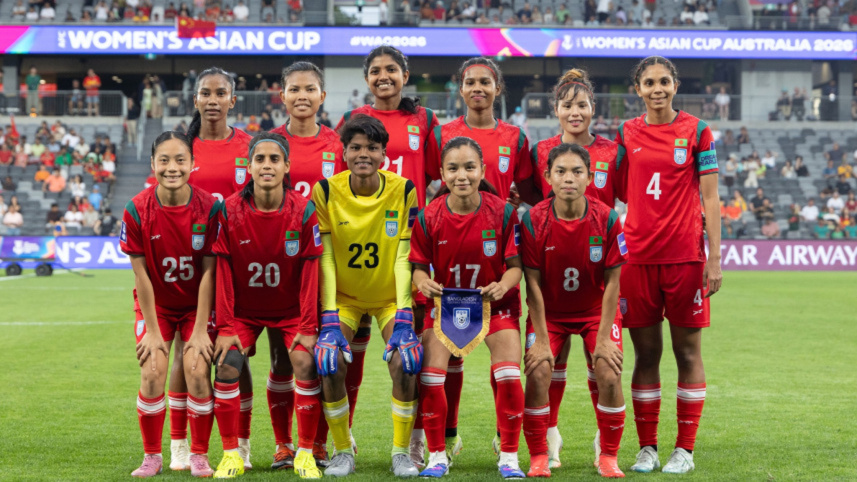
In July last year, at a stadium in Yangon, 11 Bangladeshi women beat hosts Myanmar, a side ranked 73 places above them, and became the lowest-ranked team in history to qualify for the AFC Women’s Asian Cup. Ranked at 128th in the world, they did what no Bangladesh senior team, men or women, had managed since the men reached the Asian Cup in 1980. Ritu Porna Chakma scored the goals.
The celebration was short, just like the budget. This is the pattern. When Bangladesh lets its women play—and “lets” is the right word, since serious investment in women’s football and cricket barely predates 2010—they win things that men have not. Then, we hand them a fraction of the pay, leave their prize money unpaid for the better part of a year, and make sure an official is standing in the middle of the photograph.

Look at the ledger. The men’s football team has won the SAFF Championship once, in 2003; the women have won it twice in a row: 3-1 in Kathmandu in 2022 and 2-1 in the same stadium in 2024. Unfortunately, the men’s cricket team has never won the ACC Asia Cup, having lost three finals. The women’s cricket team won theirs in 2018, chasing down India off the final ball in Kuala Lumpur, the first major continental trophy in the country’s history, men’s or women’s.
I concede the obvious objection. The women’s regional fields are smaller and weaker than the men’s Asia Cup, which features real giants, and the women’s record against the continent’s elite remains thin. No one is claiming parity with the standard. Nonetheless, the Indian women’s cricket team was among the top three in the rankings when Bangladesh beat them in the Asia Cup. The claim is narrower and harder to dodge: taka for taka, the women have returned more silverware than the men. Backing them has been the best bet Bangladeshi sport has made this century, and we placed it with our eyes shut.
The numbers tell the rest of the story. When the Bangladesh Football Federation (BFF) brought in central contracts in 2023, rightly praised as the most generous for women in South Asia, the top tier still earned only Tk 50,000 a month, so far below the men that the High Court issued a ruling asking why women footballers should be paid only “a fraction” of men’s pay. In cricket, the contrast is its own argument: the men collected a Tk 3 crore bonus for winning a single series against Pakistan, a trophy-less campaign, while the SAFF-winning women waited. Nine months after the 2024 title, the promised Tk 1.5 crore prize money was still unpaid, and players walked floor to floor inside the federation building begging for Tk 10,000 match fees, only to be turned away. One put it exactly: the amount is not the issue; it’s the mentality of not paying.
Where does this mentality originate? Partly from an old inheritance. Sports arrived in Bengal as a male project, a way for men to answer the empire’s insult on the field. Women were not included in the frame. Independent Bangladesh kept the frame and changed nothing within it. For decades, women’s sports were treated as neither a source of national pride nor a profession, just an awkwardness to be managed.
You can still hear it. The girls of Kalsindur, a remote bordering village in Mymensingh which has supplied a remarkable share of the national side, were mocked by their neighbours for running in shorts, and their teacher had to plead with parents to let them play. Their story now sits in the national textbook under the title “The Unbeaten Girls.” The country teaches its triumph to school children and underpays the women who lived it.
There is a darker thread that the federations would rather leave alone. Early last year, 18 footballers—16 of them SAFF winners, led by captain Sabina Khatun—refused to train, submitting a signed complaint that accused the head coach of mental harassment and body-shaming. In cricket, former captain Jahanara Alam’s complaint against a team manager over an incident at the 2022 Women’s World Cup ended in a ban, but only in February 2026, after an independent inquiry found prima facie evidence of misconduct and harassment.
This is what neglect looks like up close: not just small cheques but slow justice and a standing assumption that women who win should be grateful to be on the pitch at all. The solution is not a mystery. Pay what is promised on time. Build women’s leagues that keep collapsing for want of will. Treat harassment complaints as emergencies. Put the players, not the patrons, in the front row. Until then, here is the maths we continue to refuse to read: our most decorated footballers are female; our first continental cricket trophy was won by women’s team; the best return this country has ever earned on a sporting taka was earned from the athletes it respects the least.
Farah Mahboob is deputy manager at Social Innovation Lab in BRAC. She can be reached at fmahboobarc@gmail.com.
Views expressed in this article are the author's own.
Follow The Daily Star Opinion on Facebook for the latest opinions, commentaries, and analyses by experts and professionals. To contribute your article or letter to The Daily Star Opinion, see our guidelines for submission.
 For all latest news, follow The Daily Star's Google News channel.
Comments