


Will Europe's heatwave finally spur climate justice?

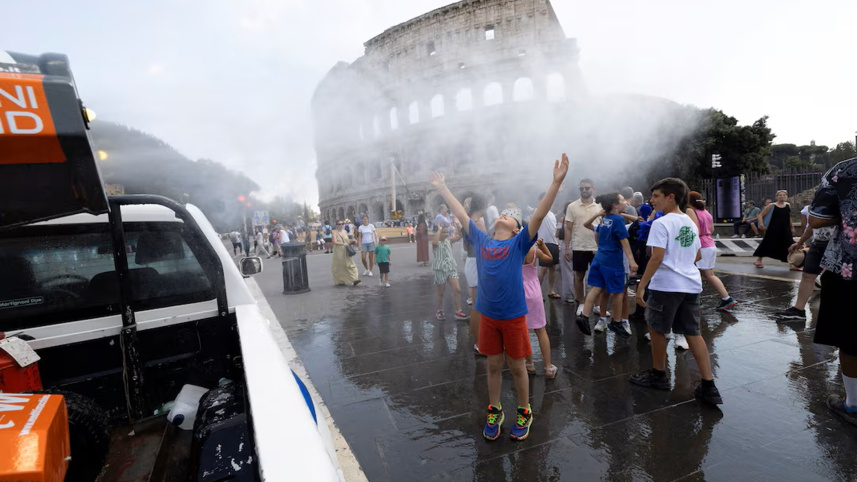
Europe is melting, and your heatwave reservation is now confirmed at the Climate Crisis Club. For years, those of us from climate-vulnerable countries have perfected the art of explaining that climate change is not a future event. It is a present inconvenience that occasionally washes away your home, destroys your harvest, floods your city, or rearranges your coastline. We have attended conferences, panels and summits where graphs climbed steadily upwards while delegates nodded solemnly before returning to air-conditioned hotels. We have produced reports, negotiated communiqués, and invented increasingly creative ways to say, “This is urgent.”
Nothing, however, has captured global attention quite like Europeans discovering that 40 degrees Celsius is, in fact, unpleasant. One almost wants to send a sympathy card. Not because the suffering isn’t real, though—it absolutely is. Wildfires, droughts, infrastructure failures, and heat-related deaths are tragedies regardless of where they occur. Climate change does not become less catastrophic because it reaches Paris instead of Patuakhali. The atmosphere has never cared much for international borders; carbon dioxide, irritatingly egalitarian, ignores GDP per capita.

But there is an irony that is difficult to ignore. The countries that industrialised first, emitted the most, and built centuries of prosperity on fossil fuels are now discovering what much of the Global South has been trying to explain for decades. Developed nations have enthusiastically endorsed ambitious declarations, applauded historic agreements and delivered eloquent speeches about shared responsibility. Then comes the awkward discussion about climate finance, loss and damage, technology transfer, or adaptation funding, and suddenly everyone develops the fiscal flexibility of a concrete pillar.
Take the annual climate conferences. Every year, thousands of delegates fly across continents to discuss emission cuts. The coffee is sustainably sourced. The reusable tote bags are impeccable. The panel discussions feature phrases like “transformational pathways” and “inclusive resilience,” which sound deeply impressive until you realise they are often substitutes for the considerably less glamorous question, “Who is paying for this?” That question has haunted international climate diplomacy for years. Developing countries have repeatedly argued that climate justice requires more than inspirational speeches—it requires money, technology, and meaningful partnerships. After all, countries that contributed the least to historical greenhouse gas (GHG) emissions are disproportionately paying the highest price. Bangladesh contributes only a tiny fraction of global emissions, but it ranks among the countries most exposed to sea-level rise, cyclones, salinity intrusion, and climate displacement. Across Africa, Asia and the Pacific, communities are adapting to crises they did little to create.
Meanwhile, climate finance commitments have developed an unfortunate habit of sounding more impressive in press releases than in bank accounts. The promise by developed countries to mobilise $100 billion annually for developing nations became something of a diplomatic ghost story. Everyone heard about it. Everyone refers to it. But finding it in reality has proven considerably more difficult. Even where funding has increased, developing countries have frequently pointed out that too much arrives as loans rather than grants. There is something almost poetic about asking countries already paying for someone else’s emissions to borrow money to survive them. Imagine setting fire to your neighbour’s garden, then generously offering them a loan to buy a hose.
This is where the European heatwave becomes politically significant. It strips away the comfortable illusion that climate change is someone else’s humanitarian problem. Suddenly, governments are discussing heat-resilient infrastructure, worker protections, wildfire preparedness, hospital capacity, and water security with an urgency that climate activists have been requesting for years. It turns out that once vineyards begin suffering, train tracks buckle under extreme temperatures, and holiday destinations become fire zones, adaptation moves rather swiftly up the political agenda. The danger, however, is that shared suffering does not automatically produce shared responsibility. Experiencing climate impacts is not the same as addressing climate injustice. The test is not whether developed countries acknowledge that climate change exists. That debate is largely over. The real test is whether this new reality finally translates into stronger emission reduction, predictable climate finance, and genuine support for countries facing existential threats.
That support cannot remain an act of charity dressed up as generosity. It is a matter of responsibility rooted in international law, economics, and simple arithmetic. Historical emissions matter because GHGs accumulate over time. The industrial revolutions that fuelled extraordinary prosperity across much of Europe and North America also filled the atmosphere with carbon that continues warming the planet today. Climate justice has never argued that contemporary citizens should inherit personal guilt for decisions made centuries ago. It argues something much more practical: those who possess greater resources and bear greater historical responsibility should contribute more towards solving a collective problem. That principle should not be controversial. We already apply it elsewhere. Tax systems recognise differing capacities to pay. Insurance reflects differing levels of risk. Disaster relief is often directed towards those with the greatest need. But when climate negotiations arrive at the same conclusion, the conversation somehow becomes politically inconvenient.
Perhaps the heatwave will change that. Not because suffering creates virtue, but because experience sometimes succeeds where decades of diplomacy have failed. There is a profound difference between reading about record temperatures and cancelling school because classrooms have become dangerously hot. There is a difference between discussing adaptation in theory and watching forests burn outside your own city. Empathy occasionally arrives disguised as inconvenience. Climate activists have long insisted that climate change would eventually become impossible to outsource. There would come a point when wealth could reduce risk but not eliminate it, and when borders would prove remarkably ineffective at stopping heatwaves, droughts or smoke.
That moment appears to have arrived. The climate crisis has finally become an equal-opportunity disruptor. The responsibility for addressing it, however, remains profoundly unequal. Until developed nations match their increasingly eloquent concern with equally ambitious action, the world’s hottest export will continue to be irony. The planet, after all, has never asked for sympathy. It has been asking for accountability.
Barrister Noshin Nawal is a columnist for The Daily Star. She can be reached at nawalnoshin1@gmail.com.
Views expressed in this article are the author's own.
Follow The Daily Star Opinion on Facebook for the latest opinions, commentaries, and analyses by experts and professionals. To contribute your article or letter to The Daily Star Opinion, see our guidelines for submission.
 For all latest news, follow The Daily Star's Google News channel.
Comments