


For seven years, the greatest World Cup scorer was a woman. Did we know her name?

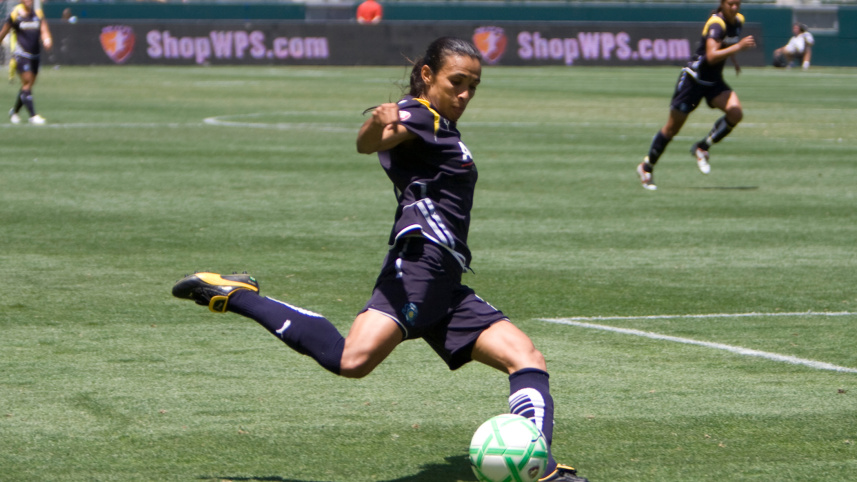
In June 2019, on the football field of Stade Océane in Le Havre, France, Marta Vieira da Silva stood before the cameras after Brazil’s elimination from the FIFA Women’s World Cup and wept. Until last week, before Argentine football player Lionel Messi scored his 18th goal in World Cup tournaments, Marta held the all-time record for goals in World Cup history, men’s or women’s, with 17 strikes across five tournaments. Her score surpassed Pelé, Miroslav Klose, and every other name the sport considers legendary. And she, the six-time FIFA World Player of the Year, stood in the stadium with tears running down her face and pleaded: “Women’s football depends on you to survive, think about it, value it more. We’re asking for support, you have to cry at the beginning and smile at the end.” For seven years, the record was hers, and the world looked elsewhere. Last week, when Messi broke it, her name appeared in the coverage as context, as backstory, as the number he had to beat.
That speech was a political demand from one of the greatest players the game has produced for a game the world had decided not to fully watch, fund, or celebrate. The FIFA Women’s World Cup exists. It produces breathtaking football. Its players carry records that would make them immortal in any other context. We have been asking the wrong question. Why is women’s football less popular? Rather, the question should be: how that lesser popularity was constructed, and by whom.


In December 1920, 53,000 people packed into Goodison Park to watch a women’s football match, while another 14,000 were turned away at the gate. Within a year, the English Football Association had banned the women’s game from every affiliated ground in England, declaring it “quite unsuitable for females.” The ban lasted 50 years. The men’s World Cup, meanwhile, began in 1930 and ran uninterrupted, building its stadiums and its myths and its commercial machinery across six decades in which the women’s game was deliberately, institutionally, kept off the pitch.
The financial gap makes this concrete. The 2023 Women’s World Cup generated $570 million, 9 percent of the $6.1 billion generated by the 2018 men’s tournament. The prize money for women players was $110 million, while that for men was $440 million. When FIFA separated broadcast rights for men’s and women’s WC in 2023 for the first time, European broadcasters offered less than 5 percent of what they paid for the men’s rights. Italian broadcasters offered less than 1 percent. These were not measurements of audience interest. They were self-fulfilling predictions, rooted in a prior refusal to build that audience.
Broadcasting fewer women’s football matches produces smaller audiences. Smaller audiences are then cited as the reason to broadcast less women’s football. The interest that never had the conditions to grow is recorded as proof of natural disinterest or indifference towards women’s football. That indifference is constructed, slowly, by decades of scheduling decisions and budget cuts and highlight packages that run 90 seconds after the men’s game has had its full broadcast. The girl who never watches a match does not often make a conscious choice. The choice was mostly made for her, upstream, long before she was born.
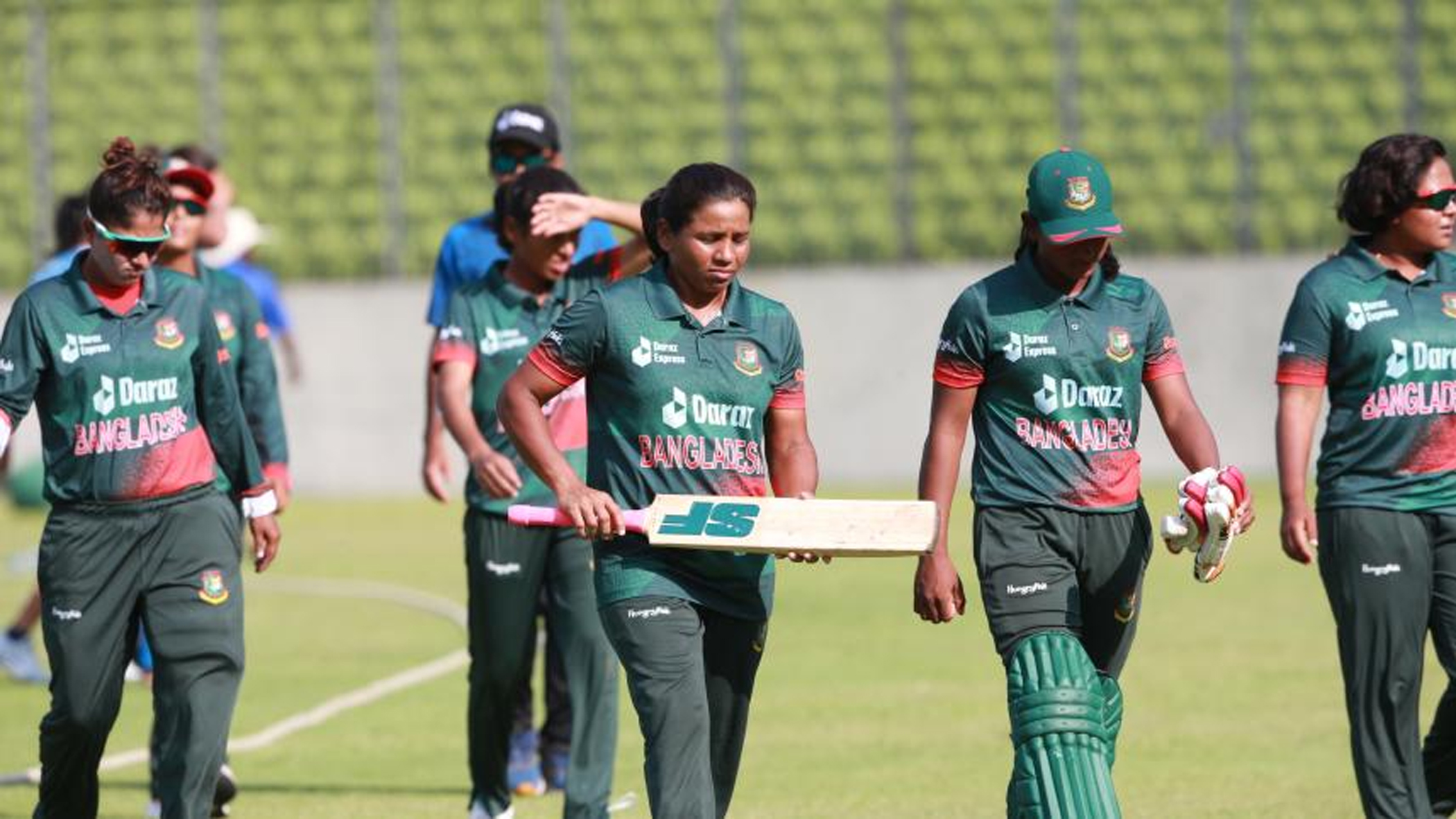
During the 2023 FIFA Women’s World Cup, 53.9 million people in China watched their team lose to England in the group stage match, not even the knockouts. In Australia, 11.15 million watched the Matildas play England in the semi-final. That is more than anyone had ever watched on Australian television. Not a men’s final. Not the Olympics. A women’s football semi-final. Commercial partners more than doubled between 2019 and 2023, from 12 to 30.
This returns us to Marta. Her 2019 speech, delivered in tears, looking straight into the camera, asking the next generation to want it more, train more, sacrifice more, was also a statement of exhaustion: the exhaustion of a player who had given everything to a game that football’s governing bodies had spent a century refusing to take seriously. That her name does not occupy the same space in the global imagination as Messi or Ronaldo is not a verdict on her greatness; it is a verdict on a system designed, long before she was born, to ensure that women’s football would always begin from behind.
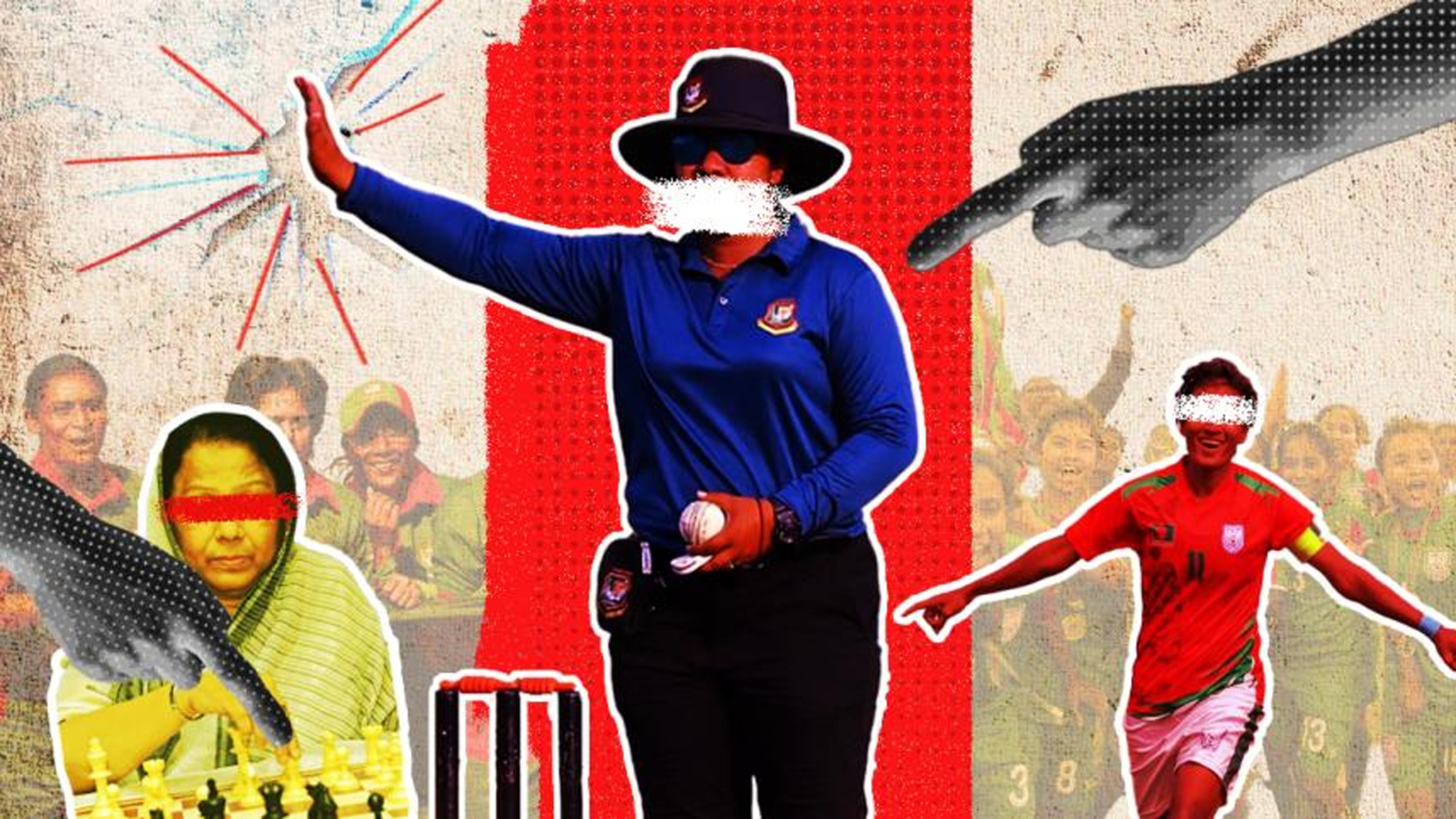
I think about this when I think about Bangladesh. Our women’s national football team has consistently outperformed the men’s side in recent SAFF Championship competitions. Sabina Khatun has become a regional icon whose achievements, in a fairer media environment, would be household knowledge. And still coverage remains sparse, Bangladesh Football Federation resources are heavily skewed towards the men’s game, and training facilities for women players fall far short of what their performances deserve. We celebrate victories briefly, then return to structural neglect. When Bangladeshi girls do not see women’s football on prime-time television, when the coaches lack proper grounds, when the federation treats women players as an afterthought, they are not just experiencing market forces, they are experiencing the downstream consequences of institutional choices made across generations.
The FIFA Women’s World Cup is growing. Average attendance has more than doubled in three decades, from 1991 to 2023. Netflix has secured US broadcast rights for 2027 and 2031. Brazil will host the next edition, the first time South America welcomes the women’s tournament. These are genuine gains. But trajectory is not justice, and growth under structural inequality is not equality. FIFA has still not formally confirmed prize money parity for the 2027 women’s tournament. The institutions that enforced exclusion for half a century are still the ones deciding the pace of change.
Marta asked the world to cry at the beginning so it could smile at the end. The beginning has lasted over a century. The question now is whether FIFA, national federations, broadcasters, and publics, in Bangladesh and globally, are willing to do the structural work that no individual player, however extraordinary, can do alone. Simply admiring Marta will not bring change. We need to build the world her words demanded.
Nur Nishat Anjum is researcher at Department of Anthropology of the University of Dhaka.
Views expressed in this article are the author's own.
Follow The Daily Star Opinion on Facebook for the latest opinions, commentaries, and analyses by experts and professionals. To contribute your article or letter to The Daily Star Opinion, see our guidelines for submission.
 For all latest news, follow The Daily Star's Google News channel.
Comments