


Follow the building code strictly
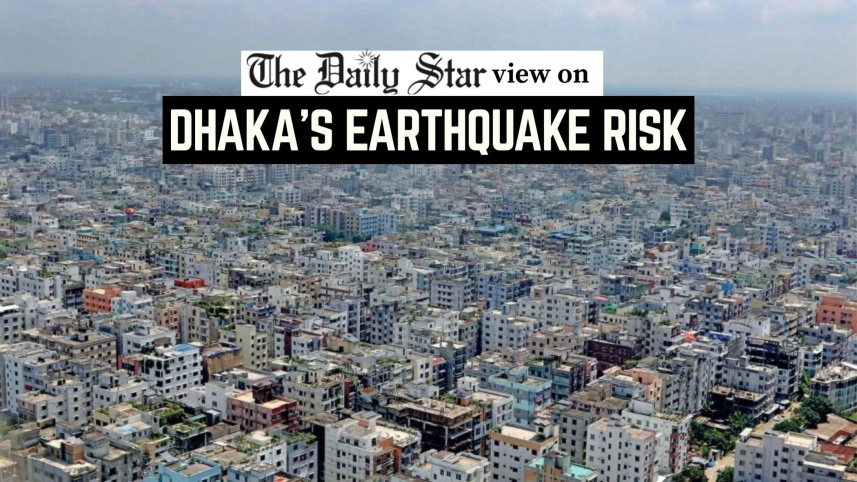
As Dhaka has expanded over the last couple of decades, more and more structures have been built without taking into account the surrounding environment. A report by this daily highlights a recent study by Rajuk and Buet, which shows that about 55-60 percent of the city falls within the red and magenta zones of its liquefaction hazard map. Given the recent devastating earthquake in Venezuela, and many earthquake incidents in Bangladesh itself over the past several months, this finding is alarming.
Dhaka’s particular vulnerability in the event of a major earthquake would be due to its soil profile. Within the 1,528 square kilometres under Rajuk’s jurisdiction, Buet researchers found that more than half the area is highly susceptible to soil liquefaction during a major tremor. Simply put, the city’s soil profile is incompatible with the dense and unplanned way in which it has been expanded. Moreover, around 65 percent of Dhaka reportedly stands on water-saturated soil on marshlands, floodplains, abandoned channels, and low-lying basins. Experts opine that seismic waves can become amplified in former wetland zones. Meanwhile, developers reportedly avoid conducting proper soil treatment before construction in order to avoid higher costs. As a result, what we have now is a capital city where about 90 percent of the filled areas rely solely on piles without improving the surrounding soil.

All this reeks of a dangerous lack of regulatory oversight on the part of Rajuk, for failing to strictly enforce the Bangladesh National Building Code (BNBC). A 2019 report by this daily revealed that over 95 percent of structures under Rajuk’s jurisdiction had been built without building approval. Additionally, even though a soft soil hazard map has been prepared, Rajuk has yet to incorporate it into the Detailed Area Plan (DAP).
Recent reports of the government’s earthquake preparedness efforts, including a plan to establish 445 earthquake-safe shelters in Dhaka and ready 100,000 volunteers in and around the capital, are reassuring. Experts have said that there is no cause for undue alarm over recent quakes, as no fault lines capable of producing major tremors have been identified in the area. But the fact remains that the red zone areas in our unsustainably built capital could suffer severe ground failure during a high-magnitude earthquake.
We urge the government to seek accountability from the relevant ministry and authorities for allowing unbridled development to go on in Dhaka without considering its impact on the surrounding environment. The DAP must be updated to include the latest soft soil hazard map, and all buildings must be constructed in strict accordance with the BNBC. We must seek ways to reduce the impact of a major earthquake in Dhaka, should it ever occur.
 For all latest news, follow The Daily Star's Google News channel.
Comments