


The case for banning paraquat in Bangladesh

A landmark study published in the American Journal of Tropical Medicine and Hygiene, led by Dr Fazle Rabbi Chowdhury and 29 co-investigators, deserves the attention of every policymaker, physician, regulator, and farmer in Bangladesh. Published in May 2026, it drew on more than a decade of hospital data from ten of Bangladesh’s largest tertiary hospitals, covering over 65 percent of the population. What they found is really terrifying!
Paraquat poisoning, once a rare curiosity in Bangladeshi hospital wards, has exploded from a single reported case in 2013 to nearly 500 cases in a single year by 2024, with a case fatality rate of 43 percent, meaning that for every ten people who swallow this herbicide, more than four will die, often in agony without any specific antidote to save them. Their finding fills a dangerous and long-standing gap in our public health knowledge, providing policymakers with solid Bangladesh-specific evidence of the human cost of a chemical that many countries have already banned.

Paraquat is a dipyridylium compound sold commercially around the world since 1962 under names like Gramoxone. Its danger lies in the lack of an antidote and acute toxicity—lethal in tiny amounts, capable of killing a healthy adult within hours to weeks. This has made it one of the world’s most notorious agents of both accidental and intentional self-poisoning. The scale of fatality documented is sobering. Bangladesh’s paraquat imports rose from just over 53 tonnes in 2013 to nearly 4,700 tonnes by 2023—an almost hundredfold jump in a decade. Poisonings and deaths rose proportionally as imports rose: the year 2023 alone saw 567 reported cases and 135 deaths across the study hospitals, the highest of the study period.
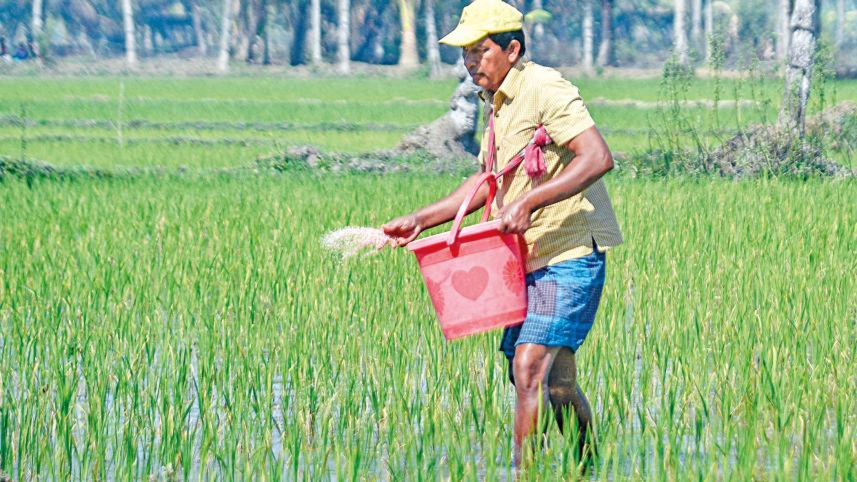
Although paraquat is marketed as an agricultural input, the demographic profile of the victims reveals a worrying story: farmers made up only 14 percent of the poisoned patients; students (38 percent) and homemakers (25 percent) were far more affected. Nearly four in five patients were between 12 and 30 years old, and two-thirds came from rural areas, where the herbicide is stocked in household stores in unlabelled bottles and easily within reach during moments of personal crisis. The clinical picture is also shocking: around 71 percent of poisoned patients developed the tell-tale “paraquat tongue” symptoms. This pattern is seen again and again worldwide—a chemical bought for the field ends up being used inside the home in despair.
The economic, psychological and social burden to families of paraquat poisoning is enormous. Every paraquat poisoning case requires intensive care, oxygen support, dialysis, and repeated laboratory monitoring. Nearly 8 percent of all patients needed hemodialysis, rising to over 22 percent among those who eventually died. Multiplying this by the several hundred cases now reaching hospitals each year clearly showed the substantial effects on Bangladesh’s public health infrastructure. Furthermore, the psychological and social costs are rarely discussed in policy circles. Because there is no antidote, patients and families often endure a prolonged, medically futile wait, watching a loved one deteriorate with full awareness that nothing more can be done.
What makes these findings so urgent is that globally, it is not a new problem. But Bangladesh has yet to solve it. Paraquat is banned or severely restricted in more than 70 countries, including the entire European Union, the United Kingdom, China, Switzerland, Brazil, Thailand, Malaysia, South Korea and Taiwan—remarkably, several of these countries manufacture paraquat. Syngenta, the world’s largest producer of paraquat, is headquartered in Switzerland, which banned its domestic use in 1989. Facing one of the world’s highest suicide rates in the 1990s, Sri Lanka introduced a phased ban on the most hazardous pesticides and herbicides, including paraquat, between 2008 and 2011. The results were striking: national suicide rates fell by roughly 50 percent in the years that followed, with no measurable loss in agricultural productivity. South Korea and Taiwan tell similar stories.
The evidence presented here is deeply troubling. A survey conducted by the National Institute of Cancer Research and Hospital (NICRH) found that 64 percent of cancer patients in Bangladesh are farmers, largely due to unsafe pesticide application practices. A 2025 review estimated nearly 27 percent of the country’s farmers suffer some form of pesticide-related illness every year in Bangladesh, with links to cancer, neurological disorders and endocrine disruption. A recent survey by BAU identifies 17 Highly Hazardous Pesticides (HHPs), including Paraquat are widely used by farmers in Bangladesh.
For paraquat specifically, a widely cited 2024 analysis in the International Journal of Epidemiology reported more than double the risk of Parkinson’s disease among people with sustained occupational exposure, serious enough that Syngenta announced in 2026 that it will cease global production of the chemical altogether, even as litigation involving thousands of exposed farmers and farmworkers continues in the US.
A common fear is that removing paraquat herbicide will cut off yields and squeeze farmers’ income. But in reality, it does not affect yields. Multiple countries that phased it out found that agricultural systems adapted successfully, particularly where the transition was paired with practical training and access to alternatives. More than 12.5 lakh farmers worldwide already grow crops under voluntary sustainability schemes that prohibit paraquat use entirely, proving at scale that modern farming does not require it. Hence, the question is: is it worth still using it in Bangladesh?
The evidence, international experience and Bangladesh’s own successful ban on class I pesticides in 2000, point to an unambiguous conclusion: paraquat should be banned for agricultural use in Bangladesh, on the same public health grounds that have already persuaded more than 70 countries—including the nations that manufacture it. However, such a ban should not be announced overnight and left unsupported. The international lesson is clear: bans work best when phased in with a genuine transition plan. The Ministry of Agriculture, the Department of Agricultural Extension, and research institutions should act now to pilot integrated weed management alternatives in high-burden rural districts combining mechanical and manual weeding, cover crops, mulching, crop rotation, biocontrol, and, as a last resort, less-hazardous herbicides.
Beyond paraquat, the broader pattern of pesticide overuse also demands a reckoning: updating the National Agriculture Policy 2018, National Integrated Pest Management Policy, and pesticide import and registration rules, with priority given to bio-based solutions including biopesticides.
Dr Chowdhury and his co-authors have done the country a genuine public service by putting numbers to a crisis long felt in villages and emergency wards but rarely counted in the capital —Dhaka. It is now up to policymakers to act on what the data plainly shows. A Silent Spring need not be the fate of Bangladesh’s agriculture and public health.
Dr Mohammad Tofazzal Hossain Howlader is a biopesticide expert and professor of entomology at Bangladesh Agricultural University in Mymensingh. He can be reached at tofazzalh@bau.edu.bd.
Views expressed in this article are the author's own.
Follow The Daily Star Opinion on Facebook for the latest opinions, commentaries, and analyses by experts and professionals. To contribute your article or letter to The Daily Star Opinion, see our guidelines for submission.
 For all latest news, follow The Daily Star's Google News channel.
Comments