


NHRC’s autonomy and authority must be ensured
That the BNP government has chosen to approve two rights-related draft laws which contain provisions allowing impunity to members of law enforcement and security forces having committed human rights violations is indeed concerning. We reiterate what the TIB has demanded: has the government learnt nothing from past mistakes?
The draft National Human Rights Commissions (NHRC) Act, 2026 retains Section 18 of the NHRC Act, 2009, which restricts the human rights watchdog from independently investigating disciplined forces. It can only seek reports from the government or the chiefs of the concerned force in the case of rights violation. Furthermore, the proposed NHRC selection committee includes the speaker, law minister, home minister, a ruling party MP, and the cabinet secretary. This goes against the principle of making the commission an independent body and makes it a totally government-dominated organisation. This was a major shortcoming of the NHRC during the Awami League regime, which saw a number of allegations of enforced disappearance, extrajudicial killings, and other human rights violations raised against members of the disciplined forces. Then, too, the commission didn’t have the authority to investigate the accused.

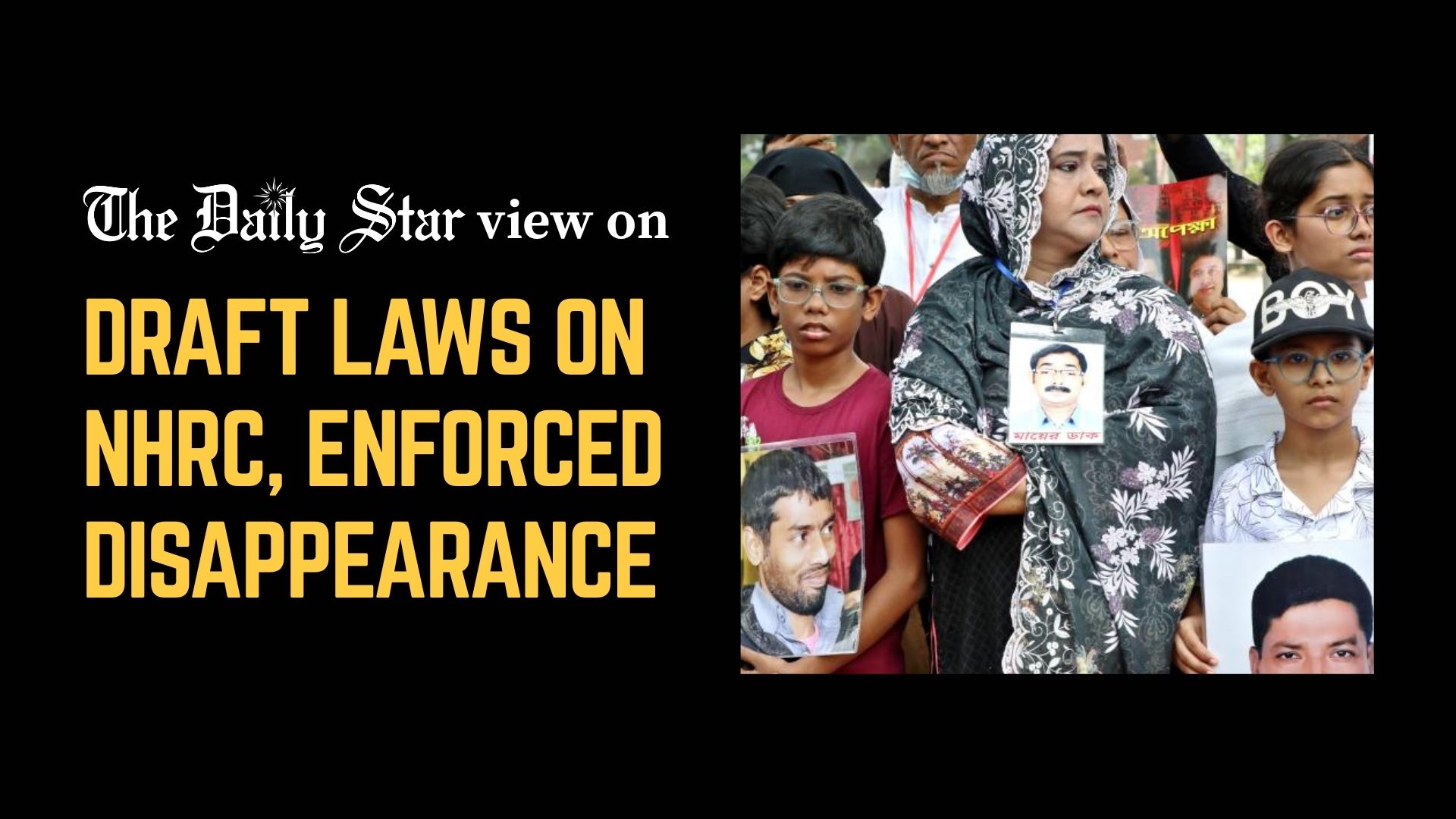
Which brings us to the draft Enforced Disappearance Prevention and Redress Act, 2026. It retains provisions that could continue the culture of impunity among members of agencies involved in the majority of enforced disappearance cases during the AL period. Investigations into enforced disappearances are to be conducted by the police, which poses a clear conflict of interest as many of the accused in such cases are themselves members of police. TIB also points out that when a junior official will have to submit a report that probes into accusations against a senior official, such investigations are unlikely to be unbiased or free from influence, given the hierarchal structure. Moreover, the draft doesn’t cover possible involvement of elected representatives, ministers, or other important officials.
It is unfortunate that the government did not keep the provisions of the 2025 ordinance—passed by the interim government and later repealed by the BNP government—which stated that the NHRC would be chaired by an appeals judge appointed by the chief justice, and members would include a cabinet secretary, one MP selected by the ruling party and one from the opposition, an academic, a human rights defender, a journalist specialising in human rights, and a member from a marginalised group. Such an organogram would have ensured objectivity and autonomy of the NHRC, not to mention public trust.
The horrific accounts of enforced disappearance, torture, and extrajudicial killing by disciplined forces during the AL regime make it crucial for the current government to ensure that such crimes are never committed again. But certain provisions in the two draft laws have raised concerns about its commitment to protecting the rights of every citizen. We urge the government to revisit these contentious provisions and ensure that no law is enacted that could allow members of the government as well as state agencies to enjoy impunity for human rights violations.
 For all latest news, follow The Daily Star's Google News channel.
Comments