


A roadmap to aligning the skills system with industry reality

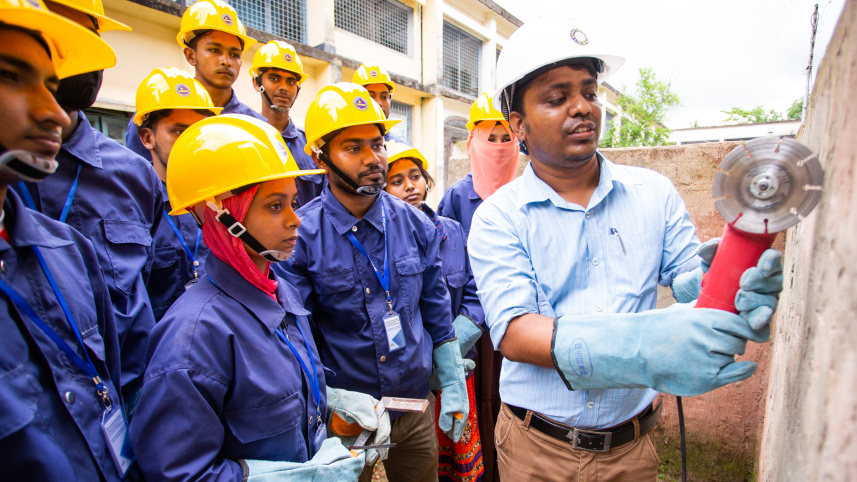
On a recent visit to Chattogram, I met a young man who had completed a four-year diploma in mechanical technology. He was proud of his certificate. But three months on, he was still unemployed. “I learned what was in the syllabus,” he told me. “But I don’t know if it’s what the factory needs.”
This gap between what young people are taught and what employers need is the biggest obstacle to Bangladesh realising its demographic dividend. Certification matters because it allows employers to trust that a worker has the skills to carry out a job. But that trust only works when qualifications are built on clear standards, assessed properly and recognised across institutions and sectors. This is why the Bangladesh National Qualifications Framework (BNQF) is so important. It provides the common language through which educators, trainers, assessors and employers can speak to each other.

Nearly 20 lakh young Bangladeshis enter the labour market each year. Roughly a third of those aged 15-34 are neither working, studying, nor training. These young people remain bereft of employment prospects. That said, too often the skills development focus in Bangladesh has been on building more training centres and enrolling more students. But enrolment in training centres does not equal employability or a guaranteed pathway if the training does not adhere to industry demand. The right question, therefore, is not how many people we train, but whether that training leads to a job.
Bangladesh’s skills-building system, therefore, needs three shifts. First, training must adjust quickly to the needs and the evolving demand of the labour market. Curricula should be built based on occupational standards and labour market evidence, with employers involved in defining the tasks, competencies and assessment criteria. Training should start with an analysis of the work people are expected to perform.
Second, the skills people already have must be recognised. Through Recognition of Prior Learning (RPL), apprenticeships, and modular courses, we see garment workers, returnee migrants, and mothers re-entering the workforce. They have already gained workplace skills, although they may not hold a formal certificate. Certifying those existing skills, under BNQF, can open doors faster than training from scratch.
Third, soft skills must be taught. Employers consistently highlight the same skills gaps: communication, problem-solving, teamwork, digital literacy, and the ability to learn on the job. These soft skills are frequently what make the difference for employers when choosing between two candidates holding the same certificate.
We share the responsibility for strengthening the skills system. Training projects should be designed around the BNQF so that graduates receive qualifications employers and institutions can understand, trust, and use for further progression. When training runs outside the national framework, the value of certificates becomes unclear. Similarly, investment in factories, industrial parks and infrastructure projects should be linked from the outset with a “workforce plan” to prepare, certify and recruit local workers for the jobs being created.
Three groups deserve particular mention in this discussion. First, young women sometimes face training schedules that assume unlimited mobility and workplaces not designed with their safety in mind. That is not equal opportunity. Every taka spent making training, workplaces and wider employment genuinely accessible to women is among the highest-return investments Bangladesh can make.
Second, persons with disabilities remain largely absent from mainstream skills programmes for lack of accessible training centres, adapted materials and employers willing to make reasonable accommodations. Inclusion cannot be an add-on project; it has to be designed into every training programme and workplace from the start.
Third, returnee migrant workers come home each year with skills, discipline and savings earned overseas, and too often no pathway to use them, which is a huge waste of talent and potential. Reintegration support, access to finance, and recognition of skills gained abroad belong at the centre of national skills policy, not at its margins.
Of course, all this is not the government’s job alone. Employers, training institutions, and those funding training programmes have their parts to play. And people—young and old—must keep learning and upgrading their skills as labour market demands continue to evolve.
Bangladesh has the young population every economy hopes for. What it does not yet have, fully, is a skills system built around one simple test: did this training lead to decent work? Until we can answer yes for the great majority of young people who receive training, the conversation about skills development is not finished.
Max Tuñón is country director of the International Labour Organization (ILO) in Bangladesh.
Views expressed in this article are the author's own.
Follow The Daily Star Opinion on Facebook for the latest opinions, commentaries, and analyses by experts and professionals. To contribute your article or letter to The Daily Star Opinion, see our guidelines for submission.
 For all latest news, follow The Daily Star's Google News channel.
Comments