


Dhaka can no longer do without a dynamic drainage system
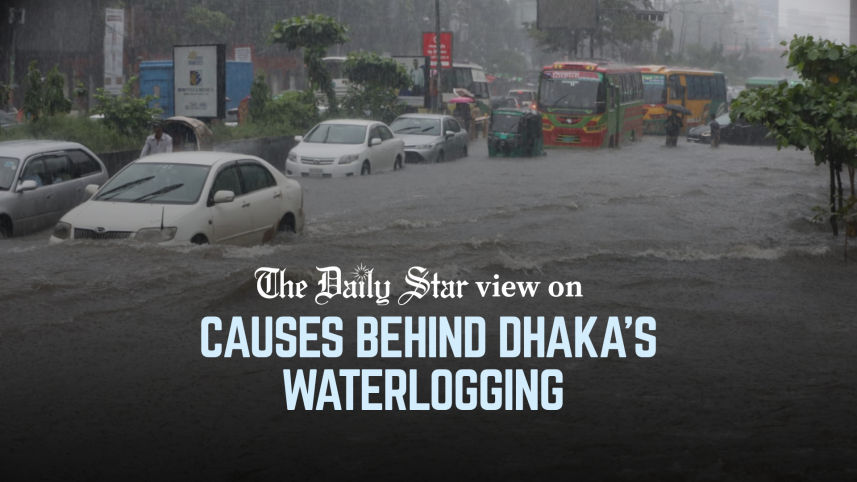
The two city corporations in Dhaka spent more than Tk 262 crore between 2021 and 2024 to construct 334.19 km of drains and box culverts in order to reduce waterlogging. Why, then, does the capital still get waterlogged during moderate to heavy rainfall? On July 12, more than 100 mm of rainfall inundated large parts of Dhaka, including many areas not known to be waterlogging hotspots. The rain was undoubtedly heavier than usual, but as many have pointed out, we see the same pattern emerge every year: it rains heavily during monsoon, Dhaka becomes paralysed while its residents struggle with flooding even inside their homes, and improper waste disposal is cited as the major cause behind such waterlogging. Digging a bit deeper, however, reveals systematic shortcomings such as the lack of a comprehensive waste management and drainage system in the capital of the country.
While the city corporations have worked on drainage and implemented various projects over the years, these have been uncoordinated and fragmented, thereby ineffective. Dhaka has been developed in an unplanned manner for decades; canals and ponds have been filled up, and concrete has been laid down in water retention areas. The waterlogging we have experienced in recent years is the consequence of these actions, and it may only get worse unless city planners intervene with effective and sustainable solutions. Earlier this year, the Dhaka North City Corporation (DNCC) and Dhaka South City Corporation (DSCC) identified 141 waterlogging hotspots in the city and conducted pre-monsoon cleaning of drainage systems in the areas. But Sunday’s downpour caused waterlogging in many unidentified areas, revealing gaps in the already fragmented drainage network.

The issue runs deeper than plastic and solid waste blocking roadside water catch pits. For one, key recommendations of the Drainage Master Plan prepared by Dhaka Wasa in 2015 were never implemented. The three ponds earmarked to serve as draining points for runoff from Gulshan, Badda, Merul Badda and Nikunja areas into the Balu River have all been filled up. Meanwhile, the Goran-Chandbari water retention area, which originally covered about 615 acres, has lost around 40 acres to development. Similarly in Kallyanpur, more than 200 acres were earmarked for water retention, but only about 30-35 acres remain. One would think that the authorities learnt of climate change risks such as extreme weather, and allowed exactly the opposite kind of “development” to take place than what was needed.
In any case, the government must ensure that its own plan to implement various measures to tackle Dhaka’s waterlogging problem are carried out transparently, efficiently, and without delay. The country as a whole must be equipped for sustainable climate change adaptation. Otherwise, we risk incurring losses of people’s lives and livelihoods to events as preventable and manageable as waterlogging and flooding.
 For all latest news, follow The Daily Star's Google News channel.
Comments