


From public recording to public humiliation: Where do we draw the line?
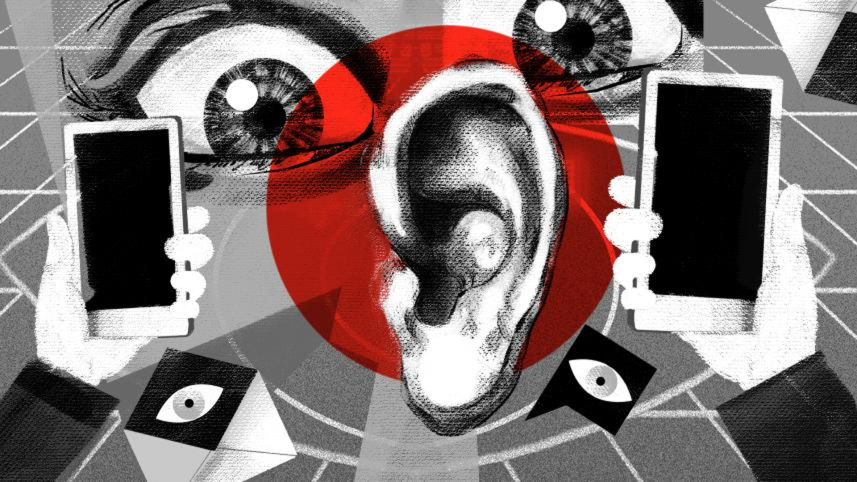
A biker jumps on a footpath, a traffic sergeant stops him, and within seconds a small crowd has gathered, phones raised, voices sharpening into interrogation. “Where were you going? Don't you have shame? Say something for the camera.” If the frightened young man says something clumsy, something defensive, something that sounds arrogant under pressure, that clip travels faster than any correction ever could. In a few hours, strangers who know nothing about him have decided who the biker is.
I have seen versions of this scene play out across the country, and each one raises the same uncomfortable question. Somewhere between citizen vigilance and public humiliation, we have stopped asking whether recording someone and broadcasting it to thousands of strangers is something we are actually entitled to do, legally or morally—simply because we happened to be holding a phone at the right moment.

Consider the raids on hotels that many of us have watched unfold online. Several people are detained, but the cameras converge on one target: a young woman trying to cover her face with a scarf. If she is considered attractive, the interest multiplies. Reporters, or people who introduce themselves as reporters, push microphones towards her and ask why she came there, as though she alone owes the public an explanation the others do not. Or take the scene that has become almost a genre of its own online: a group breaks into a room where two adults are present and demands, on camera, “Where is your kabinnama?” The footage is uploaded before anyone has verified anything, before any court has heard anything, before the people filmed have had a chance to say a single word in their own defence.
The pattern repeats after every HSC and SSC exam season, when reporters descend on students and their parents hunting for a viral moment, an unrehearsed sentence, a nervous laugh, a gesture caught at the wrong angle. It repeats in parks and restaurants, where self-appointed moral guardians film young couples sitting together, then post the footage as though sitting in public with someone were itself a crime. None of this happens in the shadows. It happens in daylight, often within police sight, and often carried out by people who call themselves journalists.
Article 43 of our Constitution protects citizens against unreasonable intrusion into the home and protects the privacy of correspondence and other means of communication. Article 39 guarantees freedom of speech and freedom of the press, but subject to reasonable restrictions imposed by law, including those relating to contempt of court, defamation, and incitement to an offence. Bangladesh now also has the Personal Data Protection Act 2026, which provides a legal framework for the protection and lawful processing of personal data. The question is how these protections should apply when images of ordinary citizens are recorded, published, and circulated in ways that expose them to public humiliation.
Whatever these laws eventually settle, one fact is not in dispute: the people doing most of this filming are not accredited journalists bound by any code of conduct. They are often ordinary citizens, sometimes acting in genuine public interest, more often chasing views, who have discovered that this kind of content travels faster than genuine reporting ever did. A minor traffic violation, a visit to a restaurant, an awkward sentence after an exam- none of these is a major crime that a person's life should be ruined over. Yet that is functionally what a viral video does: a sentence with no trial, no appeal, and no expiry date.
There is also a difference between public interest and public curiosity. Documenting corruption, abuse, serious crime, or the misuse of public power can serve a legitimate public interest. Broadcasting someone’s humiliation simply because people are curious to watch it is something else. The fact that an incident occurs in public does not automatically mean that every recording of it deserves to be broadcast to thousands of strangers.
Compare this to how we treat real power. A businessman who takes a loan and never repays it, a bank that refuses to return depositors’ own money, an official who extorts money in broad daylight- these stories circulate quietly, if at all, and rarely as long as the person involved remains powerful. Only when that power weakens does the same crowd that filmed the biker suddenly find its courage. The willingness to expose someone, it turns out, tracks not the seriousness of the wrongdoing but the powerlessness of the person committing it.
None of this argues against journalism itself. A free press that investigates real wrongdoing, corruption, abuse, and crime is essential, and Bangladesh’s journalists already work under real constraints and real risks in doing that work. What is worth asking is narrower and more specific: whether the state has any obligation, consistent with press freedom, to draw a firmer line around filming private citizens over minor infractions and circulating it without consent.
Bangladesh’s new Personal Data Protection Act, passed by Parliament this year, is a genuine step forward on paper. But whether it gives an ordinary person a practical remedy when strangers film and publicly circulate their image is a different question. The law creates rights for data subjects and a mechanism for complaints, but the practical route available to someone filmed in a public place may still depend on how the law applies to the particular circumstances and who is responsible for the recording and its publication. A young woman filmed outside a hotel, or a couple filmed in a restaurant, may have little practical ability to identify the people responsible or stop the video after it has already spread across social media. Until that gap between a legal right and a usable remedy is addressed, the punishment for a small mistake in Bangladesh will keep being decided not by any court, but by whoever happens to be filming, and by the thousands who then share, comment on, and judge what they see.
Md. Kawsar Uddin is associate professor in Department of English and Modern Languages at International University of Business Agriculture and Technology.
Views expressed in this article are the author's own.
Follow The Daily Star Opinion on Facebook for the latest opinions, commentaries, and analyses by experts and professionals. To contribute your article or letter to The Daily Star Opinion, see our guidelines for submission.
 For all latest news, follow The Daily Star's Google News channel.
Comments