


Biman needs more than new aircraft to compete globally

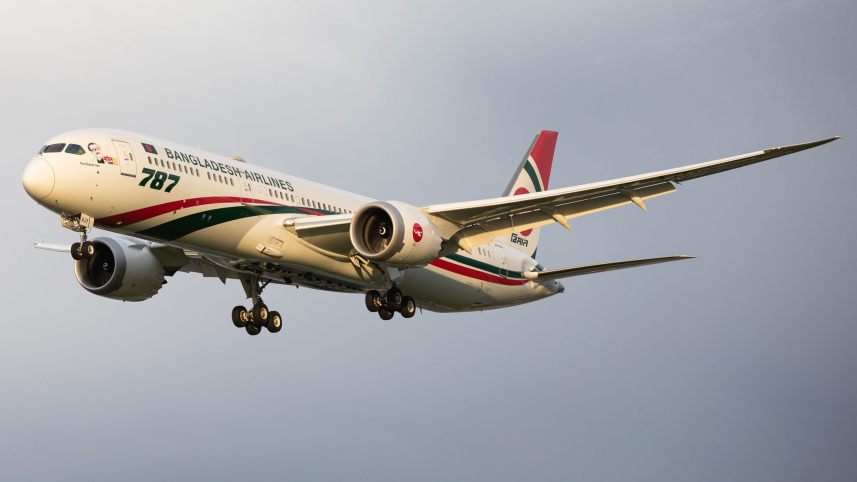
Biman Bangladesh Airlines is on a shopping spree.
In April, it signed an agreement to buy 14 Boeing aircraft. In September, it added another 11, taking its Boeing order book to 25. Now, the government is negotiating with Airbus for another 10 aircraft: four A350-900s and six A321neos. If all of these purchases go through, Biman, which currently operates 19 aircraft, will have 35 new planes in its procurement pipeline.

The government’s justification is that it carries only a little over 20 percent of international passenger demand in Bangladesh, leaving foreign airlines with the rest: more planes would allow Biman to increase frequencies, open routes, and compete for more of that traffic.
But competing for passengers is very different from merely having enough seats to carry them. A Bangladeshi expatriate travelling home from Jeddah may choose Biman because it offers a convenient direct flight. However, a foreigner travelling from Europe to Southeast Asia has far less reason to do so. If Bangladesh genuinely wants Dhaka to become an aviation hub, Biman would have to compete on fares, frequencies, connections, reliability, and service, not simply add capacity.
The challenge is to turn Biman into an internationally desirable brand, to make Biman an airline that passengers, Bangladeshi or not, actively choose and subsequently recommend. To do that, Biman needs to look like it belongs in this century.
The first step is branding.
Unfortunately, Biman’s entire brand identity seems to be stuck in the 80s. Nothing about the airline—from its bland typography and dated cabin hospitality to its severely outdated social media and website—tells you that this is a serious airline ready to take flight in the modern 21st century.
Biman has spent years modernising its fleet without ever fully deciding what a modern Biman should actually be. The airline operates Dreamliners—among the world’s most technologically advanced passenger aircraft. Yet the wider Biman experience does not consistently communicate the same modernity.
The Balaka, Biman’s logo designed by Quamrul Hassan, is a wonderful piece of Bangladeshi design heritage, and there is no real good reason to abandon the core logo. But preserving an icon does not require preserving an entire visual language around it indefinitely. Biman has clung to the mundane past all the while; the world has moved on, and the best airlines have kept up.
Emirates, for example, understood that an airline is more than transport. Emirates began flying in 1985 with just two leased aircraft from Pakistan International Airlines (PIA). The difference between PIA and Emirates is sky-high 41 years later. Emirates’ original brief was remarkably simple: the airline had to “look good, be good, and make money”. The impression it created is remarkably consistent with the impression Dubai wants to create of itself: polished, confident, international, expensive, and ambitious.
Qatar Airways has pursued a similar idea. Its branding is quieter and more restrained: burgundy, grey, the oryx, and the word Qatar prominently displayed across its aircraft. When the airline redesigned its livery in 2006, it deliberately removed the word “Airways” from the most prominent part of the fuselage and enlarged “QATAR”. The airline said at the time that the change reflected the growing importance of the country.
The airline has spent years associating that name with luxury, attention to detail, and a carefully controlled premium experience. Its own brand material has repeatedly emphasised luxury and distinctive service. The intended impression carries into Doha: sophisticated, orderly, affluent, and increasingly worth experiencing rather than merely passing through.
SriLankan Airlines offers a useful regional example. Despite operating from a much smaller economy, the airline has built parts of its passenger experience around a recognisable Sri Lankan identity. In 2026, it received regional awards for overall passenger experience and improvement, while previous awards have recognised its inflight food, entertainment, and destination marketing.
The point is that these airlines seem to understand something Biman still needs to internalise: an airline is both a transportation company and a consumer brand. It needs to identify a credible position of its own: competitive value, recognisable Bangladeshi hospitality, and a world-class experience that passengers can trust.
However, a rebranding promise only works when the organisation can deliver it. Service reform must happen alongside visual reform. If Biman is to compete seriously with international airlines, its modernisation must reach far beyond the aircraft, advertising, or cabin service. This is one of the less glamorous lessons offered by the airlines Biman wants to compete with.
Singapore Airlines, for example, has treated organisational capability as part of the product. During its transformation programme in 2018, the airline changed its IT development model, invested in digital skills across its workforce, and reported cutting application development time to market by about 40 percent. Its more recent annual reporting continues to emphasise continuous training, cross-functional mobility, and the development of digital and service capabilities among employees.
Emirates invests in the same principle from another direction. Its Centre of Hospitality Excellence trains not only cabin crew but also check-in and lounge employees, while new cabin crew undergo weeks of structured safety and service training before operating flights. In 2025, Emirates opened a dedicated hospitality training facility intended eventually to serve its roughly 25,000 cabin crew.
Biman is not, contrary to its old reputation, currently a consistently loss-making airline. It recently reported Tk 785.21 crore in net profit for the fifth consecutive year. Boeing deliveries under the current programme are also scheduled to begin from 2031. There is, in other words, time before much of this new capacity arrives. Biman should seize this moment. By 2031, passengers should not simply see new aircraft. They should see a radically new airline, ready to promote Bangladesh to the world.
Passengers today choose Dubai, Doha, Singapore, Istanbul, or other connecting hubs because airlines, airports, schedules, baggage systems, lounges, immigration rules, hotels, tourism agencies, and ground transport work together closely enough to make connecting through them worthwhile.
Dhaka will have to provide the bare necessities. Why should someone flying from Manchester to Bangkok, or from Jeddah to Kuala Lumpur, connect through Bangladesh rather than somewhere else? This question matters far more than how many planes Biman has.
 For all latest news, follow The Daily Star's Google News channel.
 Bangladesh absolutely should have an ambitious national carrier. It should have more routes, greater capacity, modern aircraft, and a much larger share of the country’s international passenger market. But ambition must extend beyond procurement. Biman (and the airport too, in time) needs a visual identity worthy of contemporary Bangladesh. It needs to free itself from dated bureaucratic clutches and create a genuine tourism proposition that makes foreigners curious about the country whose flag is painted on the tail. Most importantly, it needs to understand what business it is actually in—branding the country to the world. It needs to take Bangladesh to the world. And, in turn, bring the world to Bangladesh.
Biman has all the potential to become an aviation icon. Boeing can sell Biman a Dreamliner. Airbus can sell it an A350. Neither can sell it a reputation. That part Biman Bangladesh Airlines will have to build for itself.
Zarif Faiaz is editor of the Tech & Startup section at The Daily Star and a research fellow at Tech Global Institute. He can be reached at faiaz@thedailystar.net.
Views expressed in this article are the author's own.
Follow The Daily Star Opinion on Facebook for the latest opinions, commentaries, and analyses by experts and professionals. To contribute your article or letter to The Daily Star Opinion, see our guidelines for submission.
Comments