


How disinformation is shaping global politics

Despite how it sounds, the "war on truth" is not a fringe claim but an existential threat to democratic governance worldwide. Looking back at 2024's over 60 general elections across the globe, it is evident that disinformation—deliberately propagated lies—has become arguably the world's single greatest threat that countries remain least equipped to address, as per the UN's 2024 Global Risk Report.
The core claim is straightforward: our current system prioritises profit over safety, enabling foreign manipulation and interference to flourish as the capacity to fake becomes ever more realistic and cheap. The information ecosystem has been designed for engagement, not truth. Social media algorithms prioritise terrifying or provocative content for more clicks, opting for profit over anything else. This has accelerated polarisation and entrenched echo chambers.

The pursuit of profit over people has had disastrous impacts. The threat's magnitude is stark: false political news travels 70 percent faster than factual news, and false stories get six times more "impressions" than verified information. Fueling this imbalance is the rapid growth of artificial intelligence. AI tools have accelerated the production of deepfakes and fabricated documents, lowering the entry threshold for state and non-state actors to engineer narratives. We are already witnessing the rise of "pink slime" papers: fake news websites posing as local news outlets. Some research suggests more than half of regional digital news sites may now be AI-generated content designed to misinform.
Geopolitical weaponisation is now routine. Countries like Russia are actively intervening in democratic systems of rivals. Organised efforts, for instance, targeted the 2024 United States election. Earlier this year, the US sanctioned the Moscow-based Centre for Geopolitical Expertise—linked to the GRU—for deploying AI to rapidly disseminate disinformation and for blending a video to insult a 2024 US vice-presidential candidate.
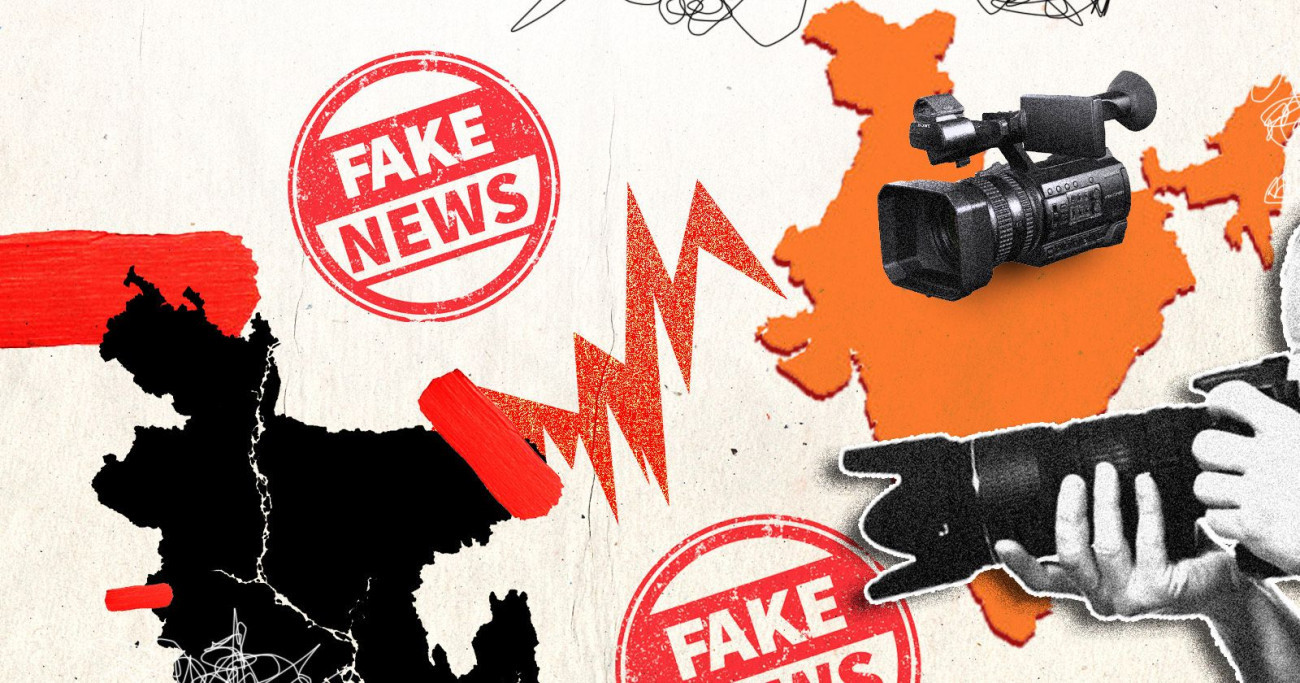
Perhaps most worryingly, Meta announced in January this year that it would replace its third-party fact-checking programme across the US with a crowd-sourced system, citing "clear bias." This risks giving vocal, well-organised groups the power to selectively shape narratives, and further emboldens malicious actors who already profit from exposure-based monetisation and weak moderation. Given how often these campaigns are state-sponsored, the response must also be systemic and global, focusing on structural reform.
Countries, therefore, must enforce digital safety and privacy by design among tech companies. An international agreement modelled after the EU's DSA could ensure social media platforms assess risk and face serious sanctions. The DSA, for example, imposes fines of up to six percent of a very large online platform's annual global revenue if obligations are breached—an essential incentive given current profit models.
Disrupting foreign interference also requires dismantling the infrastructure that supports it; first, by cutting funding pathways, including crypto-based money laundering. Second, logistical platforms used for covert coordination, like Telegram and Yandex, should be scrutinised and regulated.
Since disinformation is engineered for manipulation, the best defence is psychological. We need strong digital literacy and critical thinking programmes. One of the most effective proactive strategies is pre-bunking, rooted in psychological inoculation, which involves warning people in advance about common manipulative tactics (fearmongering, scapegoating, etc) before they encounter false narratives. This is not censorship; it is a free-speech-supporting method that empowers individuals with immunity.
Responding to the intentional degradation of truth must be a collective project led by governments, the private sector, and citizens. We cannot allow ourselves to be paralysed by the false argument that regulating digital harms equates to prohibiting free speech. Safeguarding and restoring democracy now requires us to recognise and respond to disinformation so that an informed public can choose to reject it. The time to act and demand global accountability from the systems that spread lies is now.
Shahriar Ibne Hasan Nehal is a student of international relations at the University of Chittagong.
Views expressed in this article are the author's own.
Follow The Daily Star Opinion on Facebook for the latest opinions, commentaries and analyses by experts and professionals. To contribute your article or letter to The Daily Star Opinion, see our guidelines for submission.
 For all latest news, follow The Daily Star's Google News channel.
Comments