


A gender-responsive budget must address the unpaid care burden

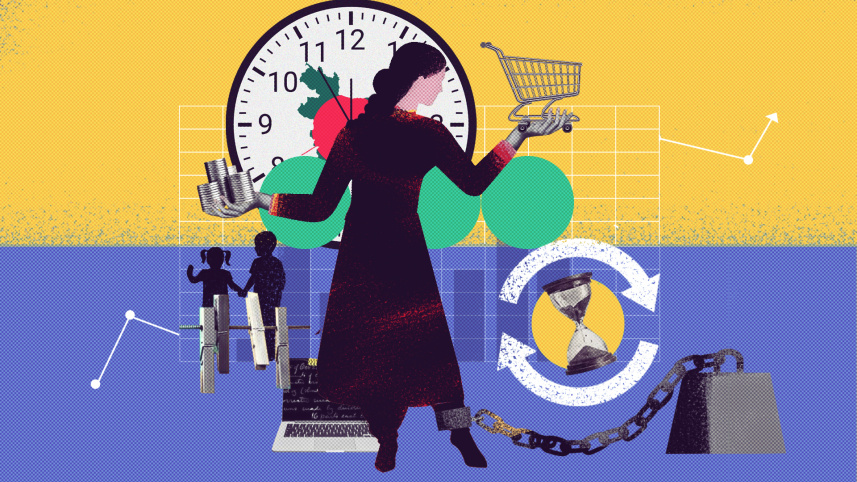
Bangladesh has often been recognised as a pioneer in gender-responsive budgeting, yet the female labour force is actively shrinking. Between 2023 and 2024, it dropped by 16 lakh. For more than a decade, successive governments have reported gender budget allocations across more than 40 ministries, positioning women’s empowerment as a national development priority. The proposed FY2026-27 budget continues this tradition while placing employment generation, SME growth, entrepreneurship, migration, investment, and productivity at the centre of our economic recovery agenda.
These are important priorities. Bangladesh needs jobs, productive enterprises, and renewed economic confidence. But amid discussions of growth and employment, one critical question has received remarkably little attention: can a budget be truly gender responsive if it does not adequately address the unpaid care burden that keeps millions of women out of the labour market?

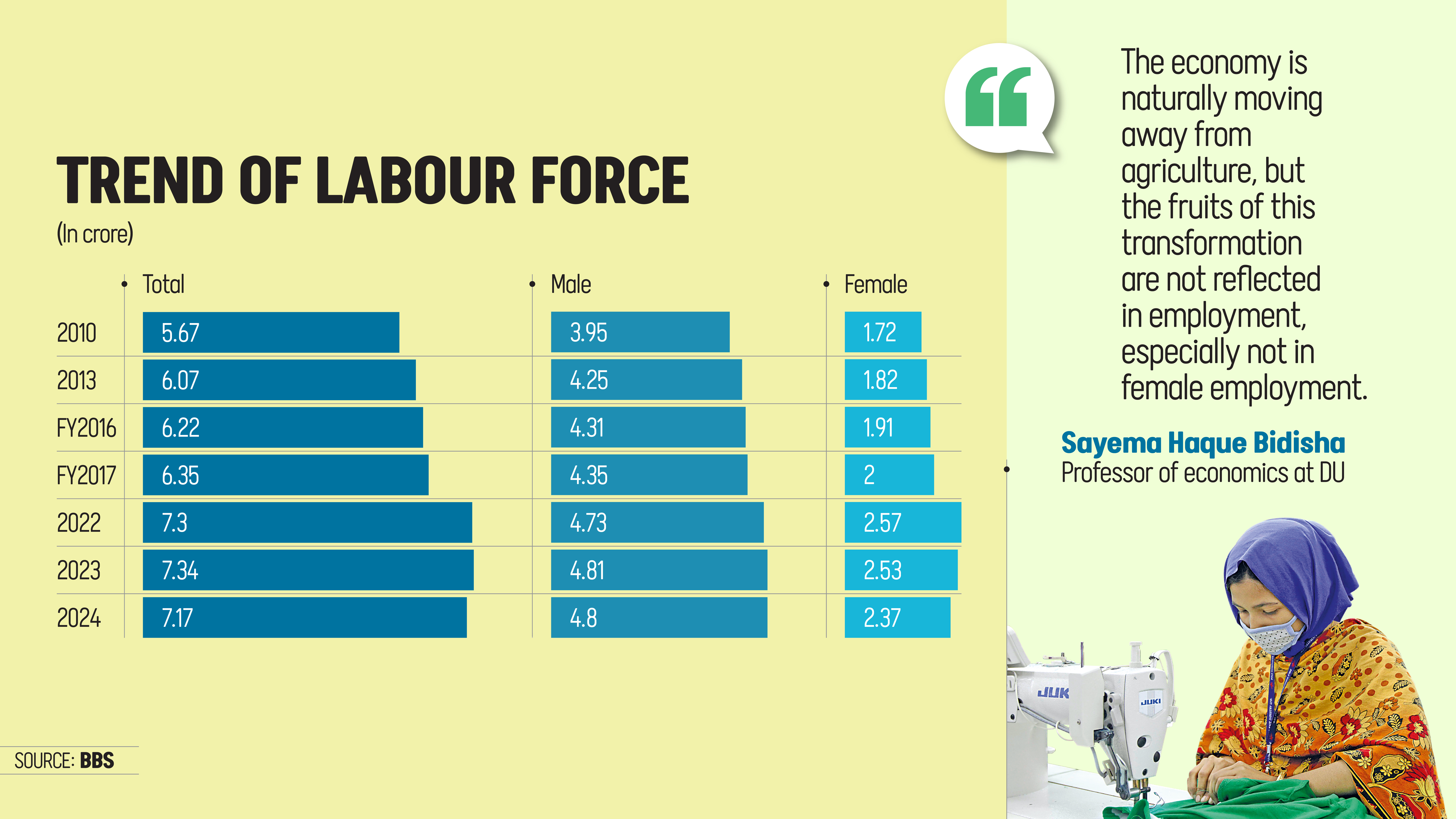
Women constitute nearly half of Bangladesh’s population and remain central to the country’s economic success story. From garments and agriculture to microenterprise and digital commerce, women’s labour has powered growth across sectors. At the same time, Bangladesh continues to struggle with relatively low female labour force participation compared to men. According to the Bangladesh Bureau of Statistics' Labour Force Survey 2024, women’s labour force participation stood at 38.40 percent, compared to 79.96 percent for men. Most of the time, the major reason is care responsibilities at home.
Therefore, looking at the care agenda matters because women are not on the margins of Bangladesh’s economy. They are central to it. Although the budget talks about establishing 80 day-care facilities for working mothers in the upcoming fiscal year, the scale of investment in this area is undoubtedly low. Even if half of the 2.37 crore female workers are mothers, the total number of government-run day-care centres—existing and proposed—amounting to a little less than 150 across the country, would not be adequate.
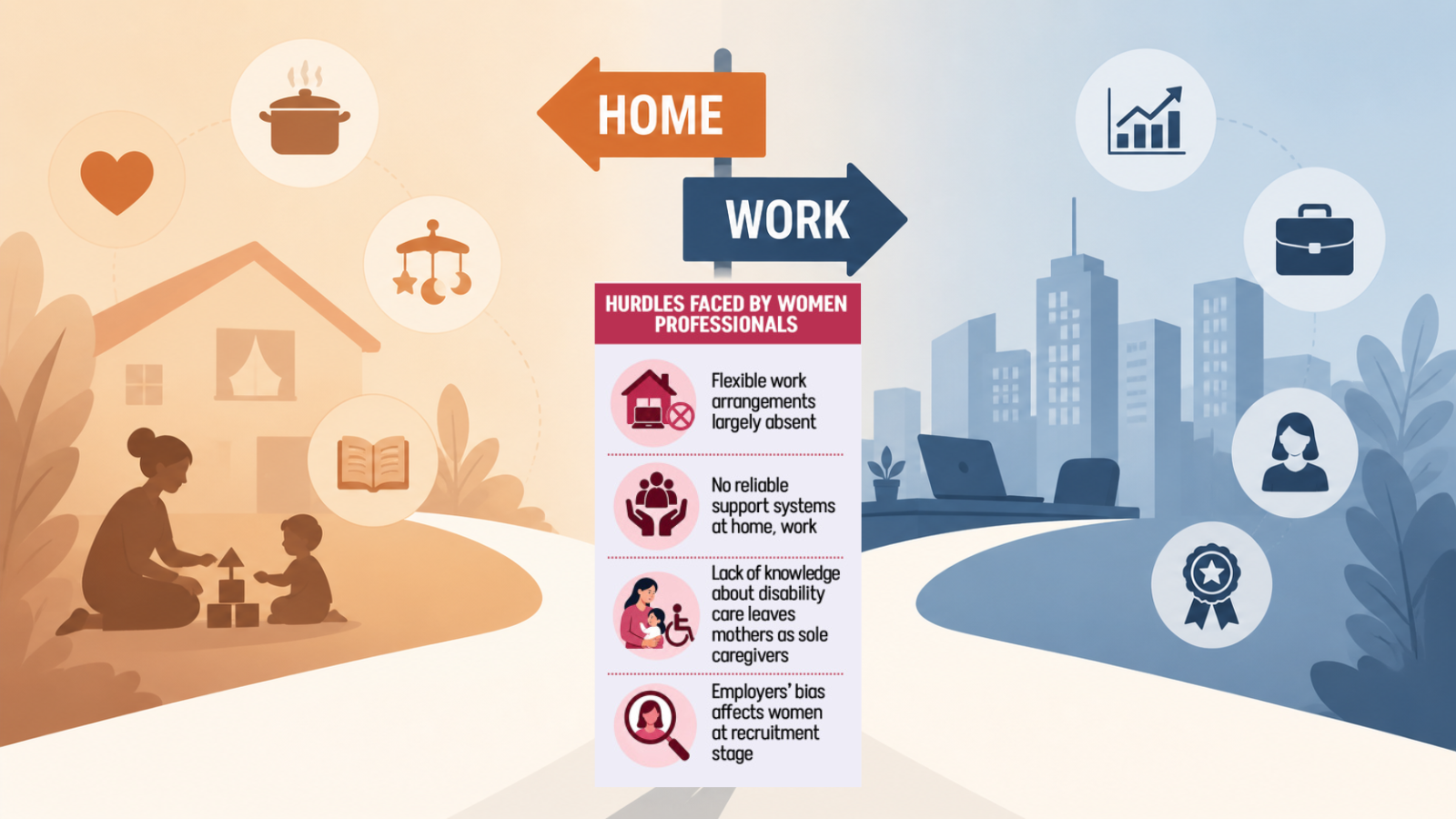
It must be acknowledged that the responsibilities that women continue to carry, relating to childcare, elder care, cooking, cleaning and household management works are essential to the functioning of families and the broader economy. But they are still largely unrecognised and uncompensated. Recent evidence suggests the scale of this imbalance is far greater than many policymakers appreciate. Bangladesh’s first comprehensive Time Use Survey found that women spend approximately seven times more time on unpaid domestic and care work than men. This is not merely a household reality; it is a structural constraint on women’s ability to participate in paid employment, grow businesses, pursue skills training, or migrate for work. When women carry the overwhelming burden of care, their economic choices become constrained long before they enter the labour market.
Thus, a woman may complete vocational training but remain unable to accept employment because childcare options are unavailable. A small business owner may receive access to credit yet lack the time necessary to expand her enterprise because she is simultaneously responsible for childcare, household management and caring for elderly family members. A migration opportunity may remain inaccessible because caregiving responsibilities cannot easily be transferred elsewhere.
Bangladesh, in fact, has now put a monetary value on what has historically remained invisible. In 2025, the Bangladesh Bureau of Statistics and UN Women released the country’s first Household Production Satellite Account, estimating that unpaid household and care work contributed Tk 6.7 lakh crore to the economy in 2021—equivalent to 18.9 percent of GDP. Women accounted for approximately 85 percent of this contribution. If unpaid care work were treated as a productive sector, it would represent one of the largest contributors to the national economy. Yet discussions of productivity, investment and employment rarely acknowledge it.
This is particularly relevant given the budget’s emphasis on SMEs and entrepreneurship. Women are estimated to lead around 28 lakh SMEs in Bangladesh and support the livelihoods of millions through their enterprises. Yet women own only about 7.2 percent of registered businesses, reflecting persistent barriers to formalisation, growth and investment. While access to finance remains a legitimate concern, it must be noted that a woman entrepreneur cannot scale a business if she remains solely responsible for childcare, elder care and household management. Loans can expand capital. They cannot create time. The same logic applies to employment generation. Creating jobs is important, but ensuring women can access those jobs is equally important.
This raises a broader question about how Bangladesh defines gender-responsive budgeting, since, historically, general allocations that happen to include women would be building a road where women might walk on. But a true gender budget should not just count women as passive beneficiaries; it must actively dismantle the structural barriers of care burden. Therefore, childcare deserves far greater attention than it did in the proposed FY2026-27 budget.
Investments in community childcare centres, workplace childcare facilities, early childhood services and care-support infrastructure should be viewed not simply as social expenditures but as economic investments. Just as roads connect workers to markets and electricity powers businesses, care infrastructure enables greater labour force participation.
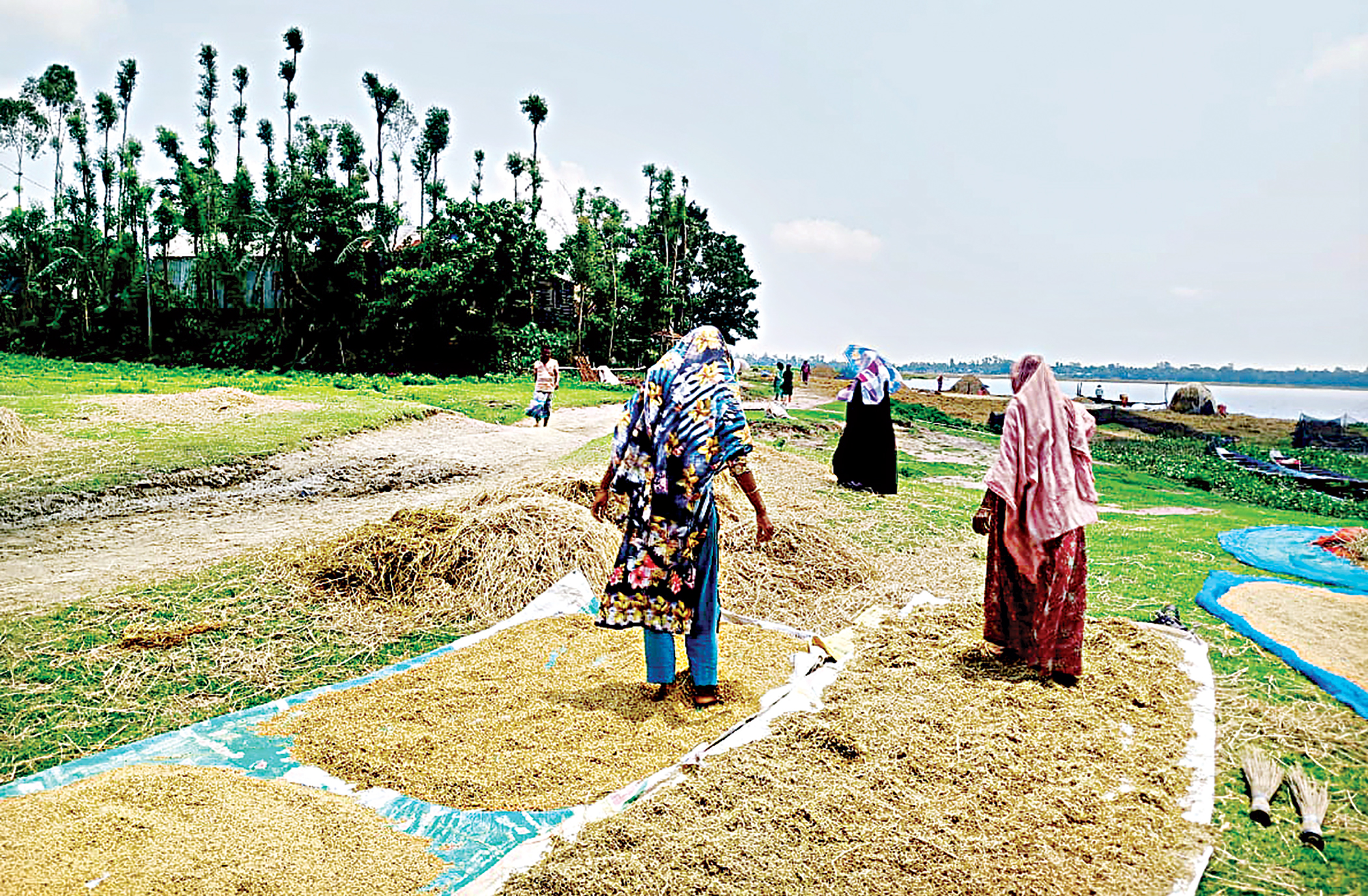
Bangladesh would not be the first country to adopt such an approach. In 2015, Uruguay established a National Integrated Care System that expanded childcare, elder care and support services while recognising care as a shared responsibility between households, communities, markets and the state. The underlying logic was simple: if care responsibilities keep women out of paid employment, then investing in care is also an investment in economic productivity. Bangladesh may not replicate Uruguay’s model directly, but it offers an important lesson. Care infrastructure should not be viewed solely as a social welfare expenditure; it is an economic enabler.
The finance minister has rightly placed employment, investment and productivity at the centre of the FY2026-27 budget. But if women are expected to contribute fully to these national goals, then the policies supporting their participation must receive equal attention. A serious conversation about jobs, entrepreneurship and migration must also be a conversation about care.
As Bangladesh charts its next phase of economic growth, perhaps the most important question is not how many jobs will be created, but whether the women who could fill them will have the opportunity to do so.
If unpaid care work contributes nearly one-fifth of GDP, then a truly gender-responsive budget cannot afford to treat care as an afterthought. The real measure of a gender-responsive budget is whether the budget addresses the realities that shape women’s lives.
Tasmiah T Rahman works as portfolio adviser at Innovision Consulting and is currently pursuing a joint PhD in women’s labour market participation. Views expressed in this article are the author’s own.
Views expressed in this article are the author's own.
Follow The Daily Star Opinion on Facebook for the latest opinions, commentaries, and analyses by experts and professionals. To contribute your article or letter to The Daily Star Opinion, see our guidelines for submission.
 For all latest news, follow The Daily Star's Google News channel.
Comments