


Climate change demands a smarter approach to healthcare

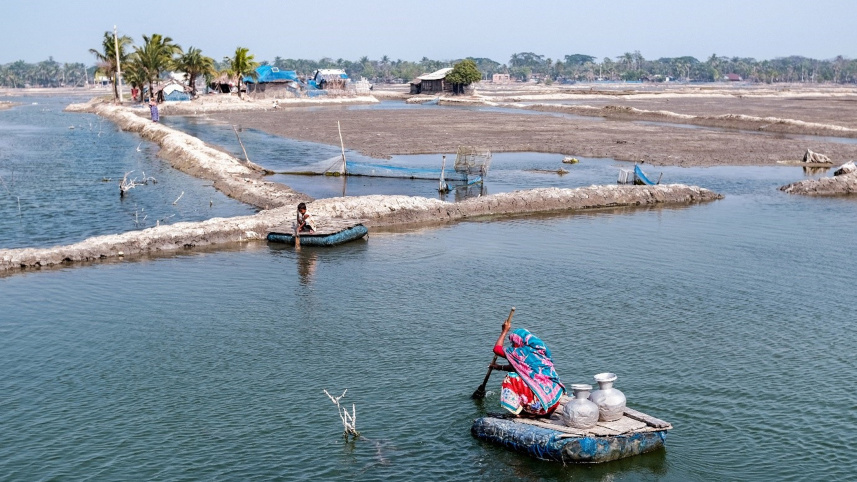
On a hot, humid morning in the coastal village of Satkhira, Rahima Begum wades through waist-deep saline water to reach the nearest health facility. She is unsure if it is still functioning after the recent cyclone. Behind her, she drags a makeshift wooden raft carrying her seven-year-old daughter, severely ill with diarrhoea and dehydration. Rahima’s village has long been on the frontline of climate change consequences.
Over the years, salinity intrusion in groundwater has reduced access to fresh water. Tubewells, once a lifeline, no longer act as reliable sources of safe drinking water. Daily exposure to saline water for washing, cooking, and drinking is increasing the risk of diarrhoeal diseases, skin infections, menstrual and reproductive health complications, as well as cardiometabolic diseases. For Rahima, and millions like her, climate change is no longer a distant threat but an everyday reality. It is reshaping disease patterns, increasing the occurrence of acute public health events, and straining access to essential health services.

Across Bangladesh, climate-sensitive health risks are intensifying. Heatwaves are becoming more frequent and severe which heightens risks of heat stress, dehydration, and mortality. Dengue, once seasonal and largely confined to urban areas, has become a year-round, nationwide threat. In 2023 alone, Bangladesh recorded over 3,21,000 cases and 1,705 deaths from the disease which is the deadliest outbreak on record. Waterborne diseases, including diarrhoeal illnesses, often surge after floods, and they remain a major contributor to mortality among children under five. Ambient air pollution continues to exacerbate respiratory diseases, contributing to a considerable number of premature deaths every year. These converging risks underscore the importance of a systemic, forward-looking response in protecting health in a changing climate.
The Ministry of Health and Family Welfare’s new Health National Adaptation Plan (HNAP) provides a critical framework to do just that. Developed with support from the World Health Organization (WHO) and United Nations Population Fund (UNFPA), the plan sets out a clear roadmap to build climate-resilient, low-carbon health systems in alignment with the country’s commitments under COP26. It defines priorities across infrastructure, surveillance, workforce capacity, and governance. Crucially, it marks a decisive shift from a reactive approach to one grounded in preparedness, resilience, and long-term sustainability.
The priority now is implementation. Health facilities must withstand floods, heatwaves and cyclones while maintaining essential services, including safe water, sanitation and reliable energy. Disease surveillance must integrate climate data to improve early warning and rapid response, particularly for climate-sensitive threats such as dengue. The health workforce must be equipped to recognise and manage emerging risks, from heat-related illness to shifting patterns of infectious disease. Groups who are being disproportionately affected—women, adolescent girls, children, older persons, and persons with disabilities—must be prioritised in both planning and implementation. The health sector itself must reduce its environmental footprint. Improving energy efficiency, expanding renewable energy use, and adopting sustainable procurement practices can lower emissions while strengthening system reliability. Climate resilience and sustainability are not competing priorities but mutually reinforcing.
Stronger domestic investment must be matched by more accessible and predictable international climate finance, aligned with country priorities. Only through sustained funding and effective partnerships can the HNAP be translated into tangible health gains for communities like Rahima’s, which are on the frontlines of climate change. Cross-sectoral action is likewise critical. Addressing climate-related health risks requires coordinated efforts across water and sanitation, agriculture, environment, infrastructure, urban planning, and disaster management. Empowering local governments and communities is essential in delivering practical, context-specific solutions, while stronger coordination, combined with locally driven action, may help to build resilience while delivering broader health and development gains, with equity at the centre.
The conversation must shift from commitment to implementation and from planning to protection. Success will be measured in lives protected: fewer disease outbreaks, reduced heat-related deaths, and declines in maternal, neonatal, and child mortality. Success will also be measured in the ability of health systems to withstand and continue delivering care in the face of repeated climate shocks. For communities like Rahima’s, resilience cannot remain an aspiration, it must become a reality. The HNAP provides a clear path forward, but its impact will depend on how quickly and effectively it is implemented. In a changing climate, protecting health will ultimately be defined not by plans alone, but by the actions taken today.
Dr Ahmed Jamsheed Mohamed is WHO representative in Bangladesh.
Catherine Breen Kamkong is UNFPA representative in Bangladesh.
Views expressed in this article are the author's own.
Follow The Daily Star Opinion on Facebook for the latest opinions, commentaries, and analyses by experts and professionals. To contribute your article or letter to The Daily Star Opinion, see our guidelines for submission.
 For all latest news, follow The Daily Star's Google News channel.
Comments