


Ecocide is hard to litigate, but we must still demand accountability

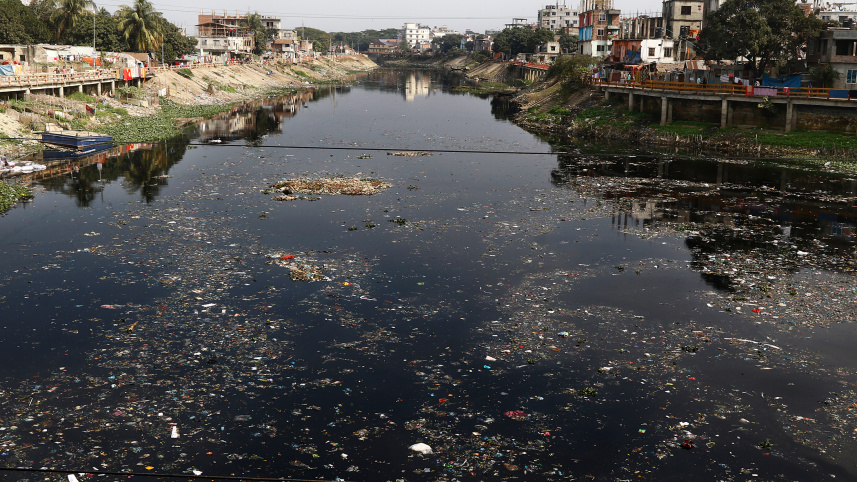
We like our crimes tidy. A victim, a perpetrator, a sequence of events that can be narrated without requiring a climate scientist, three expert witnesses, and a decade of satellite data. It helps with closure. It helps with headlines. It reassures us that the world, however chaotic, is at least legally coherent. Ecocide has a rather inconvenient habit of refusing to behave like a proper crime. In Dhaka, for instance, the evidence is everywhere and nowhere at once. The air is unbreathable, the rivers look like they have given up on their original purpose, and yet life proceeds with impressive discipline. Offices open, traffic builds, weddings happen. There is something almost admirable about a city that can function at full capacity while slowly poisoning itself. If this is not harm, it becomes difficult to define what is.
We do not call ecocide a crime, of course. That would require the unpleasant business of accountability. Instead, we call it development, urbanisation, or, when we are feeling particularly philosophical, inevitability. These are comforting words. They suggest that what is happening is both necessary and beyond control. Yet, there is a word for it. International lawyers have spent decades trying to formalise it. They call it ecocide, the widespread and long-term destruction of the environment caused by human activity. The ambition is to recognise it as a crime under the Rome Statute, placing it alongside genocide and war crimes. In other words, to admit that environmental destruction is not an unfortunate side effect of progress, but something for which someone should be held responsible. If that sounds excessive, it is only because we have normalised the alternative.

The difficulty is not in seeing ecocide. It is in proving it. In Ukraine, environmental destruction during the ongoing conflict has been described as ecocide, yet prosecutors have struggled to convert visible damage into viable legal cases. Out of hundreds of incidents, only a small number have progressed to a stage where they can be meaningfully pursued in court. The problem is not a lack of evidence in the ordinary sense. It is an excess of complexity. Environmental harm does not arrive neatly packaged. It unfolds over time, across borders, and through chains of causation that are anything but linear. Harm is cumulative, responsibility is diffuse, and causation is buried under decades of decisions politely described as necessary trade-offs. By the time the damage is visible, it is already global.

Consider climate change. No single factory causes a flood in Bangladesh. No single policy decision raises sea levels. And yet, collectively, the damage is undeniable. Homes disappear, farmland becomes saline, and entire communities are displaced with quiet regularity. The harm is real. The perpetrator is less easy to isolate. Then there is the question of thresholds. What counts as “severe”? How widespread is “widespread”? How long is “long-term”? These are precisely the kind of ambiguities that determine whether a case survives or collapses. Add to this the requirement to prove knowledge or intent and the problem becomes even more complicated. Environmental destruction is rarely framed as destruction. It is framed as growth, infrastructure, and necessity. The same decision that pollutes a river is also the one that creates jobs. The same project that displaces a community is also the one that boosts GDP.
Proving that someone intended environmental harm, rather than economic progress, is not just difficult. It is politically inconvenient. Even where intent can be inferred, science introduces another layer of discomfort. Environmental harm relies on modelling, projections, and probabilities. Courts, understandably, prefer certainty. Science offers likelihoods. Somewhere between the two, accountability begins to blur. And then there is power. Recognising ecocide as an international crime would not simply target isolated actors. It would involve systems. Corporations, governments, and economic models that rely, to varying degrees, on environmental extraction. The question is not whether the law can be written. It is whether it can be enforced against those who can resist it.
For countries like Bangladesh, this tension is particularly stark. Bangladesh contributes a fraction of global emissions and absorbs a disproportionate share of the consequences. Floods intensify, cyclones strengthen, and salinity advances inland with quiet persistence. The damage is measurable, visible, and ongoing. Even still, there is no courtroom where this harm can be fully argued. Ecocide offers a way to reframe that reality. It shifts the narrative from vulnerability to injustice, from adaptation to accountability. It suggests that environmental destruction is not merely unfortunate, but wrongful. But it also introduces an uncomfortable mirror since Bangladesh is not a mere victim. Its rivers are polluted, its wetlands encroached upon, and its air quality routinely ranks among the worst in the world. These are not distant harms. They are local, visible, and in many cases preventable. If ecocide is to function as a meaningful legal concept, it cannot be selectively applied. Accountability, like pollution, does not respect borders.
We like to imagine that the most serious crimes announce themselves loudly; that they disrupt, shock, and demand immediate attention. Ecocide does none of these things. It is gradual, normalised, and, in many ways, convenient, which is precisely what makes it dangerous. It is because the hardest crimes to prosecute are not always the ones we cannot prove. They are the ones we have quietly decided not to name.
Barrister Noshin Nawal is a columnist for The Daily Star. She can be reached at nawalnoshin1@gmail.com.
Views expressed in this article are the author's own.
Follow The Daily Star Opinion on Facebook for the latest opinions, commentaries, and analyses by experts and professionals. To contribute your article or letter to The Daily Star Opinion, see our guidelines for submission.
 For all latest news, follow The Daily Star's Google News channel.
Comments