


We must stop child labour and marriage
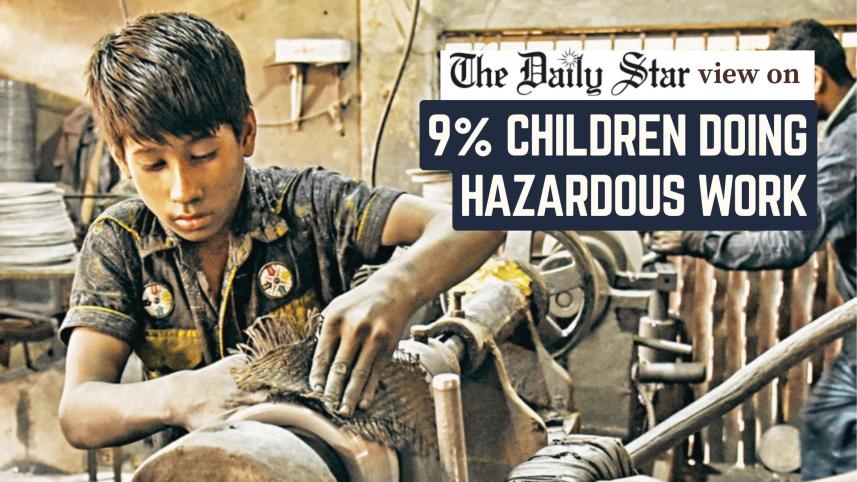
A recent survey by the Bangladesh Bureau of Statistics, with support from Unicef, has unravelled some bleak statistics on children from low-income households. Although 84 percent of children in Bangladesh complete primary school, less than half finish secondary education. Those who drop out are either married off, especially if they are girls, or pushed into hazardous labour. The survey found that the number of recently married girls aged 15 to 19 sharply increased from 32.9 percent to 38.9 percent. Nine percent of child workers (up from 6.8 percent in 2019) are in hazardous jobs and exposed to dangerous conditions such as extreme heat, toxic chemicals and dust, heavy loads, or unsafe tools and machinery.
Children not attending school are around 2.6 times more likely to be in labour. According to the survey, northern divisions of Rajshahi and Rangpur have a higher number of child workers compared to Dhaka, Chattogram and Sylhet, where there is better access to education and economic opportunities. With the cost of living sharply rising and incomes not keeping pace, low-income families often depend on their children's income to run the household. In addition, education quality and teachers' inability to motivate students are also leading to drop outs. While boys are put into economic work, girls are burdened with unpaid domestic work and then married off while they are teenagers. Furthermore, gaps in contraception availability and family planning are pushing more girls into early pregnancies, often leading to health complications.

Both child labour and child marriage rob children of their childhood, their right to education and good health. The increase in numbers shows that these are crises that need to be addressed immediately. While there are laws against child labour and child marriage, they are not enforced because society has normalised both these maladies.
Experts have pointed out that unless the reality of extreme poverty of these households is addressed, it will be very difficult to combat these evils. Social safety nets must ensure that poor households can meet basic needs. The government should also raise awareness among parents regarding the need for education and the harmful consequences of child marriages. This requires all stakeholders, including political and religious leaders, to be on board to create social awareness. The education system must be redesigned so that schools are accessible and equipped with better-trained and better-paid teachers as well as innovative curricula that spark the interest of students. As political parties get ready for the next elections, they must pledge their commitment to children. They must promise to enforce the existing laws to end hazardous child labour and child marriage and ensure that every child has access to education.
 For all latest news, follow The Daily Star's Google News channel.
Comments