


RMCH’s ICU crisis unacceptable
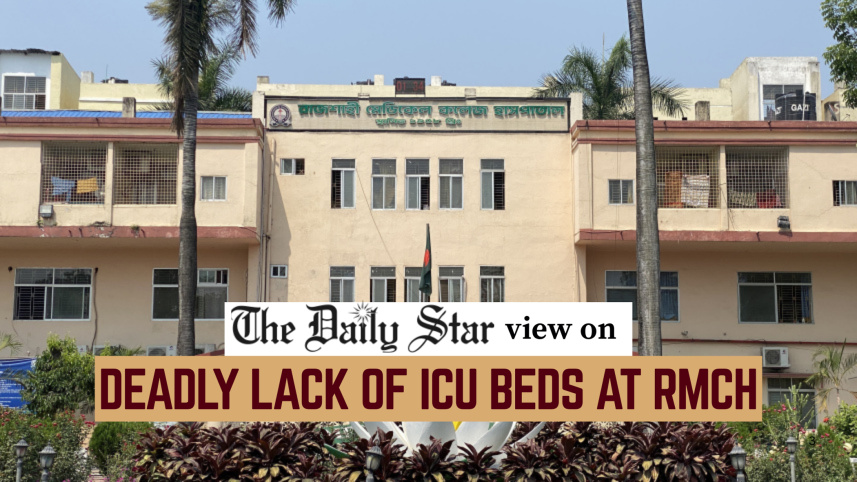
We are shocked and outraged by a report that some 229 lives were lost in March alone—nearly half of whom were children—due to not receiving timely intensive care unit (ICU) treatment at Rajshahi Medical College Hospital (RMCH). This is an institution that has been coming under constant scrutiny in recent weeks for failing its patients by not ensuring access to critical treatment at a time when they needed it most. It does not, unfortunately, come as a surprise that public hospitals outside of Dhaka are failing to provide critical care and continuously suffer from an acute shortage of skilled labour, which hinders treatment processes despite there being necessary equipment and infrastructure.
However, for a division-level hospital like RMCH (which is the largest health facility in the country’s northwest region), such a failure to ensure treatment for critical cases cannot be dismissed as just negligence, given the fatal consequences. It is also particularly worrying that so many lives have already been lost there this year alone, which begs the question: why is the matter not being taken more seriously, especially amid the recent measles outbreak? What are the authorities waiting for?
 For all latest news, follow The Daily Star's Google News channel.
 According to an RMCH spokesperson, some 119 children and 278 adults were admitted to the hospital’s ICU last month. From the waiting list of 386 children, 91 died and among adults, some 138 patients died out of 614 on the waiting list. These figures make one thing clear: the hospital is operating far above its capacity. With just 40 ICU beds—12 for children and 28 for adults—the shortfall becomes a glaring one during public health crises. And, this scenario is not exclusive to RMCH, nor is it only prevalent outside of Dhaka, as we have observed in the case of Dhaka Shishu Hospital, which recently hit capacity amid rising measles cases.
We call upon the government and all relevant authorities to treat the lack of ICUs with greater seriousness. It is also high time for the authorities to realise that it is not enough to build infrastructure if the facilities are not made operational in time. The 200-bed children’s hospital in Rajshahi, completed yet unused, is a stark example of failure in planning and execution. At the same time, nearly 32 percent of sanctioned posts in the health sector remain vacant, undermining existing capacity. Therefore, the priority is clear: operationalising idle facilities, filling critical vacancies, and ensuring resources reach overlooked regions when needed. We expect the government to leave behind the tradition of blame shifting and instead focus on stopping the preventable deaths which continue in a system that rarely ceases to fail its most vulnerable populations.
Comments