


A strategic roadmap for Dhaka's solid waste management

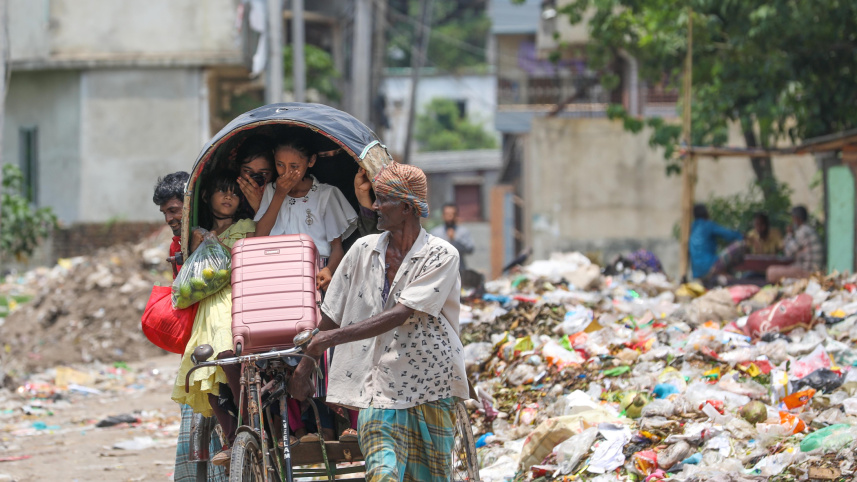
Dhaka is the second-most populous city in the world and is projected to be the world’s most populous city by 2050, according to a 2025 report published by the United Nations on world urbanisation prospects. The rising population, coupled with unplanned urbanisation, makes Dhaka a challenging ground when it comes to solid waste management, which is one of the top environmental problems in the city and a major public health issue.
There are four city corporations in urban Dhaka—Dhaka North City Corporation (DNCC) covering some 197.18 square kilometres, Dhaka South City Corporation (DSCC) covering around 109.24 square kilometres, Gazipur City Corporation (GCC) covering some 329.53 square kilometres, and Narayanganj City Corporation (NCC) covering an area of 72.43 square kilometres. The city corporations serve a total area of approximately 708.38 square kilometres, and the total population living in this area is estimated to be around 13.94 million, as per the 2022 population census. This translates to a population density of 19,680 persons per square kilometre, which is the most densely populated part of the country, explaining why the four city corporations are struggling to manage the rapidly increasing volumes of solid waste.

The four city corporations in Dhaka generate about 11,500 tonnes of solid waste daily—6,500 tonnes from DNCC and DSCC, 4,000 tonnes from GCC, and 1,000 tonnes from NCC. The average per capita waste generation stands at 0.65 kg per day. Approximately 75 percent of the waste is organic with high moisture content, and 70-80 percent is collected daily.
The four city corporations have the herculean task of collecting, transporting, and making sure the solid waste is disposed of in a hygienic manner. However, this task is often obstructed due to the lack of proper infrastructure facilities and an acute shortage of skilled manpower. During a string of visits to all four city corporations between September and November 2025, I have found that in DNCC and DSCC, the community-based organisations collect waste via rickshaw vans, transfer it to about 114 secondary transfer stations, from where about 400 trucks transport it to the final destination—the two landfill sites in Aminbazar of DNCC and Matuail of DSCC—each site covering about 100 acres of land. Gazipur and Narayanganj cities also collect a part of the solid waste through community-based organisations by door-to-door collection service and collect the rest of the waste by the municipal staff from the households, business establishments, institutions and industries, and keep them in dustbins from where about 300 municipal trucks transport them to respective landfill sites.
That being said, a huge amount of solid waste, about 20 percent, remains uncollected. The uncollected plastic bottles and polyethene bags pollute the soil, water, and air and impact the local environment. The plastic waste often ends up in the drainage system, blocking and causing water stagnation and flooding. In addition, a huge amount of waste goes into the water bodies, causing pollution. The Sustainable Development Goal (SDG) 11—sustainable cities and communities—sets a target to “reduce the adverse per capita environmental impact of cities, including by paying special attention to air quality, municipal, and other waste management by 2030”. Safe waste disposal is thus one of the major areas requiring significant improvements in order to achieve this SDG goal.
The city corporations, therefore, need to design proper waste collection and disposal methods and invest adequately in the next five years to achieve the 2030 agenda. They should also take it seriously to strengthen operational procedures, adopt innovative technologies, and involve local communities, NGOs, and the private sector in proper solid waste management. Furthermore, the corporations must also ensure safe disposal of waste to minimise pollution in surface and ground water, soil, and air through recycling, reuse, and incineration methods.
A very small amount of waste is segregated in Dhaka city, as domestic source segregation has not been introduced yet. An ideal and globally applied waste management approach is the 3R (reduce, reuse, and recycle) strategy. This approach helps to separate and reuse a large amount of recyclable waste, such as glasses and plastic bottles, paper, and hardboards, which can be marketed for profit. The organic items, which constitute about 70 percent of solid waste in Dhaka, can be transformed into composting fertilisers. Technology exists today for this transformation to produce organic fertilisers, which can drastically lower the volume of solid waste, improve food security and reduce the use of chemical fertilisers. Although all four city corporations are thinking of introducing this transformational technology, none have put it on the ground yet. Consequently, waste recycling is still undertaken informally by scavengers belonging to underprivileged communities, who often risk their health while the formal sector neglects the opportunity for waste recycling in a land-scarce and densely populated urban environment.
Donor-funded solid waste management projects in Dhaka, implemented by the DNCC and DSCC, with support from the Japan International Cooperation Agency (JICA) and the World Bank, have succeeded in somewhat improving the situation in recent years. These initiatives focused on upgrading from open dumping to sanitary landfills, promoting 3R (reduce, reuse, recycle) policies, and proposing waste-to-energy solutions. Despite these projects, limited collection, inadequate transportation, and unscientific disposal of a significant amount of daily waste in the capital city of the country cause an adverse impact on the environment, spreading diseases and badly affecting the health of the inhabitants. So it is essential for a city like Dhaka, which is the second largest in the world, to put a stronger effort at the highest political level and arrange the financial and technical support needed to transform Dhaka into an environmentally healthy city by 2030.
Dr Nawshad Ahmed a retired UN official, is an economist and urban planner.
Views expressed in this article are the author's own.
Follow The Daily Star Opinion on Facebook for the latest opinions, commentaries, and analyses by experts and professionals. To contribute your article or letter to The Daily Star Opinion, see our guidelines for submission.
 For all latest news, follow The Daily Star's Google News channel.
Comments