


Protect low-income families from measles-induced poverty
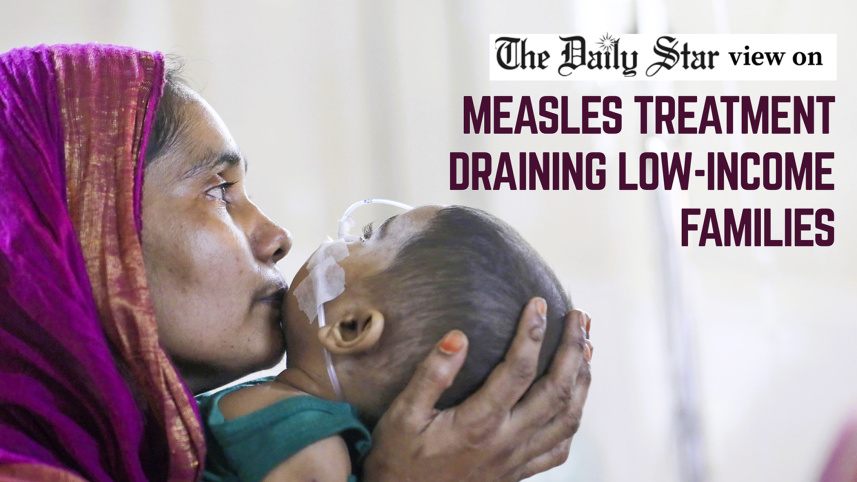
It is unfortunate that parents are often driven to poverty simply to keep their children healthy and alive in Bangladesh, where citizens pay more than two-thirds of their total health expenditure out of their pockets. The gravity of the situation becomes evident when we are hit with health emergencies such as the ongoing measles outbreak. According to a recent Prothom Alo report, many parents of measles-affected children are struggling to afford the treatment costs, especially when the patients require paediatric intensive care (PIC), which is in inadequate conditions at public hospitals.
The report quoted several parents from low-income families who have spent between Tk 1 lakh and Tk 7 lakh for their children’s treatment. Many are having to borrow money to pay for lengthy hospital stays, ambulance services, expensive PICU care (sometimes in private hospitals), medicine and diagnostic costs, and even attendant food and accommodation expenses. Even after all this, some parents have had to suffer the misfortune of watching their cherished children breathe their last. Between March 15 and April 15, there have been 166 cases of suspected measles deaths in the country. In 24 hours till 8am on April 16, six more children died with measles symptoms while 811 children were admitted to hospitals, according to the Directorate General of Health Services.

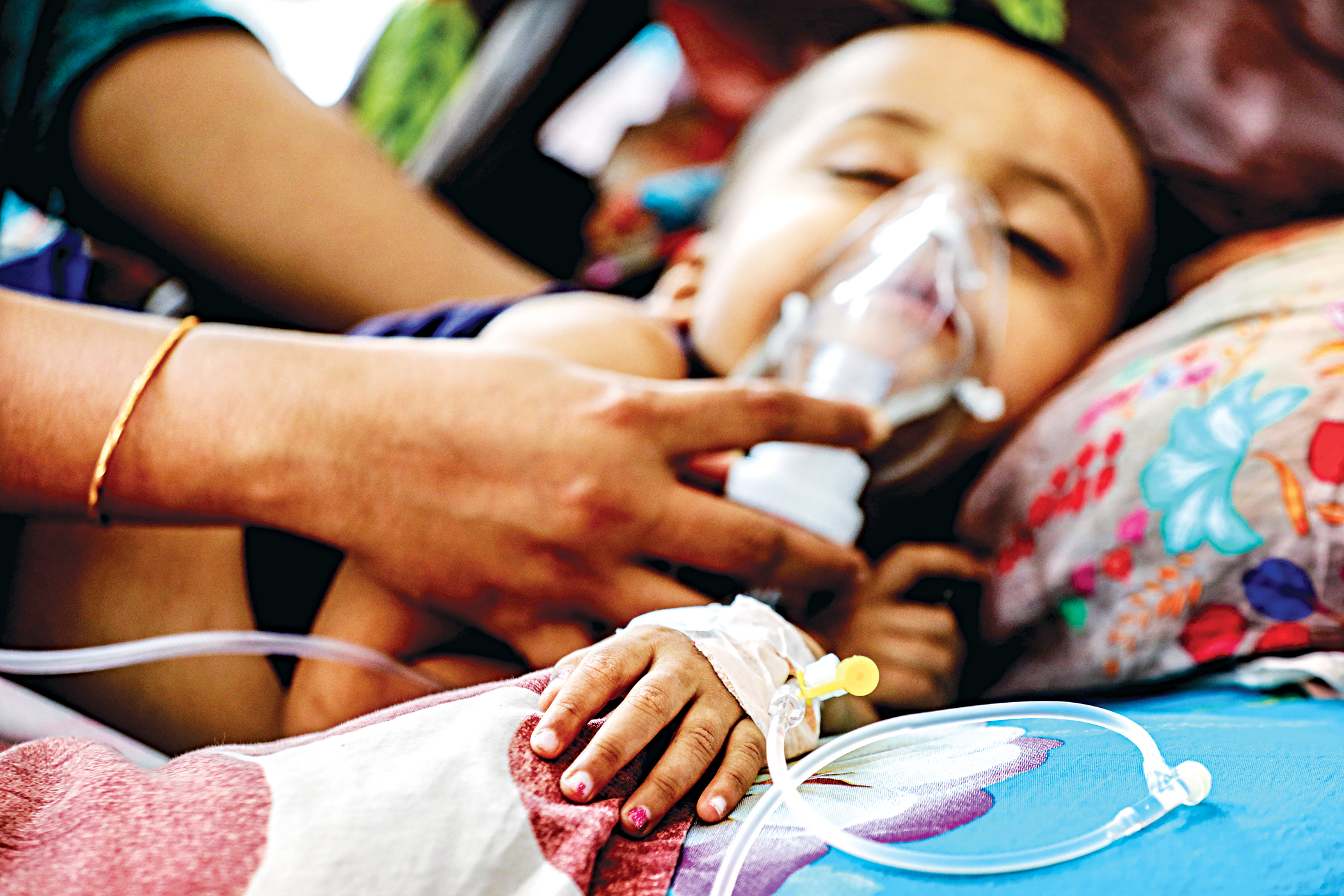
Although costs at government hospitals are comparatively low, many lack the capacity to provide care during disease outbreaks. Several district hospitals lack adequately equipped ICUs, let alone PICUs. Even when ICU beds are available, staff shortages make it impossible to provide patients with much-needed care. Even divisional hospitals, like the Rajshahi Medical College Hospital (RMCH), deal with such crises. In March alone, 229 patients died at RMCH while waiting for ICU beds. Among them, 19 were children.
What’s unfortunate is that these deaths could have been prevented to a large extent had we ensured a 95-percent immunisation rate through timely measles vaccination. Thankfully, the government has started an immunisation drive, and it must not stop until the necessary coverage to rein in the outbreak is achieved. At the same time, as it did during the height of the Covid pandemic, the government must open a special measles cell with emergency contact numbers; collect, update, and disseminate information on available PICUs in both public and private hospitals; urgently address the staffing and ICU crises at public hospitals outside Dhaka; and issue early disease detection and quarantine protocols if needed. Most importantly, authorities must formulate innovative policies to reduce our high out-of-pocket health expenditure, which is pushing more and more people into poverty.
 For all latest news, follow The Daily Star's Google News channel.
Comments