


Even if deferred, Bangladesh must prepare for eventual LDC graduation

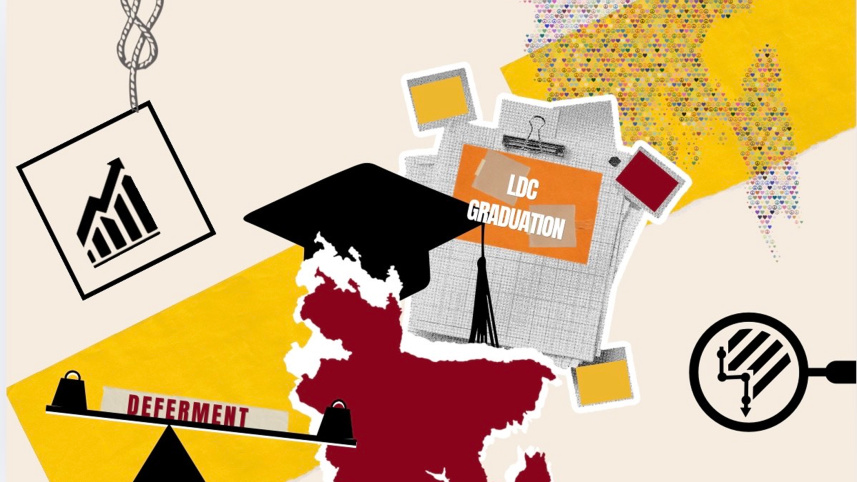
Unless the government’s request for deferment is granted, Bangladesh is set to graduate from the Least Developed Country (LDC) category in November this year. This would be a historic milestone for the country as this is the culmination of decades of steady progress in income levels, human development, and structural changes. The country has consistently surpassed all three graduation criteria: per capita gross national income (GNI), human asset index (HAI), and economic vulnerability index (EVI). However, behind this achievement lies a troubling truth: while it may appear ready to graduate officially, Bangladesh is still not fully equipped to handle the practical aspects of the transition.

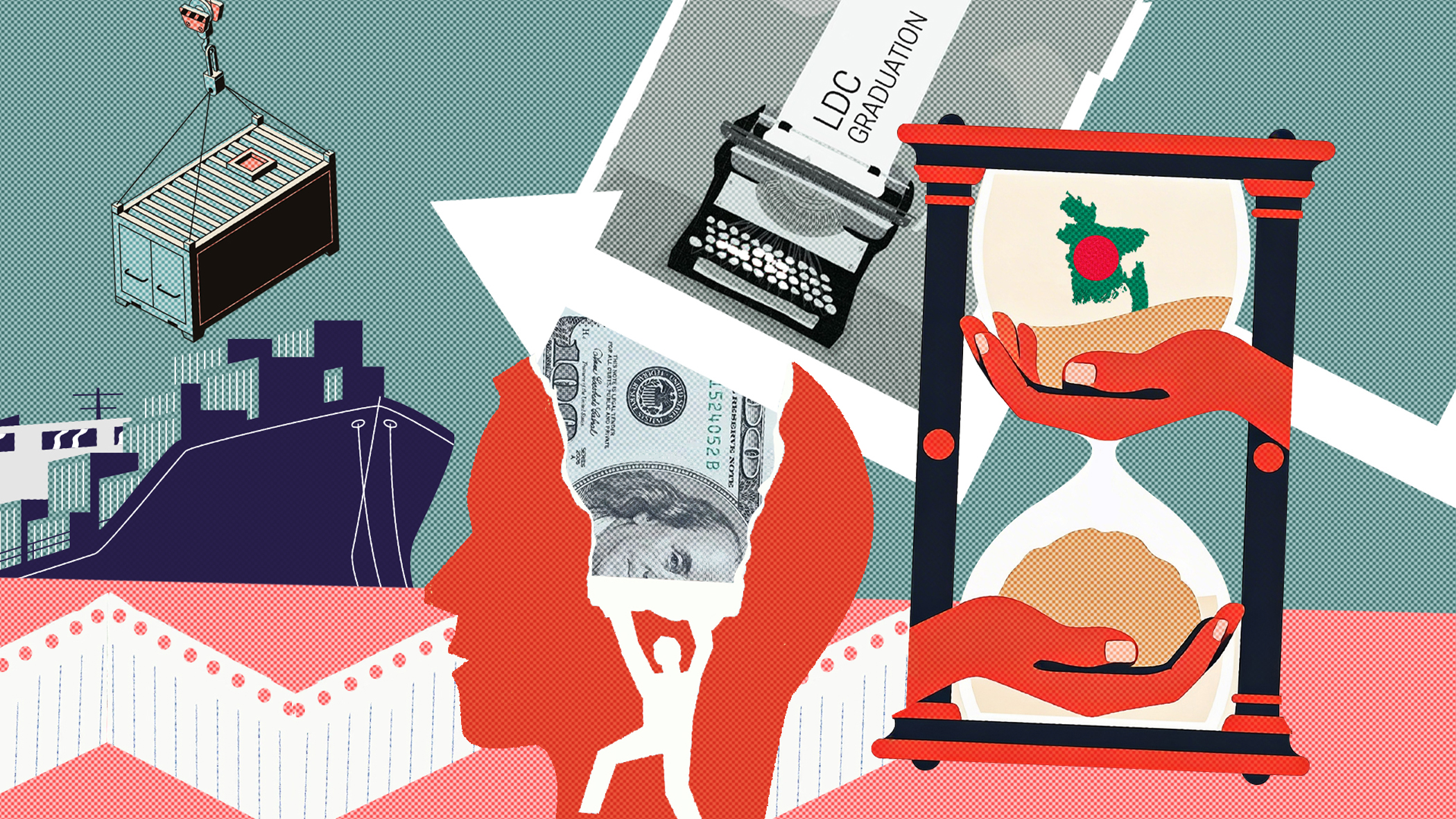
There are key differences between eligibility and readiness. Graduation is not just about past achievements. It is a future-oriented assessment of whether a country’s economy, institutions, and policies can sustain progress without international support and various forms of flexibility. Recent evidence suggests we should proceed with caution on this matter. Bangladesh’s readiness for LDC graduation is under strain due to macroeconomic pressures and structural weaknesses. The country is entering the final stage of its graduation process during a fragile macroeconomic period. A consistently high inflation rate over the past three years reduced real incomes and pushed many people back into poverty. This setback in poverty reduction is the first of its kind in recent decades and highlights deep vulnerabilities that must be addressed.
External sector pressures are also significant. Foreign exchange reserves have fallen sharply—from $46 billion at the end of 2021 to $30 billion (BPM6) as of April 9, 2026. This covers import expenses of four or five months only. The taka has depreciated continuously, raising the domestic costs of essential imports such as fuel, food, and industrial input. In this circumstance, policy options to address post-graduation shocks are quite limited.
Fiscal fragility compounds these risks. Bangladesh’s tax-GDP ratio was only 6.6 percent in FY2025, one of the lowest worldwide. This greatly restricts the government’s capacity to invest in critical sectors such as infrastructure, human capital, and social safety nets, among others. Fiscal capacity is further constrained by high debt servicing. The country now faces a moderate risk of debt distress, up from low risk, mainly due to downward revisions in export data that weaken key debt indicators under stress scenarios.
The financial sector poses perhaps the most immediate systemic risk. Non-performing loans (NPLs) have surged to 30.6 percent of total banking sector loans as of December 2025. Such a high NPL ratio indicates significant governance failures, regulatory gaps, and politically driven lending practices. Such a stressed banking system is ill-prepared to sustain the investment growth needed to boost competitiveness in a post-LDC landscape.
Overall, these macroeconomic indicators suggest that Bangladesh is approaching LDC graduation amid increased economic vulnerability rather than stability. The most immediate and tangible impact of this transition will be on trade. The country’s export success, especially in the RMG sector, has heavily relied on preferential market access and policy flexibilities provided by the World Trade Organization (WTO). Revocation of these preferences post-graduation will fundamentally alter the country’s competitive landscape. The European Union is the most vital market for Bangladesh, accounting for about 44 percent of its exports. As trade policies evolve, safeguard measures could lead to tariffs of 12 percent on average on Bangladeshi RMG products, even if the country qualifies for GSP+. On the other hand, countries like Vietnam and India enjoy zero tariffs through free trade agreements. This disparity could significantly diminish Bangladesh’s market share.
That Bangladesh’s capacity to offset these preference losses is limited adds to the concerns. Export diversification has progressed slowly, with dependency on RMG products increasing rather than decreasing. Structural challenges such as high logistics costs, which are currently about 16 percent of GDP, port congestion, energy shortages, and compliance issues continue to raise the cost of doing business.
In effect, Bangladesh risks transitioning to the post-LDC phase with weakened external competitiveness at a time when global trade itself is becoming more fragmented and protectionist. The country was initially set to graduate in 2024, but the graduation period was extended due to the global shock caused by the Covid pandemic. The two-year extension till 2026 was intended to be a phase of strategic readiness, including reforms, diversification, and institutional strengthening. However, this period has, unfortunately, been overtaken by a series of overlapping crises. The pandemic was followed by worldwide commodity shocks, supply chain disruptions, tighter financial conditions, and rising geopolitical tensions. Domestic political upheaval in July-August 2024 led to a change of government, which shifted policy focus from long-term reform to stabilisation. In this context, following the national election in February 2026, the new government promptly applied for a three-year deferment of LDC graduation considering the ongoing macroeconomic stress, a political transition, and global uncertainty.
Although a smooth transition strategy (STS) with 157 actions was adopted in February 2025, its meaningful implementation has been hindered by insufficient preparation. Institutional coordination remains weak and implementation capacity strained. Therefore, a three-year deferment would provide critical breathing space to stabilise the macroeconomy, address major trade uncertainties, especially with the EU, strengthen financial governance, and accelerate STS implementation.
However, this extension should not lead to complacency. It must be rooted in a well-defined, efficient reform plan with specific, measurable milestones.
This preparation must contain a stringent reform agenda. Macroeconomic stabilisation should be prioritised. Revenue collection must be improved via comprehensive tax reforms, establishing a credible plan to increase the revenue-GDP ratio to at least 10 percent in the short to medium terms. Public spending should be reoriented to focus on investments that boost productivity and on social protection.
In the banking sector, tackling NPLs, strengthening regulatory discipline, and improving governance are crucial to restoring confidence and enabling credit for productive investments. The banking sector reform measures must be an ongoing process. Political intervention in the sector’s decision-making process must be curtailed to achieve better outcomes.
Enhancing competitiveness requires structural reforms. Key steps include reducing logistics costs, improving port efficiency, ensuring a reliable energy supply, and helping firms meet global compliance standards. To effectively diversify exports, it is essential to create sector-specific hubs, implement performance-based tax incentives, and establish a dedicated technology upgrading fund for SMEs. Active support should be directed towards sectors such as pharmaceuticals, agro-processing, electronics, and light engineering through targeted policies and investments. In addition, trade diplomacy efforts should focus on early negotiations with the EU and on developing institutional capacity to handle tariff changes after LDC graduation. Bangladesh needs to prepare for a future where it can comply with WTO rules without preferences.
Institutional coordination must be enhanced by establishing high-level mechanisms with clear accountability. And last but not the least, it is essential to incorporate climate resilience into the development strategy. Bangladesh must obtain concessional funds while enhancing its domestic capacity for climate adaptation and mitigation.
Dr Fahmida Khatun is an economist and executive director at the Centre for Policy Dialogue (CPD). Views expressed in this article are the author’s own.
Views expressed in this article are the author's own.
Follow The Daily Star Opinion on Facebook for the latest opinions, commentaries, and analyses by experts and professionals. To contribute your article or letter to The Daily Star Opinion, see our guidelines for submission.
 For all latest news, follow The Daily Star's Google News channel.
Comments