


Persistent gas crisis calls for bold policies
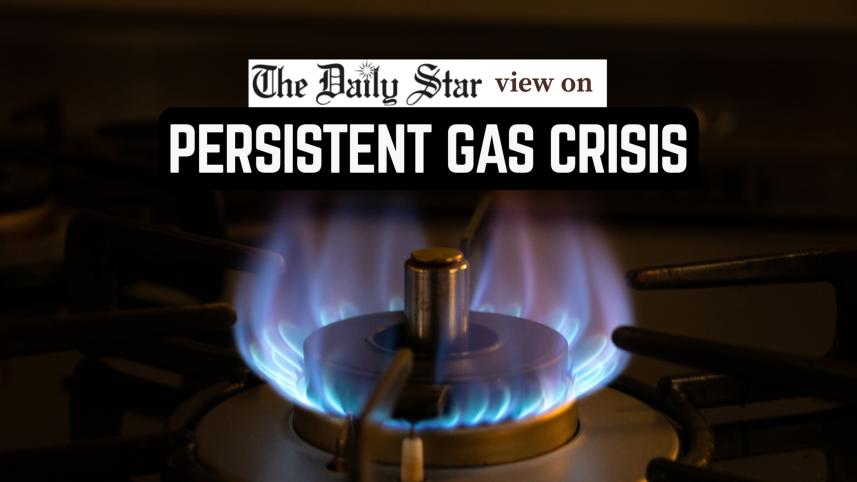
At a time when households are already grappling with high food prices, the persistent gas crisis has added to their hardship. On Saturday, a pipeline leak led to a complete or partial gas shutdown in many Dhaka neighbourhoods, leaving families unable to cook. This comes amid an ongoing LPG shortage driven by flawed policies and a nexus of opportunistic suppliers, dealers, and distributors, which made cylinders unavailable even at prices far above the fixed rate. The gas shortage also forced most autogas stations to shut down, affecting private car owners and ride-sharing drivers. While middle- and upper-income groups managed through electric cookers or takeaways, the poor and marginalised are having to bear the brunt of the crisis, highlighting the country’s energy vulnerability.
According to media reports, Saturday’s natural gas shortage in Dhaka was caused by a valve explosion on a distribution line near Gono Bhaban. Titas Gas Transmission and Distribution had to shut down several adjacent valves to repair the damage. This came at a time when some neighbourhoods have already been receiving almost no gas supply for a couple of months due to a leaking pipeline under the Turag River. In recent winter sessions, low gas pressure has become a common phenomenon, forcing families to adjust household routines around an erratic supply while continuing to pay full bills.

In the last fiscal year, the country experienced a demand-supply deficit of more than 130 crore cubic feet of natural gas. According to a Bonik Barta report, year-on-year gas supply on January 10 this year was 17.60 crore cubic feet lower. To bridge this gap, the government increased LNG imports, but that too failed to prevent the current crisis.
Meanwhile, a handful of companies controlling LPG imports appear to have created a supply shortage, citing vessel unavailability and high shipping costs. In some cases, they charged inflated wholesale prices, which distributors and retailers passed on to consumers. Distributors have also alleged that refilling empty cylinders has become increasingly difficult. This is partly attributed to the reduced presence of some influential LPG importers who once controlled a large share of the market during the Awami League government.
While we cannot expect the interim government to initiate long-term solutions with only about five weeks left in its tenure, we must say that it could have done more than conduct ad hoc drives against small retailers to control the LPG market. That said, the government’s recent decision to reduce and exempt VAT at several supply and distribution stages to expedite LPG shipments, directing the central bank to ease the LC opening process and removing LPG import ceiling, is welcome. In the long run, the next government must heed expert opinion and enact bold policies to reduce dependency on energy imports. Investment in natural gas exploration, renewable energy, and the strengthening of public institutions in the energy sector should be among its highest priorities.
 For all latest news, follow The Daily Star's Google News channel.
Comments