


Overseas manpower recruitment: Approval for 252 agencies raises red flags

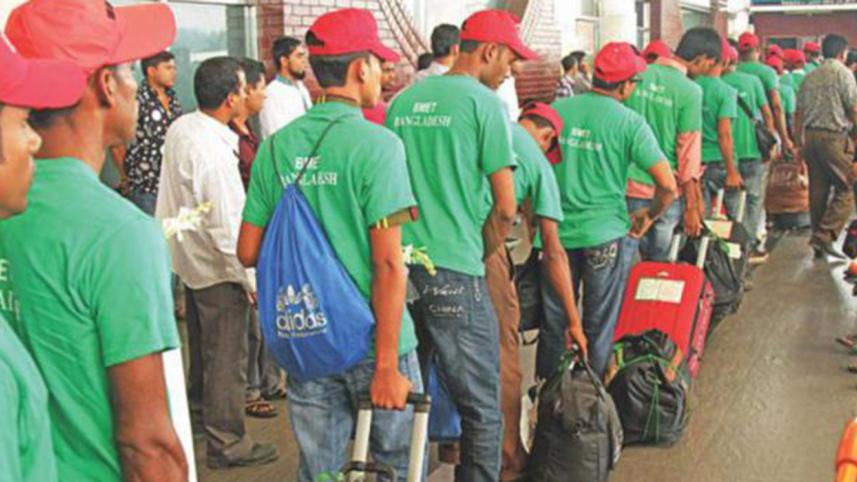
Bangladesh has approved licences for 252 new overseas recruiting agencies, bringing the total to a record 2,646, even as experts warn that the sector is already buckling under systemic corruption and inadequate oversight.
The expansion that comes under the oversight of the Expatriates’ Welfare and Overseas Employment adviser, Asif Nazrul, makes the country’s migration network the largest in South Asia.

The decision directly contradicts recommendations from a government-commissioned White Paper on the economy released in December 2024, which urged a “reasonable” reduction in the number of agencies to curb exploitation and financial irregularities.
“Many old recruiting agencies are unfit and involved in corruption. We suggested reviewing and filtering them through a re-registration process,” said economist Debapriya Bhattacharya, who led the experts’ panel that prepared the White Paper.
“I am surprised that instead of cleaning up the mess, the authorities have raised the number of agencies,” he told The Daily Star.
The government must take responsibility for the approvals, which will likely clutter the system. This is a real concern, he added.
According to the White Paper, Bangladeshi workers pay the highest migration cost in South Asia. Over the past decade, 19 percent of workers, who paid agents in advance, failed to migrate, resulting in a financial loss of around Tk 31,660 crore each year.
Despite repeated attempts, this correspondent could not reach Adviser Asif over his mobile phone. He also did not respond to text messages.
When contacted, Niamat Ullah Bhuiyan, senior secretary at the expatriates’ welfare ministry, said that having more agencies reduces the possibility of manipulation by syndicates.
“If each agency sends even one worker, the total number of migrant workers will increase significantly. Having a large number of agencies won’t create any problem as long as they maintain ethical standards.”
Referring to violations of rules by recruitment agencies, he said legal measures are in place to control them. Harsh punishment is meted out to dishonest agencies, and no one is given any special favour.
Over the years, complaints of fraud and manipulation against recruiting agencies have remained high.
Data from the Bureau of Manpower, Employment and Training (BMET) shows that 2,213 complaints were filed in 2024; 2,380 in 2023; 1,240 in 2022; 582 in 2021; and 905 in 2020.
The number of recruiting agencies has seen a steady rise since 2009, when it hovered around 900. The figure stood at about 2,300 before the ouster of the Awami League government in August 2024.
The list of the newly approved agencies was published by the expatriates welfare and overseas employment ministry on November 4 last year.
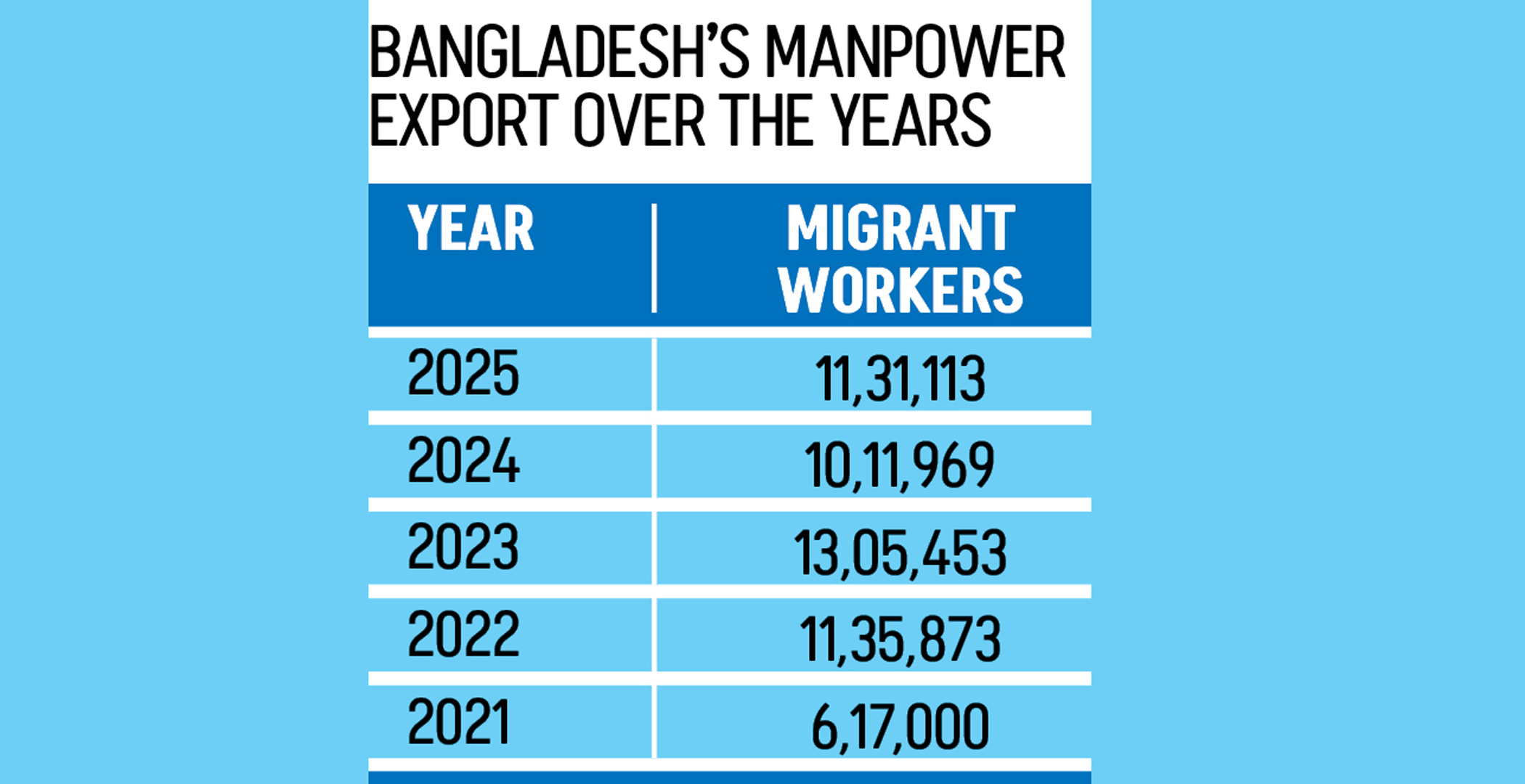
Bangladesh now has the highest number of recruitment agencies in South Asia, compared to 1,988 in India; 2,537 in Pakistan; 1,041 in Nepal; 857 in Sri Lanka; and 31 in Bhutan.
Fakhrul Islam, former joint secretary of Bangladesh Association of International Recruiting Agencies (BAIRA), said the approval of new recruiting agencies has both positive and negative sides to it.
The move is positive in the sense that it will allow new firms to operate in compliance with government regulations, he said.
Fakhrul, however, warned that the outlook for the current labour market situation is weak.
“The new agencies, which have to bear high monthly expenses, may not survive unless new labour markets open. The sector could face a serious crisis if that does not happen,” he said.
 For all latest news, follow The Daily Star's Google News channel.
 Shariful Hasan, associate director of the BRAC Migration Programme, said that issuing more licences will not help reduce migration costs or the suffering of migrants.
“I don’t think the 252 new licences will improve the migration system or ease hardships of migrant workers… What matters is transparency, accountability, and proper management,” he told this newspaper.
SECTOR IN CRISIS
Experts say that though the country saw record remittance of $31 billion last year, there has been hardly any progress in reducing migration costs, curbing exploitations by brokers, or protecting workers’ rights.
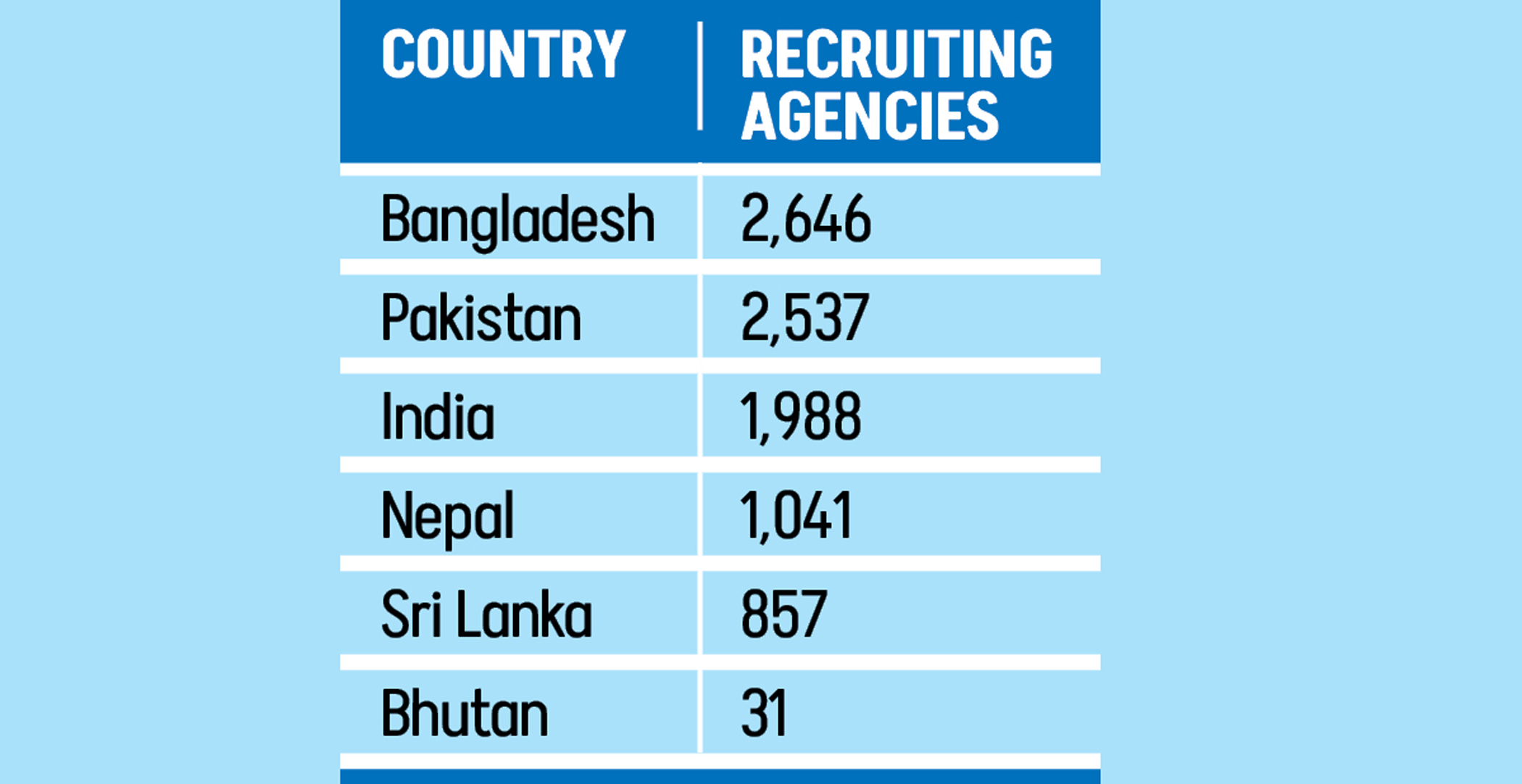
Saudi Arabia remains Bangladesh’s largest labour destination, but workers migrating to the kingdom have complained of rising costs of residence permit and difficulties in securing jobs there. Last year, nearly 70 percent of the 11.31 lakh Bangladeshi workers who migrated abroad went to Saudi Arabia
Over the past decade, many countries, including Oman, Bahrain, Libya, Sudan, Egypt, Romania, and Brunei closed their labour markets for Bangladeshis. Malaysia also halted recruitment of Bangladeshi workers amid allegations of syndicate trading during the tenure of the AL government.
While the UAE labour market remains open on paper, visa issuance to Bangladeshi workers has been suspended since July 2024.
In a positive development, Bangladesh signed two agreements with Japan in May 2025, under which Tokyo committed to hiring at least 100,000 Bangladeshi workers over five years. However, only 1,563 workers went to Japan last year.
In October last year, Bangladesh struck a deal with Iraq, which agreed to resume labour recruitment that remained stalled since 2020.
The gradual shrinking of legal migration opportunities has led to a rise in irregular migration.
According to the Displacement Tracking Matrix of the International Organisation for Migration, Bangladesh ranked first in terms of irregular sea crossings to Europe last year, with 22,145 people entering through unsafe routes, up from 15,304 the previous year.
Young migrants often rely on brokers and fall prey to human trafficking. Data from the home ministry’s Public Safety Division show that 4,546 cases were filed against 19,280 people over human trafficking from January 2019 to January 2025. Of them, 157 were convicted.
Comments