


Panic buying drains filling stations


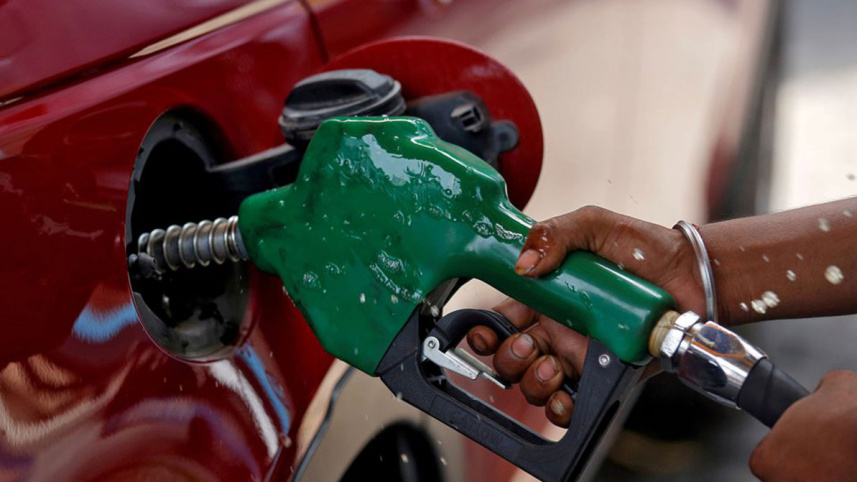
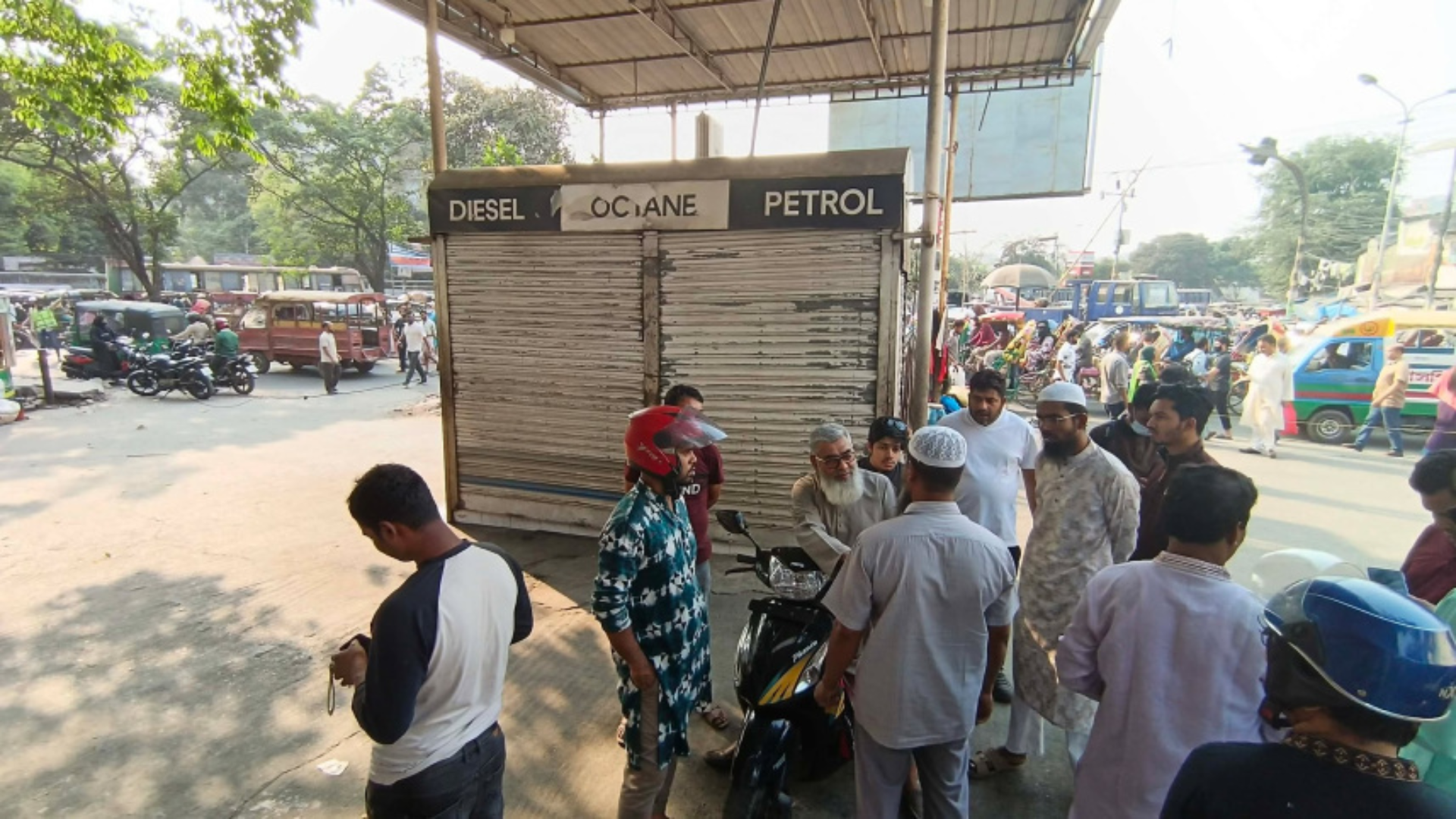
Many filling stations across Bangladesh, including Dhaka, Chattogram, and Rajshahi, ran dry today as panic buying continued for a second day amid fears of supply disruption due to the war in the Middle East.
Long queues stretched into the night, with motorists scrambling to secure fuel despite repeated government assurances that reserves remain adequate and prices will not rise this month.

Power, Energy and Mineral Resources Minister Iqbal Hassan Mahmood Tuku met Prime Minister Tarique Rahman at his office today and briefed him on the situation.
The minister reiterated that Bangladesh’s fuel stocks are sufficient and urged citizens not to panic.
“There are adequate reserves of diesel, petrol and octane in the country. People have no reason to be worried,” Tuku told reporters at the Prime Minister’s Office in Tejgaon.
He added that two more fuel-carrying vessels are scheduled to arrive tomorrow, ensuring continued supply.
The minister acknowledged public anxiety triggered by the Middle East conflict and the shutdown of the Strait of Hormuz, but stressed that panic buying itself is creating unnecessary pressure.
“If people start stockpiling fuel, it creates artificial shortages,” he said, adding that mobile courts will be deployed from tomorrow to monitor filling stations and prevent irregularities.
According to Bangladesh Petroleum Corporation (BPC), as of today the country held 15,000 tonnes of petrol, enough for 15 days’ supply; 23,000 tonnes of octane, enough for 25 days’ supply; and 129,000 tonnes of diesel, enough for 14 days’ supply.
Officials said despite delays in scheduled arrivals, supply remains manageable. One vessel carrying refined diesel arrived on March 4, while shipments expected on March 6 and today are now due tomorrow. Another vessel is expected on March 12.
Under BPC’s March import schedule, Bangladesh is set to receive 200,000 tonnes of crude oil, 374,000 tonnes of diesel, 25,000 tonnes of octane and 45,000 tonnes of jet fuel from Saudi Arabia and Abu Dhabi.
April shipments include 100,000 tonnes of crude oil, 293,000 tonnes of diesel, 50,000 tonnes of jet fuel and 25,000 tonnes of octane.
However, officials cautioned that the ongoing conflict could delay arrivals.
Fuel sales have spiked dramatically since the conflict began on February 28. BPC data shows that daily average sales of diesel jumped from 12,879 tonnes in February to 24,478 tonnes between March 1-4. Total sales in those four days reached 97,912 tonnes, up 76 percent from the same period last year.
The daily average sales of octane rose from 1,173 tonnes in February to nearly 2,000 tonnes in early March, a 71 percent increase while petrol sales surged from 1,212 tonnes a day on an average in February to 2,345 tonnes in March 1-4, a 94 percent rise.
Officials said this sudden spike, driven by panic buying, is straining supply management and could turn “relatively low stock levels” into a major risk if imports are delayed.
Prof M Tamim, vice-chancellor of Independent University, Bangladesh (IUB) and an energy expert, explained that Bangladesh operates on a “running inventory” system rather than a strategic reserve.
“Our total storage capacity, including tankers, pipelines, and private power plant tanks, is enough for approximately 35 to 40 days,” he said. “But we lack a formal strategic storage policy where fuel is kept untouched for emergencies.”
Tamim warned that in a crisis, existing contracts may not be honoured if suppliers invoke force majeure.
 For all latest news, follow The Daily Star's Google News channel.
 Despite the cost, he urged the government to establish at least 15 days of dedicated strategic inventory to safeguard against global volatility.
To curb panic buying, the government has capped daily fuel purchases. Motorists can buy up to 2 litres of fuel oil for motorcycles; private cars up to 10 litres; SUVs/microbuses 20-25 litres; pickup trucks/local buses 70–80 litres diesel; and long-distance buses/trucks 200–220 litres diesel.
Officials said these limits are precautionary, not due to shortages.
However, rationing itself has prompted some to stockpile fuel out of fear.
Correspondents visiting stations in Dhaka, Chattogram, Khulna, Rajshahi, Pabna, Gopalganj and Rangamati found most pumps closed or selling limited quantities.
In Dhaka, only a few stations continued distribution, drawing huge crowds. Even at Friday midnight, long queues were seen at Tejgaon pumps. Employees said weekend depot closures worsened shortages.
In Chattogram, long lines formed at several stations.
“I visited eight filling stations today before coming here and standing in line,” private car driver Rezaul Karim told The Daily Star at the CMP Filling Station in the WASA area of the port city.
“But when my turn finally came after half an hour, I was told that there was no fuel left.”
In Rajshahi, temporary disruptions led to commotion at some pumps, with some suspending sales after running out of fuel and others selling limited quantities.
In one case, fuel had to be sold in the presence of police after a commotion broke out. Around 10:30am, long queues of motorcycles and other vehicles were seen at Messrs Habib Filling Station in front of Rajshahi Airport under Paba upazila.
At Nayan Filling Station in the RUET area, biker Sabuj Ahmed said he uses his motorcycle daily and was visiting different pumps, trying to fill the tank.
Solaiman Kabir, manager of Messrs Afreen Filling Station, said the ongoing situation in the Middle East has created panic among people regarding fuel availability, increasing demand two to three times compared to normal.
Customer flow normalised in Patuakhali and Gopalganj after rationing began, though crowds remained slightly higher than usual.
In Rangamati, supply was stable but demand for octane rose sharply at Kalyanpur, Rajbari, Banarupa and Old Bus Stand stations.
Minister Tuku said the government is exploring alternative sources beyond Qatar to secure future supplies. Urging citizens to remain calm, he said, “In reality, there is no shortage of fuel.”
[Our correspondents from Chattogram, Rajshahi, Khulna, Pabna, Gopalganj, Rangamati, contributed to this report]
Comments