


‘Over 3,400 dead in Iran’
Iran yesterday vowed to defend itself against any foreign threat, after US President Donald Trump said he would “watch it and see” about military action over the crackdown on protesters.
Iran’s judiciary said a protester who the United States and rights groups feared faced imminent execution would not be sentenced to death, after Trump had warned of strikes should people arrested for demonstrating be killed.

The protests were sparked by economic grievances but evolved rapidly into a nationwide movement that has constituted the greatest threat to the Islamic republic since its inception in 1979.

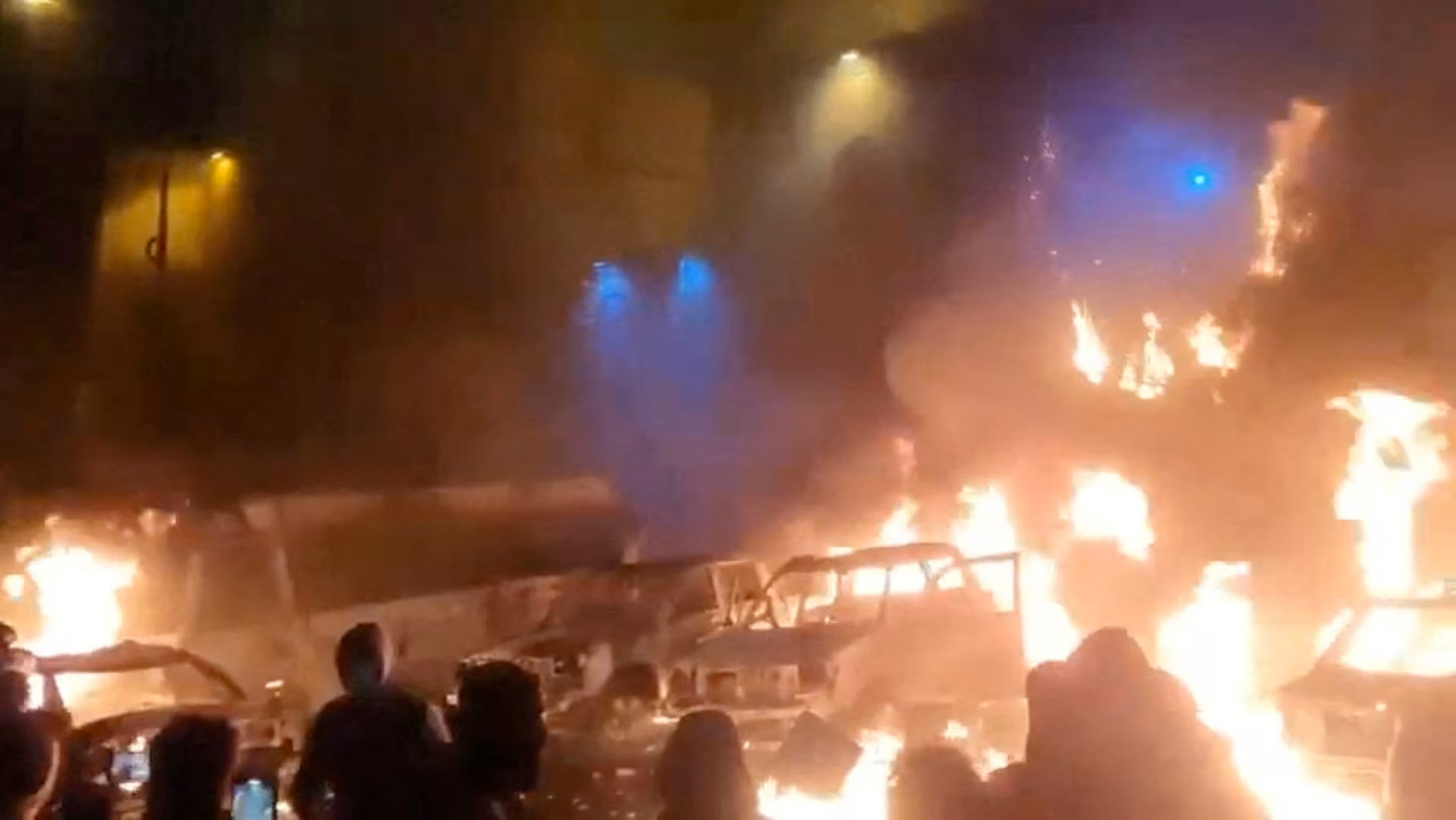
Rights groups say the crackdown by authorities, who exercise zero tolerance for dissent, has left at least 3,428 people dead. They also accuse the country’s theocratic leaders of using an internet blackout to cover up the brutality of their crackdown.
In telephone talks yesterday, Iranian Foreign Minister Abbas Araghchi told Saudi Arabian counterpart Faisal bin Farhan of the importance of “global condemnation of foreign interference in the internal affairs of regional countries”.
He also reiterated that Iran would defend itself “against any foreign threat”.
The developments came hours ahead of a UN Security Council meeting on Iran later yesterday, which was requested by the US.
On Wednesday, Saudi Arabia informed Iran it would not allow its airspace or territory to be used to attack it, two sources close to the kingdom’s government told AFP.
Up until Wednesday, the United States was threatening military action against Iran should it carry out the death penalty against people arrested over the protests.
In an announcement at the White House, Trump said he had now received assurances from “very important sources on the other side” that executions would not go ahead.
“They’ve said the killing has stopped and the executions won’t take place -- there were supposed to be a lot of executions today and that the executions won’t take place -- and we’re going to find out,” Trump said.
Asked by an AFP reporter in the Oval Office if US military action was now off the table, Trump, however, did not rule out possible US military action. “We’re going to watch it and see what the process is.”
In separate comments, Trump told Reuters in an exclusive interview that Iranian opposition figure Reza Pahlavi “seems very nice” but expressed uncertainty over whether Pahlavi would be able to muster support within Iran to eventually take over.
All eyes were on protester Erfan Soltani, 26, in prison in Karaj outside Tehran since his arrest, who is facing charges of propaganda against Iran’s Islamic system and acting against national security.
Yesterday, the Iranian judiciary said Soltani has “not been sentenced to death” and if he is convicted, “the punishment, according to the law, will be imprisonment, as the death penalty does not exist for such charges”.
Iran’s judiciary chief had vowed fast-track trials for those arrested, and prosecutors have said some detainees will face capital charges of “waging war against God”.
State media reported hundreds of arrests and the detention of a foreign national for espionage, without giving details.
In an interview with US network Fox News, Araghchi said there would be “no hanging today or tomorrow”, while accusing US ally Israel of orchestrating violence in Iran, without providing evidence.
 For all latest news, follow The Daily Star's Google News channel.
 Araghchi contends the protests devolved into widespread violence between January 7 and 10 because they were infiltrated by external “elements who had a plan to create a big number of killings in order to provoke President Trump to enter into this conflict and start a new war against Iran”.
He said the Iranian government was “in full control” and reported an atmosphere of “calm” after what he called three days of “terrorist operation”.
The US-based Institute for the Study of War, which has monitored protest activity amid the shutdown, said it had recorded “zero protests” on Wednesday.
As the tensions eased a bit, Iran yesterday reopened its airspace after a nearly five-hour closure.
However, European airlines continued to avoid flying over Iran, according to reports. Airlines were also avoiding flying over neighbouring Iraq, Reuters reported, citing information on flight tracking websites.
In a fragmented Iranian opposition, Pahlavi, the US-based son of Iran’s last shah, has emerged as a prominent voice during the unrest.
In a post on X, he yesterday outlined his vision for what he describes as a “free Iran” in remarks that appear to gesture towards a future leadership role. Pahlavi said that Iran would end its nuclear military programme and immediately halt support for armed groups abroad.
Tensions escalated on Wednesday, as Iran said it had warned neighbours it would hit American bases in the region in the event of US strikes, and a US official said the United States was withdrawing some personnel from bases in the region. Several Western officials said US military intervention could be imminent.
There are currently no US aircraft carriers positioned in the Middle East or Europe, following the Trump administration’s pressure campaign against Venezuela, US media reported. According to US cable news network NewsNation, the Pentagon has ordered the USS Abraham Lincoln strike group to head to the Middle East from the South China.
Despite the possible deescalation, fears of possible US military action continued to rile the region, and Turkey yesterday said it opposed a military operation against Iran.
China’s top diplomat Wang Yi told his Iranian counterpart in a phone call that Beijing opposed “the use or threat of force in international relations”, Beijing’s foreign ministry said.
Comments