


Iran’s struggles under repression and foreign intervention

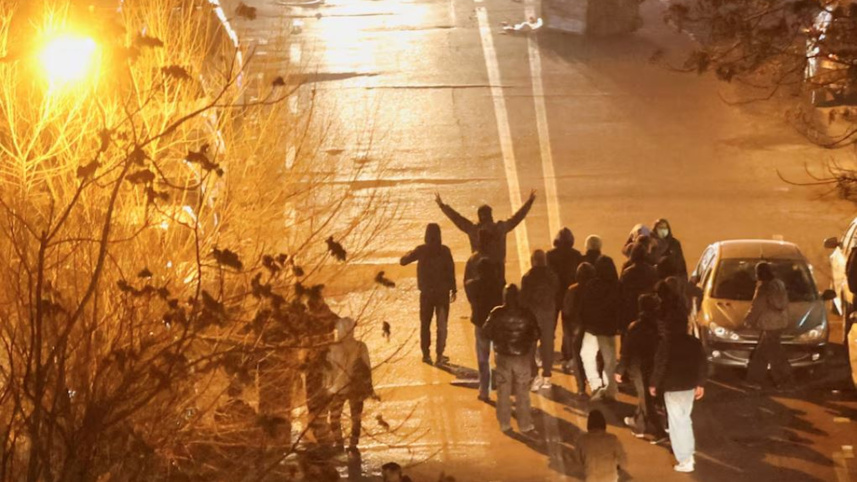
As protests in Iran show signs of waning under the weight of an increasingly brutal crackdown, Iranian officials have claimed that at least 5,000 people, including around 500 security personnel, have been killed nationwide. Yet both casualty figures and arrest totals vary widely across sources, underscoring the opacity surrounding the unrest. The US-based Human Rights Activists News Agency (HRANA), the monitoring group most widely cited by news organisations worldwide, estimates that more than 24,000 people have been arrested.
However, independent verification of these claims has become even more difficult following a near-total nationwide internet shutdown imposed on January 8, which has deepened the information blackout surrounding the protests.

In the days leading up to the shutdown, journalists and media workers inside Iran reported increasing pressure from authorities, including warnings, intimidation, and summonses, to refrain from covering events. Independent journalists faced restrictions on internet access and disruptions to mobile data—measures that had already constrained their ability to contact sources, verify developments, and publish for domestic and international audiences. Once internet access was cut entirely, even the restricted flow of information stopped.
The Committee to Protect Journalists (CPJ) condemned the move as “a blatant assault on press freedom.” Its regional director for the Middle East and North Africa, Sara Qudah, remarked, “By cutting connectivity, authorities are preventing journalists from documenting events and isolating the country from international scrutiny.”
Yet verified videos and credible eyewitness accounts from Iran point to mass killings committed on an unprecedented scale, according to Amnesty International. Its secretary general, Agnes Callamard, stated, “The international community must take urgent diplomatic action to protect protesters from further massacres and confront the impunity driving the state’s campaign of bloodshed.”
Western leaders have strongly condemned the actions of the Iranian regime. US President Donald Trump has issued varying degrees of threats and has recently stated, “It’s time to look for new leadership in Iran.” But Iran’s Supreme Leader Ayatollah Ali Khamenei, in a speech on Thursday, blamed the US for the death toll and repeatedly claimed that US and Israeli agents were responsible for the unrest.
While the Iranian regime has a long history of crushing dissent independent of foreign interference, these claims may not be entirely unwarranted. For example, according to The Jerusalem Post, towards the end of December last year, the Mossad used its Farsi-language Twitter account to encourage Iranians to protest against the regime, stating that it would join them during demonstrations. The post read: “We are with you. Not only from a distance and verbally. We are with you in the field.”
Given Mossad’s deep infiltration of Iran, as demonstrated by the shocking killings of senior Iranian generals in 2025, it is not implausible that such operations continue to this day. Former CIA Director Mike Pompeo, known for his hawkish stance against Iran in particular, tweeted: “Happy New Year to every Iranian in the streets. Also, to every Mossad agent walking beside them…”
Meanwhile, Western media coverage has largely overlooked the massive rallies supporting the Iranian government, which in some cases appear to dwarf anti-regime demonstrations. This is not to suggest that the Iranian government’s violent response is justified, nor should it diminish the profound hardships and sufferings faced by the Iranian people—conditions that are widely believed to have sparked the protests on December 28.
The collapse of the Iranian rial and soaring prices initially prompted protests by shopkeepers in Tehran, before demonstrations against Iran’s clerical rulers spread nationwide. While protesters may have been mostly silenced by now, their grievances remain unresolved. And as the risk of foreign (particularly US) intervention persists, the dire economic conditions that first ignited unrest in the closing days of 2025 have only worsened.
Even so, it is widely understood that US sanctions and Western economic manoeuvring have slowly strangled Iran’s economy, one of many ways in which confrontation with Iran has advanced over the years.
Iran is surrounded by at least 45 hostile military bases on all sides. That produces an atmosphere of intense fear in which the country’s leadership perceives itself to be in a state of constant war. Historically, such conditions have often led regimes to adopt illogical methods of suppressing dissent, as seen, for example, in Britain’s imprisonment of Bertrand Russell during World War I.
The Iranian regime’s fears mean that human rights abuses within the country, which unquestionably deserve condemnation and investigation, stand little chance of resolution so long as the leadership remains convinced that invasion or total annihilation is imminent. That fear, regardless of political bias, is not without justification.
Where there are great powers at work, not just shadowy conspiracies and intelligence agencies, but enormous cultural, industrial, and corporate networks that interact, the push forcing governments towards a particular direction is enormous. This dynamic was most starkly illustrated during recent events in Venezuela, including the bombing of its capital and the abduction of its former president and his wife.
Following those events, the US president openly claimed that his country now controlled 55 percent of the world’s oil, with analysts noting that the move significantly strengthened Washington’s strategic advantage over China.
The same logic applies to Iran. Should the US succeed in achieving regime change in Iran, a goal it has pursued for decades, it would deal a significant blow to both Russia and China. It would halt China’s access to Iranian oil and, at the very least, derail China’s Belt and Road Initiative, of which Iran is one of the most important pieces. It would also help Israel achieve one of its most vehemently pursued strategic objectives.
While recent troop movements and betting market signals suggested that the US might strike Iran by the end of January, Trump’s focus on Greenland has arguably pushed Iran down the priority list. However, some analysts argue that another push against Iran is not a matter of “if” but “when.”
In any case, for the people of Iran, the most likely outlook seems to remain “lose-lose.” Whether they can achieve freedom, economic stability, and safety without the intervention of foreign “saviours,” or without being caught up in “underhanded geopolitical machinations,” remains uncertain. For now, however, it appears unlikely.
Eresh Omar Jamal is a Bangladeshi analyst currently based in Canada. Views expressed are the author’s own.
Views expressed in this article are the author's own.
 For all latest news, follow The Daily Star's Google News channel.
 Follow The Daily Star Opinion on Facebook for the latest opinions, commentaries, and analyses by experts and professionals. To contribute your article or letter to The Daily Star Opinion, see our guidelines for submission.
Comments