


Progress under pressure: Bangladesh’s healthcare challenges

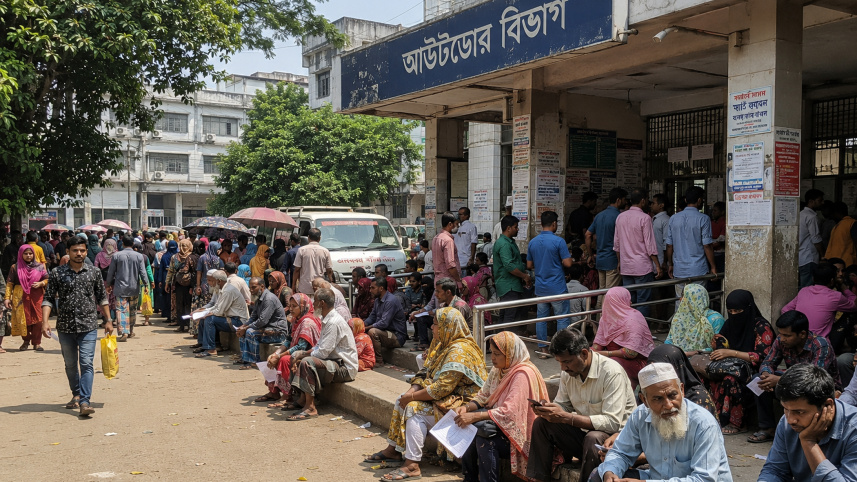
Bangladesh’s health story is often told through its remarkable achievements. Longer lives, healthier mothers, better survival for children and successful vaccination drives have transformed the nation over recent decades. Yet behind these gains lies a difficult reality: for many families, getting timely and affordable care remains a daily struggle. The country’s health system now stands at a crossroads, where past success must be matched by bold reforms for the future.
Public hospitals remain the first choice for millions of people, but they are stretched far beyond their limits. Crowded wards, long queues, limited staff, shortages of medicines and ageing facilities mean patients frequently wait longer than they should. Many eventually turn to private hospitals, where treatment often comes with bills that push households into financial hardship. With much of healthcare spending still paid directly by patients, illness can quickly become an economic crisis as well as a personal one.

Experts argue that health should be viewed not as a cost but as one of the nation’s smartest investments. A healthier population supports stronger economic growth, higher productivity and greater social wellbeing. Increasing public funding, expanding financial protection and improving access to affordable care could help reduce the burden on ordinary families while ensuring no one is left behind.
Another challenge is the unequal distribution of healthcare workers. While larger cities attract more experienced professionals, many rural communities continue to face shortages. Strengthening local health centres would allow people to receive basic care closer to home, easing pressure on major hospitals and reducing unnecessary travel for simple health concerns.
Good management is equally important. Strong oversight can improve the quality of services, protect patients and encourage higher standards across both public and private facilities. At the same time, digital innovation offers fresh opportunities. Remote consultations, secure patient records and smarter hospital systems could make healthcare faster, more connected and easier to reach, particularly for people living far from urban centres. However, technology should always complement compassion rather than replace it.
Bangladesh is also witnessing a steady rise in long-term illnesses linked to changing lifestyles and an ageing population. Preventing disease through healthier habits, greater public awareness and regular check-ups will become increasingly important if the country hopes to reduce future pressure on hospitals.
The private sector has an essential role to play, provided it works alongside government under clear standards that promote quality and affordability. Greater investment in research, skilled professionals and international partnerships could further strengthen the country’s health services.
Ultimately, every reform should begin with one simple principle: the patient comes first. A modern, fair and people-centred health system will not only save lives but also shape Bangladesh’s future prosperity for generations ahead. Achieving that vision will require political commitment, steady investment and public trust. Communities, healthcare workers, educators and policymakers all have a shared responsibility to build a system that values dignity, fairness and equal access. The choices made today will determine whether tomorrow’s healthcare becomes a privilege for a few or a dependable right for every citizen.
The writer is a joint general secretary of the Association of Bangladesh China Alumni (ABCA), and Managing Director of Long Life Hospital, Dhaka. E-mail: shapon.ch2000@gmail.com
 For all latest news, follow The Daily Star's Google News channel.
Comments