


Harnessing the wind: Clean energy, clear progress

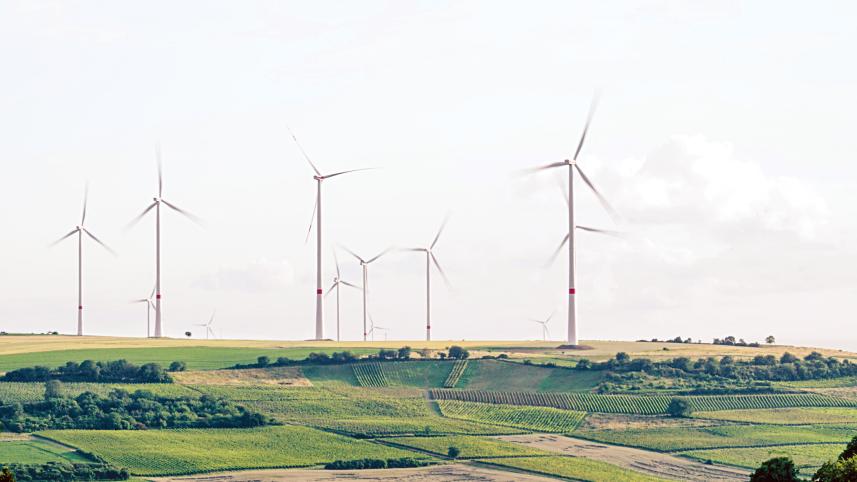
In a coastal village in Cox’s Bazar, steel towers now rise where fishermen once cast their nets. The wind that used to whip across the salt-stung plains without notice is now captured, spinning giant blades that generate electricity and promise a cleaner future. Bangladesh, long reliant on fossil fuels and foreign energy imports, is finally beginning to turn the tide.
The 60-megawatt wind farm at Khurushkul, right beside the Chaufaldandi Union in Cox’s Bazar, stands as a symbol of that change. Built with a Chinese partnership and using 22 turbines towering 90 metres high, this is the country’s first large-scale attempt to harness the power of the wind. For a nation often thought to lack the wind speeds needed for utility-scale generation, the project is both a technical and psychological breakthrough.

Md Shahriar Ahmed Chowdhury, Director of the Centre for Energy Research at United International University, has followed this transition closely.
“If we consider wind power potential, from Bangladesh’s perspective, it’s lower than moderate. Not even moderate,” he said. While the numbers may not equal those of Europe’s giants, they are definitely worth considering.

The research carried out by the Asian Development Bank, with the help of some German, Italian and Dutch experts, has shown that certain coastal areas and offshore zones in Bangladesh can get pretty windy with speeds of 6 to 7 metres per second. However, when storms come through, the wind speed can shoot up to a staggering 80 metres per second, a terrifying prospect for any turbine.
“We generally design our turbines to take on winds of 60 metres per second, so at extreme wind speeds the turbines are at risk, which increases the insurance premium,” Shahriar says.
This is the catch that Bangladesh finds itself in about wind power: harnessing the energy whilst withstanding the full force of the storms.
Despite this, the Cox’s Bazar project is up and running, pumping out just shy of 110 million kilowatt-hours every year. At about 20 per cent of its total capacity, it may not be on a par with the best in the world, but, given the adversity, it’s considered a real success.
Several more projects are in the pipeline, including a 55-megawatt wind farm in Mongla that’s currently under construction.
Khulna, Feni, and Inani are also being looked at as potential sites, and there’s a lot of interest in offshore wind potential with plans for a proposed 500-megawatt project.
Energy transmission remains one of the biggest engineering bottlenecks. Power generated in remote coastal areas must reach major consumption hubs like Dhaka and Chattogram. “If we want to transfer 1,000 megawatts of power, it’s not actually possible right now,” Shahriar noted. “We need to strengthen our transmission infrastructure first.”

Bangladesh’s grid, historically designed for predictable power from fossil fuel plants, is ill-equipped to handle the variable nature of wind. Without proper measures or the introduction of storage, fluctuations in wind output can destabilise the grid. But here too, there are signs of progress.
“Previously, energy storage technology was expensive, but now the price is comparatively lower. Two years ago, the cost per megawatt-hour (MWh) was 300 thousand US dollars. Now it is less than 200 thousand,” Shahriar said. Better storage reduces the risk of a blackout and allows wind energy to be used when the wind dies down.
Still, not all renewables are made equal. Compared to wind, solar is seen as a safer bet for investors and policymakers. It’s easier to plan, can be deployed virtually anywhere, and its performance is easier to predict.
“Solar is comparatively easier to develop and estimate the yield, and you can plant it anywhere,” Shahriar says. “On the other hand, wind plants cannot be planted anywhere; they need site-specific measurements. You have to measure at least two years of wind at the design hub height.”
Policy has been both an enabler and a barrier. In the past, projects were awarded on an unsolicited basis, often resulting in delays or dead ends. That model is slowly being replaced by open tenders. But investors still find the landscape risky.
Despite hurdles, wind power’s appeal is clear. It does not emit carbon, consumes no fuel once installed, and uses very little land. The Cox’s Bazar wind farm takes up a mere 7.5 acres of land, a drop in the bucket compared to what a solar farm of comparable size would require. And while solar power is mostly limited to daylight hours, wind turbines keep revolving away 24/7, especially during the monsoon season, when they operate at their most productive.
However, getting to a greener grid is not just about wanting to go green; it takes a whole lot of strategic planning, deep pockets, and unwavering decisiveness from the people in charge.
“Countries that are getting into renewable energy and doing big projects get real support from their government,” Shahriar notes. “It’s all about having the right transmission infrastructure, getting the land sorted and getting that all-important go-ahead from the government.”
With Bangladesh going offshore, the potential is huge. Turbines out at sea do not have to worry about troublesome land disputes and can tap into the stronger, steadier winds that come with it.
 For all latest news, follow The Daily Star's Google News channel.
 Onshore wind turbines typically do not go much above 5 megawatts, but offshore machines can crank out up to 20 megawatts. Still, getting the tech and expertise sorted out for these kinds of installations is a whole different ball game, and we are still in short supply of that right now.
Asked what breakthrough technology excites him, Shahriar was pragmatic.
“Vertical wind turbines do not have that much potential worldwide, but horizontal turbines or three-wheeler wind turbines have more potential. Offshore and nearshore areas have potential, so they can be a big sector.”

If Bangladesh were to invest aggressively in wind today, what would citizens gain? Not necessarily cheaper electricity in the short term. But the long-term benefits are undeniable: reduced dependence on imported fuels, a lower carbon footprint, and improved energy security.
“If you invest long term, number one, you are getting energy security. Secondly, it will help reduce carbon emissions. Thirdly, it will also impact our reserves, too,” Shahriar said.
By 2040, with proper planning and support, renewables could form up to 50 per cent of the country’s power mix. Most of that will likely come from solar, but wind can still play a meaningful role. According to Shahriar, “We can achieve 50 per cent if there’s support from the government, good policies, and material support.”
The future is not just about numbers. It’s about mindset. It’s about whether the country is ready to back long-term gains over short-term convenience. It’s about whether policymakers can align investor incentives with national priorities. And it’s about whether the people of Bangladesh will accept the changes, from turbines altering skylines to new grid infrastructure slicing through fields.
In a country where every degree of temperature rise and every litre of imported fuel matters, it may be one of the best arrows in our quiver. From the shores of Kutubdia to the breezy coasts of Cox’s Bazar, the wind is already here. The question now is whether we will let it blow past us or capture it and let it power our future.
Photo: K Tanzeel Zaman
Comments