


105-year-old heritage: Charak Puja crowds flock to handicrafts exhibition

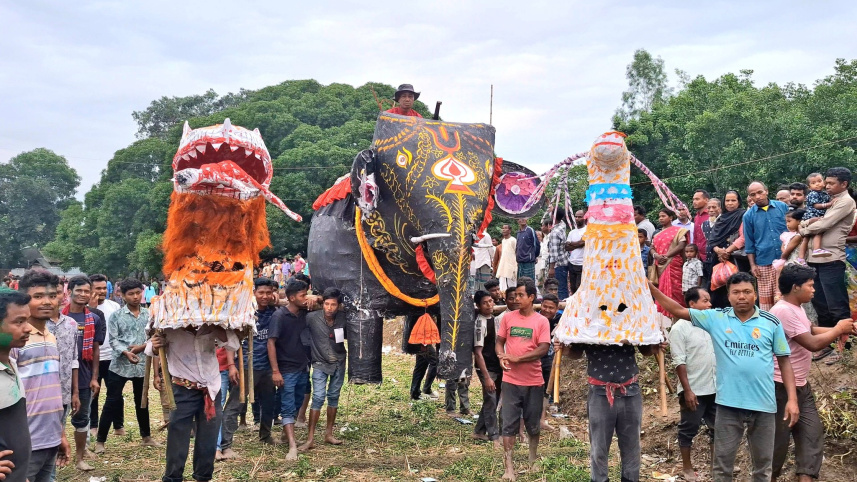
A centuries-old ritual and a distinctly local form of storytelling came together at Farabari village, about 10 kilometres from Thakurgaon town, as thousands gathered for a three-day Charak Puja and fair centred on a Shivkali temple beneath an "unidentified" century-old tree.
Held once every five years with spontaneous community participation, the event, now in its 105th edition, began on Saturday and concluded yesterday, with a handicrafts exhibition by village artisans emerging as its centrepiece.

By yesterday noon, crowds of devotees and visitors had begun to swell around the temple grounds. The air filled with the steady rhythm of drums and cymbals as the fair moved towards its most anticipated segment: a display of handmade models that blended imagination with social messaging.
The afternoon exhibition brought together self-taught artisans from surrounding villages, who showcased intricate models of elephants, horses, tigers, giraffes, deer, crocodiles, snakes and frogs, crafted from bamboo and paper.
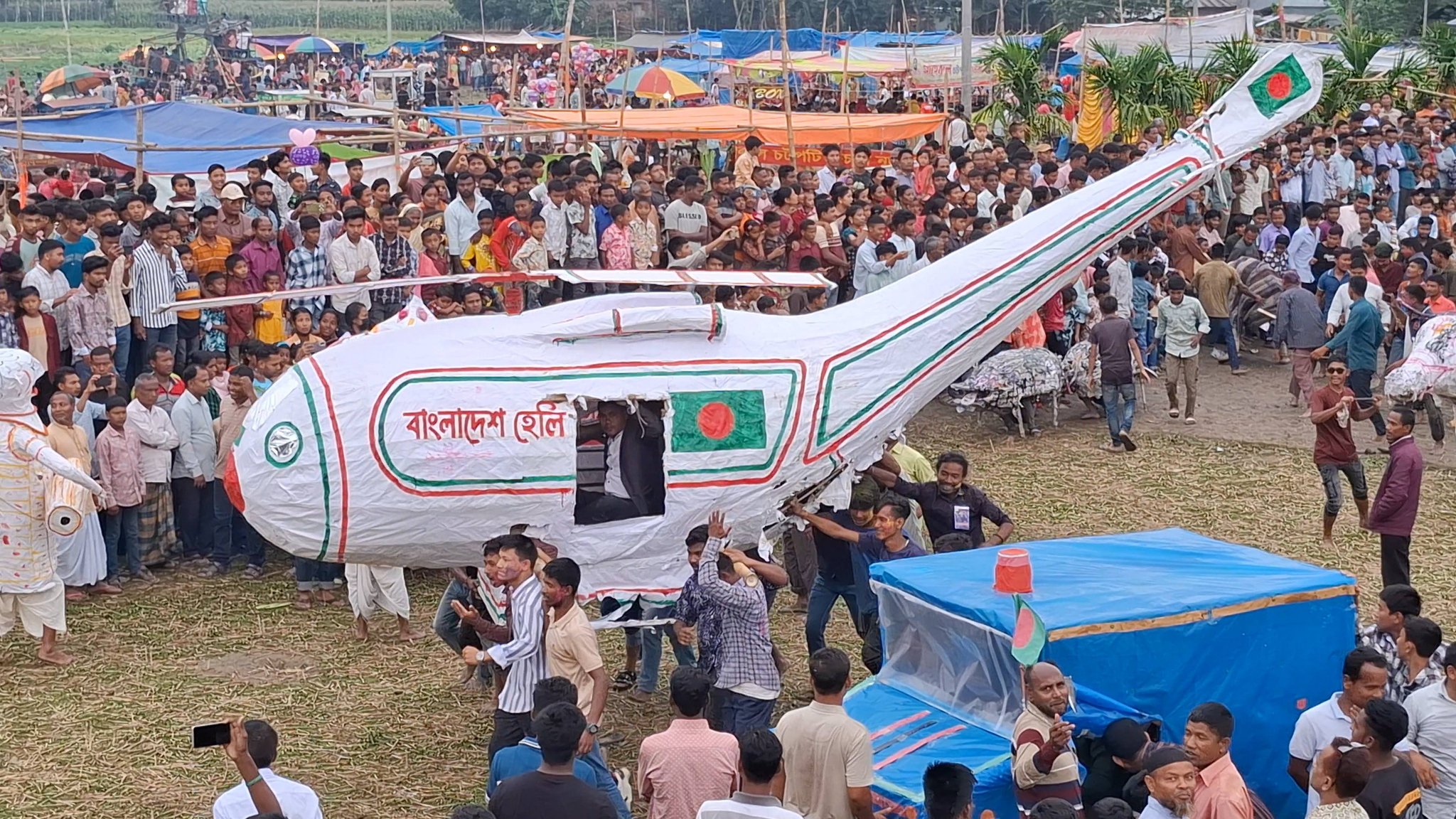
A jeep and a helicopter, symbols of modern aspiration also featured among the exhibits
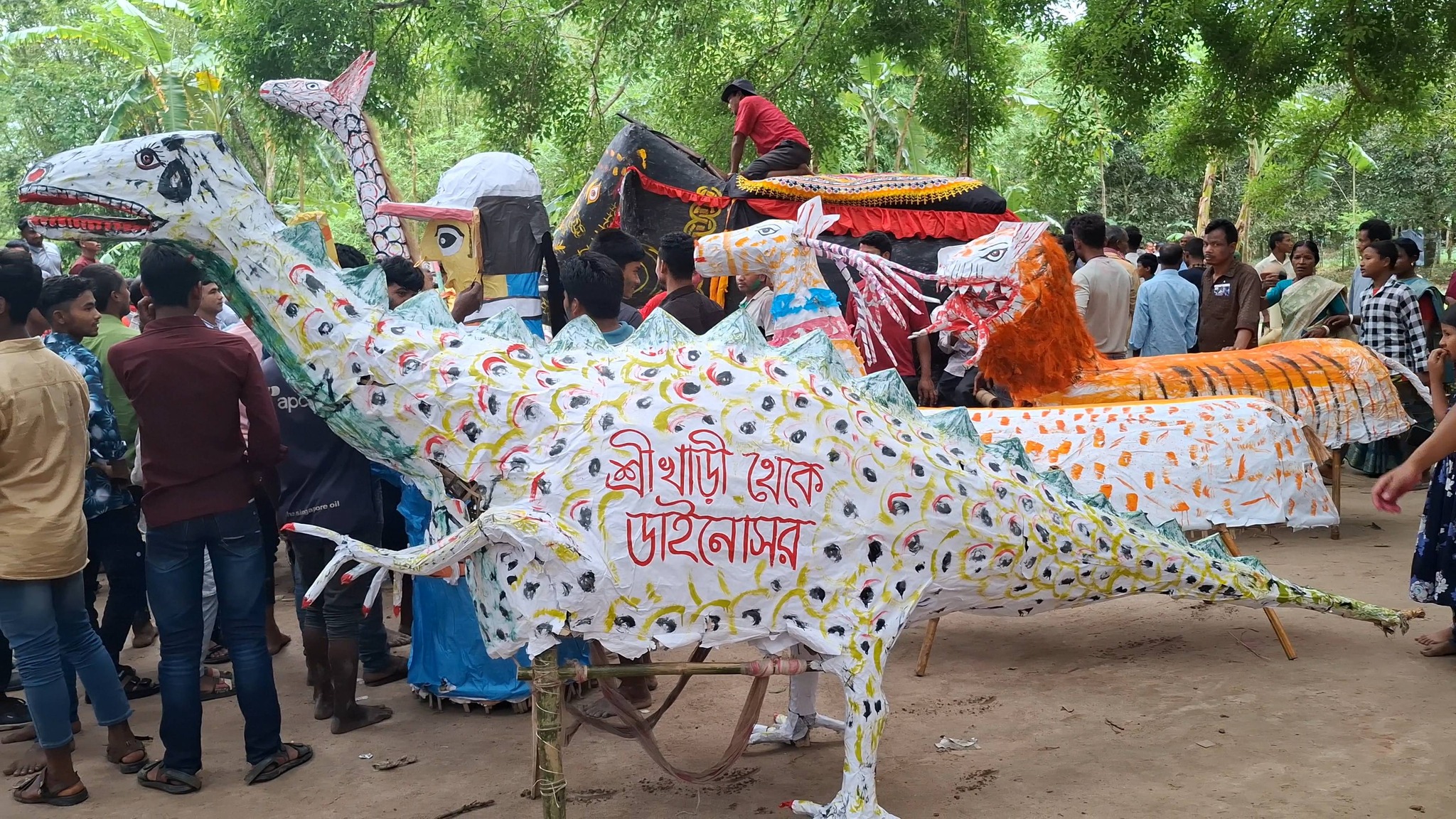
Participants carried their creations on their shoulders and paraded across the fairground, drawing applause from onlookers.
The hour-long display turned the open field into a moving gallery of rural creativity.
One of the largest exhibits, a towering elephant replica, was built over 20 days by a 14- to 15-member team led by local farmer Jagadish Roy.
It was carried around the grounds by more than 20 youths.
From South Bothina village, another group led by Khageshwar Roy presented models of a tiger and a deer. Their tiger depicted an attack on a human, conveying a cautionary message against wildlife hunting.
Environmental awareness ran as a clear thread through many displays.
Parash Chandra Barman, a young participant from Farabari, presented models of snakes, frogs and mongooses to highlight biodiversity and ecological balance.
 For all latest news, follow The Daily Star's Google News channel.
 He said indiscriminate hunting and food scarcity were driving many species towards disappearance.
A teenage participant dressed as a vulture moved through the crowd, drawing attention to the impact of pesticides on scavenger birds and urging their conservation.
“These birds play a vital role in keeping the environment clean,” he said.
Two young participants, Jibon Roy and Uday Roy, showcased models of Rui and Katla fish, warning that native species are declining as water bodies shrink.
Nearby, a helicopter replica built under the leadership of Bishwajit Roy drew crowds of curious children.
He said the effort aimed to inspire young people to think about technology and its advancement.
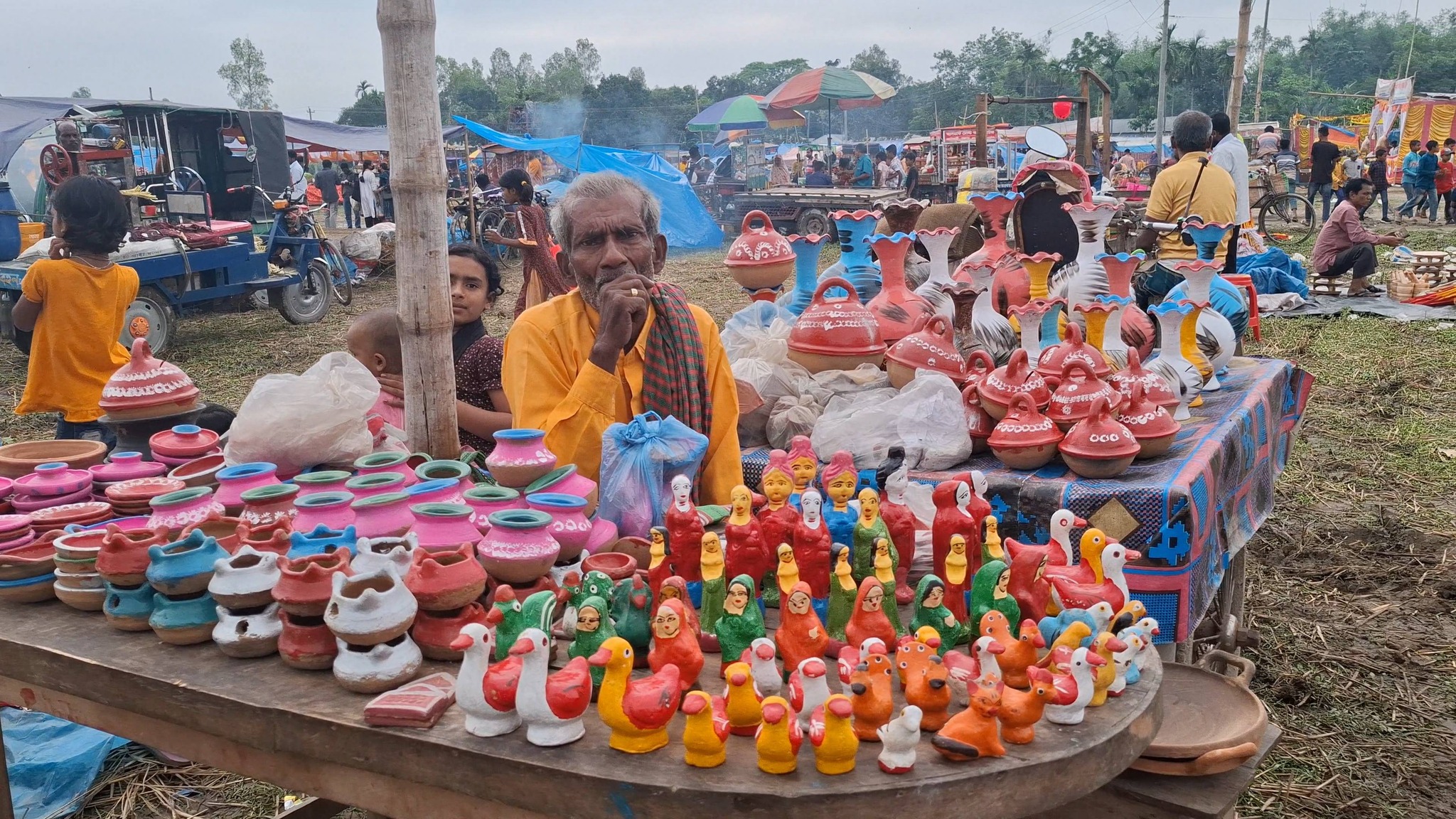
As the exhibition ended, visitors spread across the fairground, where more than a hundred stalls offered toys, ornaments and household items made by local potters.
Traditional foods such as chotpoti, fuchka, sweets, jilapi, muri-murki and batasha were also available.
One of the visitors said the fair offered more than entertainment. It created space for reflection on culture, environment and shared heritage.
Kadimul Islam, a fine arts teacher at Thakurgaon Government Boys’ High School, noted that none of the participants had formal training.
“They are farmers, labourers and students. Their work may lack professional polish, but the creativity is impressive,” he said.
Educationist Professor Montosh Kumar Dey pointed to the cultural significance of the timing, linking the festival to Chaitra Sankranti and Pahela Baishakh.
“Such exhibitions remind us that human life is inseparable from animals and birds,” he said, adding that they also raise awareness about endangered species.
Babul Barman, president of the Shivkali temple management committee, said the fair has long drawn participation from people of all religions, reinforcing communal harmony in the area.
Comments