


Bangladesh must reclaim its digital and material commons

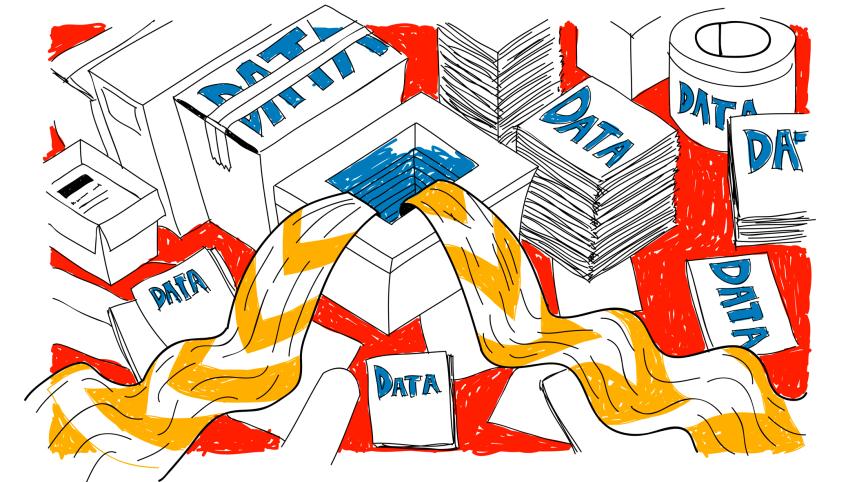
In the 18th century, the “enclosure movement” swept across Europe. Powerful landlords fenced off common lands, pastures and forests that communities had used collectively for generations. They were turned into private properties. This act of primitive accumulation forced independent farmers to become wage labourers, stripping them of their autonomy and concentrating wealth in the hands of a few. Today, in a rapidly shifting Bangladesh, a similar but invisible process is underway. The “land” being enclosed is not just soil, but human knowledge, experience and wisdom. The fences are not made of wood, but of proprietary algorithms and energy-hungry data centres. The risk for a country like Bangladesh is not just technological lag; it is the prospect of becoming a “digital colony”—a territory that provides the raw data and physical energy for someone else’s AI empire, while its own economy remains stunted.
To understand the stakes, one must recognise the mechanism of this colonisation. Scholars Nick Couldry and Ulises Mejias describe this as the “double logic” of extraction. First, the data is extracted from us, often without meaningful consent, under the guise of “free services.” Second, this data is transformed into private capital (such as AI models and predictive analytics) from which the original producers, the citizens, are excluded.

Take the digital landscape of Dhaka. In the past, a local driver or shopkeeper held “sovereign” knowledge of their neighbourhood’s traffic patterns or consumer demand. Today, that knowledge has been extracted and enclosed by global platforms. This creates a massive informational asymmetry. The platform now knows more than the driver or the passenger. It uses this data to set prices that extract maximum value from the rider while squeezing the worker.
The value generated by millions of interactions in Bangladesh does not stay here to build local infrastructure; it flows upwards to servers in the US or Europe. This mirrors the colonial patterns of the past: raw materials are exported and finished goods are imported. We get the app, but we lose the industry.
However, the enclosure is not just digital. As Thijs Van de Graaf, associate professor of international politics at Ghent University in Belgium, wrote in the December 2025 issue of Finance & Development, the rise of AI has triggered a global “resource race” that is anything but virtual. AI is often portrayed as intangible, living in the “cloud,” but the reality is grounded in steel, silicon and, crucially, electricity.
Van de Graaf informs us that AI’s physical expansion creates a geopolitical trap, with data centre energy consumption now rivalling nuclear plants. Tech giants are targeting countries like Bangladesh for affordable resources. However, hosting foreign servers could strain our limited gas and water supplies, as the data would remain under foreign ownership. We risk exporting vital energy and data, receiving only carbon emissions and subscription fees in return, which is the harsh material reality of digital enclosure.
A dangerous trap is “Data as Labour”—paying citizens for their information. This commodifies personal lives, creating a “serfdom of data” where the poor are forced to sell privacy to survive. It validates the colonial model by merely putting a price tag on submission. A dignified nation must not seek better payment for extraction, but should completely change the ownership model.
The true path to sovereignty is “data as a commons.” Just as rivers are shared resources, critical national data must be treated as a collective asset, not foreign private property. Securing this through a national data trust enables local start-ups to build solutions tailored to our environment and to break reliance on biased Western AI. This ensures digital wealth is governed for the public benefit rather than extracted abroad.
To operationalise digital stewardship, rather than things like only cybersecurity, Bangladesh needs three pillars. First, enforce transparency echoing the EU’s Digital Services Act to open algorithmic “black boxes.” Second, establish sectoral data trusts for collective bargaining power. Finally, build a public digital infrastructure which will be green with sovereign cloud capacity, ensuring the ecosystem relies neither on rented land nor dirty energy.
Bangladesh faces a unique opportunity to rewrite the social contract. We must choose: either remain a resource farm for foreign gain or place a data commons. The digital wealth of a nation should be used for the people who create it. The fences of the new enclosure are being built around us; the task for us is to tear them down.
Benzir Ahammed Shawon is a graduate student of applied mathematics and computational science at North South University. He can be reached at write.benzir@gmail.com.
Views expressed in this article are the author's own.
Follow The Daily Star Opinion on Facebook for the latest opinions, commentaries, and analyses by experts and professionals. To contribute your article or letter to The Daily Star Opinion, see our guidelines for submission.
 For all latest news, follow The Daily Star's Google News channel.
Comments