


Chandrayaan-3: All systems working perfectly, says ISRO chief
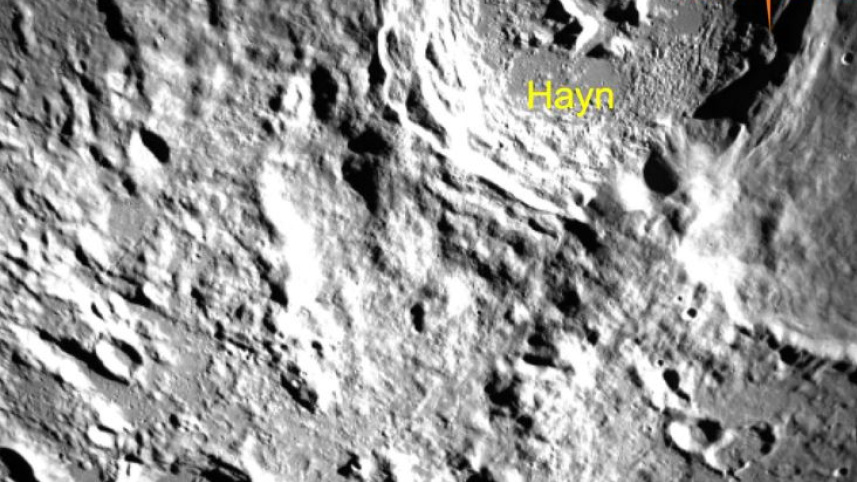
As India waits with bated breath for the maiden attempt to land its first unmanned mission on the moon tomorrow, the national space agency chief S Somnath met Science and Technology Minister Jitendra Singh yesterday and said all systems are working perfectly, and no contingencies are anticipated tomorrow (August 23).
In the following two days, the health of India's third moon mission Chandrayaan-3 would be continuously monitored, and the final sequence of soft-landing would be loaded two days ahead and tested out, he told Jitendra Singh, our New Delhi correspondent reports.

Somnath, chairman of Indian Space Research Organization (ISRO) and secretary, Department of Space, apprised Jitendra Singh in New Delhi of the status and readiness of Chandrayaan-3 for the moon landing scheduled for August 23 around 6:04pm on August 23, an official statement said.
Chandrayaan-3 comes three years after India's previous Chandrayaan-2 mission, which was only partially successful since the lander lost contact after a hard landing on the lunar surface.
But this time, the ISRO successfully established two-way communication between the Chandrayaan-3 lander module and the still orbiting Chandrayaan-2 Orbiter.
If it manages to soft land Chandrayaan-3 on the moon tomorrow, India will be the fourth country to achieve the feat after the United States, Russia, and China. But India will be the only country in the world to land on the lunar South Pole.
On landing, the lander and the rover, that will pop out of the lander, will be functional on the lunar surface for 14 Earth days equivalent to one lunar day.
The primary objectives of the Chandrayaan-3 mission are threefold: to demonstrate safe and soft landing on the lunar surface; to demonstrate the rover roving on the moon; and to conduct in-situ scientific experiments.
Singh recalled that the first in the series of India's moon missions is credited with having discovered the presence of water on the surface of the moon and even the most premier space agencies like the US's NASA were fascinated by this discovery, and used the inputs for their further experiments.
Chandrayaan-3 mission was launched on July 14 from the Satish Dhawan Space Centre in Andhra Pradesh's Sriharikota.
 For all latest news, follow The Daily Star's Google News channel.
Comments