


The real reason Dhaka’s women-only buses are running empty
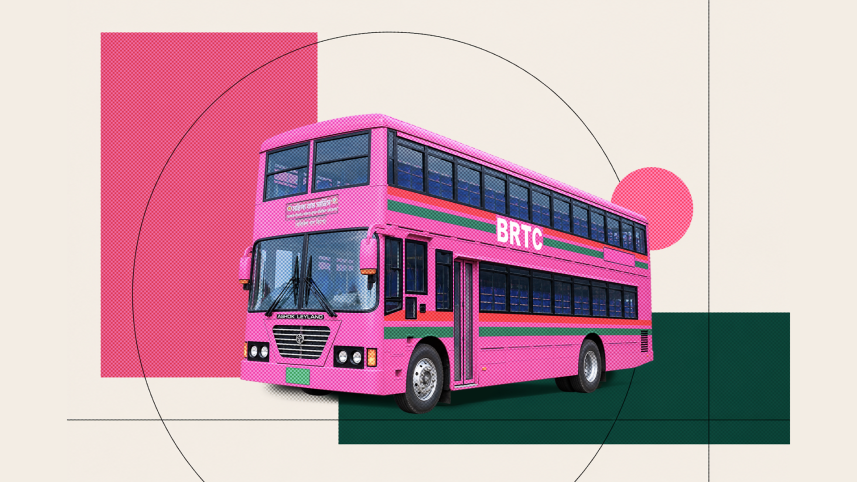
Just one month after the Bangladesh Road Transport Corporation (BRTC) rolled out its women-only Pink Bus fleet, the vehicles are cruising past busy Dhaka stops nearly empty, and losing up to Tk 60,000 every single day. Despite promises of a safe haven from harassment, female commuters face long wait times, sparse schedules, and deeply entrenched hostility from a male-dominated transport ecosystem.
On paper, the bus service idea sounds perfect. It is driven and operated by women, allowing female passengers to travel without the fear of unwanted touching, staring, or harassment. Yet, on Dhaka’s roads, a beneficial initiative needs more than the pink point. It needs frequency, accessibility and, most importantly, trust.

The current service operates on 10 routes in Dhaka, with only two trips a day. For a woman who is rushing to work, university or home, missing that one bus at that particular time can mean standing on the roadside for an unreasonable amount of time.
Passengers have already spoken up for more frequent trips, wider route coverage and live tracking. These are not extravagant demands; they are just basic requirements for a public transport service.
And then there is the elephant in the room we usually forget to mention: the women who are carrying misogyny on their backs.
I have heard the argument that some women themselves would rather not board the pink bus simply because a woman is behind the wheel. Some feel safer seeing a male driver. Other questions include whether a woman can drive fast while handling Dhaka’s chaotic roads.
That, to me, is more disturbing than an empty seat.
We talk endlessly about misogyny when it comes from men, but we rarely confront how casually women help men with the same prejudice against other women. A woman driver is suddenly less capable just because she is a woman. Society somehow made male competence the default, and female competence is something that needs to be proven.
Why does a woman need to prove herself when a man gets a free pass?
Imagine every time a male driver caused an accident, passengers concluded that men were incapable of driving. So, why does a woman driver's simple mistake become evidence against an entire generation?
The pink bus is merely a transport experiment. It has become a mirror that reflects the government's infrastructure failures that make a woman wait, the planning gaps before it launched which make the services inconvenient, and the social conditioning that makes women distrust women.
If BRTC genuinely wants women to use the pink bus, it has to make the service practical enough to choose. More frequent trips, more routes, reliable schedules, live tracking and of course better communication.
And women, too, need to stop treating another woman’s seat behind the steering wheel as a question mark; we already have men for that.
The real test is whether we, as a society, can finally let women do ordinary things without constantly questioning their ability and have the courage to raise our voices against the root problem instead of blaming a gender and moving on.
 For all latest news, follow The Daily Star's Google News channel.
Comments