


Dhaka’s office lunch: What are we actually eating?
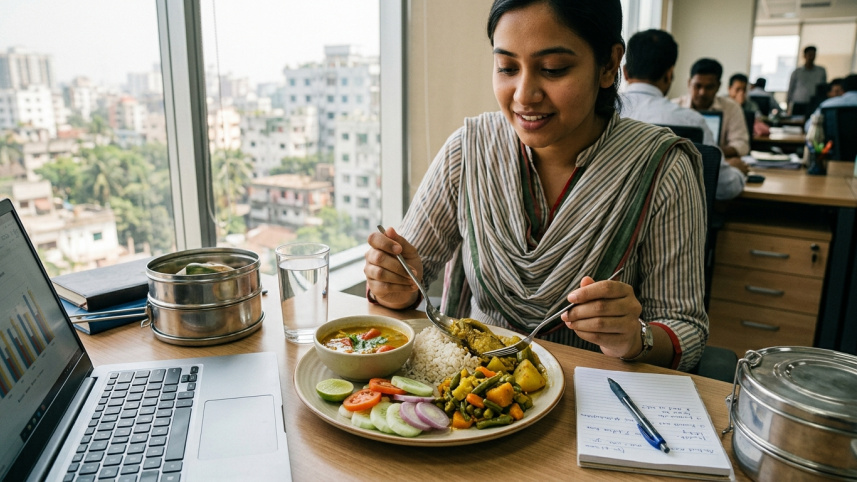
Healthy office eating does not mean giving up traditional Bangladeshi food. It means building a more balanced plate and a better routine around it.
A typical Bangladeshi office lunch may feature a generous portion of white rice with fish, chicken or meat, perhaps some daal and vegetables, and sometimes a soft drink or a dessert.

It is important to remember that rice itself is not the problem. It is a traditional staple and can absolutely be part of a healthy diet. The bigger question is: What is on the rest of the plate? If rice occupies most of the meal while vegetables, daal and other forms of protein are limited, the lunch may be filling without being nutritionally balanced. Similarly, generous amounts of oil, fried foods, rich gravies, and sugary beverages can add considerable calories without improving nutritional quality.
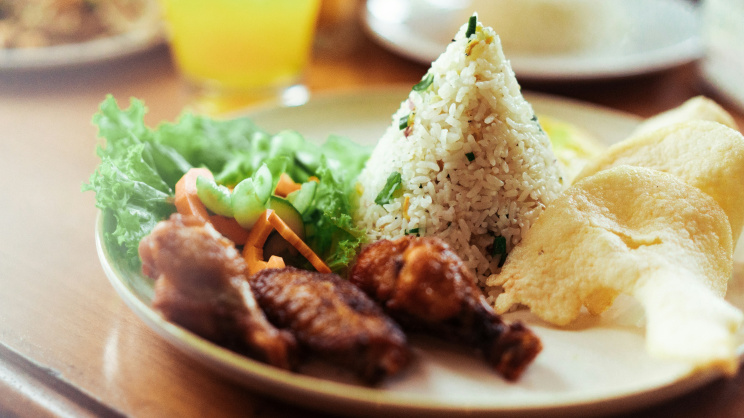
A healthier office lunch should provide a sensible balance of whole or minimally processed carbohydrates, protein, vegetables, fibres, and healthy fats.
In a city where healthy food choices around the workplace may not always be readily available, bringing lunch from home can provide greater control over ingredients, portion sizes, cooking oil, salt and overall balance.
A simple home-packed lunch does not have to be elaborate. Rice or rooti, fish or chicken, daal, two types of vegetables and some salad and a fruit or handful of mixed nuts for mid-morning or afternoon can make a nutritious and culturally appropriate meal. Even a sandwich with a combination of brown bread, egg or meat, salad and yoghurt as a dry lunch could also be a good choice. The goal is not to make office lunch complicated. The target is to make it complete.
However, it’s time to look at the whole day and simply not be obsessed with one office meal. When we talk about “office lunch”, we often focus only on what is inside the lunchbox. But nutrition does not work meal by meal in isolation. The real picture is the entire day's eating pattern.
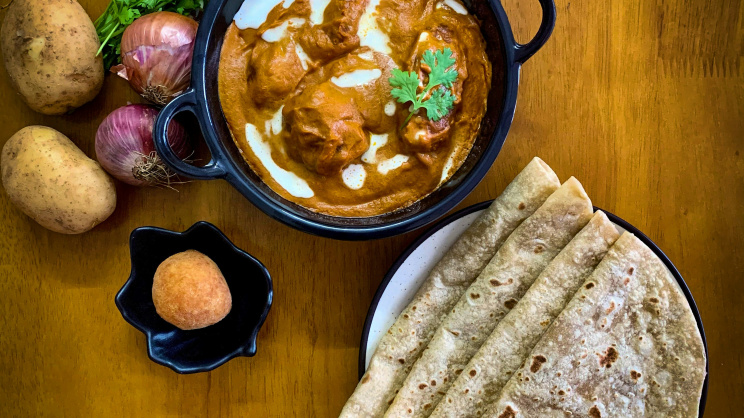
A person who skips breakfast, eats an unbalanced brunch outside, has a rice-heavy lunch and then consumes a very large dinner late at night may technically be eating three times, but the pattern is still far from ideal.
The answer is not crash dieting, eliminating rice or following complicated food rules. It is regularity, balance, variety and moderation.
Office-day routine
Don't skip breakfast. Even a simple, balanced meal is preferable to beginning the day on an empty stomach.
During the workday, choose outside food carefully. Look for options containing protein, vegetables and less fried food. Carry lunch from home whenever possible; it makes portion and ingredient control easier.
Build a balanced plate consisting of moderate rice or rooti, adequate proteins, plenty of vegetables, daal/salad, fruits, and nuts.
Limit soft drinks and other sugar-sweetened beverages and measure your drinks.
Don't allow yourself to become excessively hungry before going home. A sensible snack, when needed, can help prevent overeating at dinner.
At dinner, avoid turning it into the day's largest meal. Keep portions sensible and include vegetables and protein. Eat mindfully rather than rushing through the meal.
The bottom line: Dhaka's office workers do not necessarily need to abandon traditional Bangladeshi food to eat better; they need to rethink the pattern. A healthier office lifestyle begins with a simple shift: do not wait until you are extremely hungry to think about food.
Plan the day before hunger makes the decisions for you, because the real question is not simply, “What are we eating for lunch?” It is: “What does our entire working day look like on the plate?”
 For all latest news, follow The Daily Star's Google News channel.
 The writer is the Chief Clinical Dietician & HOD, Continental Hospital PLC
Comments