


Sleepless in Ramadan


Are you someone who can sleep the moment you close your eyes, no matter where you are? Congratulations, you have what I call the ‘jiffy sleepy luck,’ and not someone who would be interested in this article. However, if you know someone who takes ages to sleep, has to have every one of their ‘conditions’ met before being able to rest, and complains of ‘memory matinees’ kicking off just as they close their eyes, then please, direct them here, for they might find a kindred spirit’s confession here. And, if you are curious, or just want to know how the other shoe fits, well read on.
Yes, as I am sure you have figured by now, I have trouble sleeping. In some ways, you could say my sleep is like a fickle fairy, only presenting itself if it has been appeased properly, and gone in an instant if the process is interrupted. Also, if I wake up from a sleep, or heck, even a short nap, it is impossible to go back to sleep. Sounds like a pain, right? Well, it is. So, you can only imagine how much more difficult it gets once Ramadan rolls around.

Don’t get me wrong. I love Ramadan. People tend to be slightly more honest than they usually are, assuming otherwise their fast will ‘lighten,’ and usual conversations about mostly nothings get injected with a dose of Ramadan Resolutions like praying Taraweeh, eating healthy, and of course, my favourite, jilapis.
However, the most difficult part of Ramadan, other than the traffic, and the mad rush at malls, is waking up for sehri. “But you have trouble sleeping, so you are already up. What’s the issue?” I hear you asking. The issue, dear reader, is that by the time you wrap up eating, and praying the Fajr, it’s already dawn. And in my particular case, had I slept at a reasonable hour and woke up for sehri, I would now be unable to sleep again.
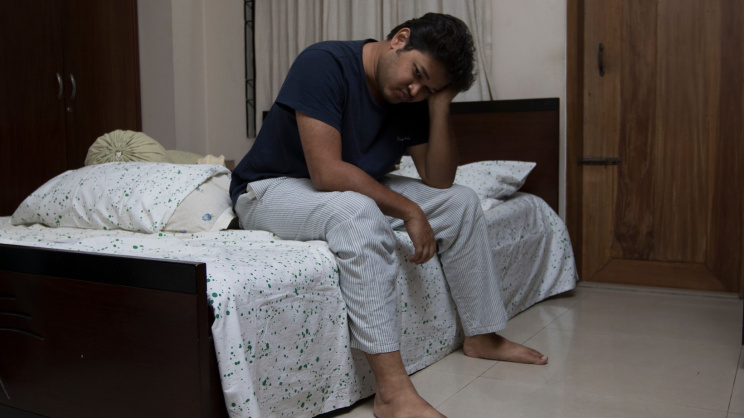
Most people, I understand, manage to fall back into sleep after Fajr. They treat the pre-dawn hours as a brief interruption and close their eyes again by six. I watch them with something close to envy. For me, the lights in my head have come on. My brain has decided that this counts as morning, and there is no negotiating with it. So, I sit with the night instead.
And have I mentioned the 'suhoor' experience? You know, the one where you go out at two or three in the morning to eat out in a restaurant. I usually make it a firm point to avoid these as much as I can, but it's hard to say no to friends, especially ones who show up at your house, leaving you no choice but to surrender to your rotten fate. The worst part is not the going — it is the coming back. You return home full, slightly dazed, and wide awake at four in the morning with absolutely nowhere to put that energy.
Ramadan, it turns out, does not so much disrupt my sleep as it holds up a mirror to it. The broken nights, the odd hours, the body running on stubbornness; none of this is new. What is new is that everyone around me is in a version of the same boat, which makes the whole thing feel oddly communal rather than just exhausting.
Not being a good sleeper is a long-standing arrangement I have made with the night. While most people treat sleep as a destination, something to fall into and emerge from on schedule, I have always lived at its edges. I lie awake. I think too much. And once something breaks my sleep — a sound, a dream, a passing thought that arrives uninvited — I am done. The next two, sometimes three hours are mine whether I want them or not.
But here’s the odd thing; I have always loved the night. The particular stillness that settles over a city between two and four in the morning is something I have sought out long before Ramadan gave me a reason. The street outside goes quiet in a different way than it does at midnight. The noise drops a register. The air feels slightly lighter. Most of the world is unavailable, which is its own kind of relief. Staying up feels like the only answer, until dawn shows up of course, and you realise the rest of the day awaits.
 For all latest news, follow The Daily Star's Google News channel.
Comments