


Inside Design In Bangladesh Week 2026
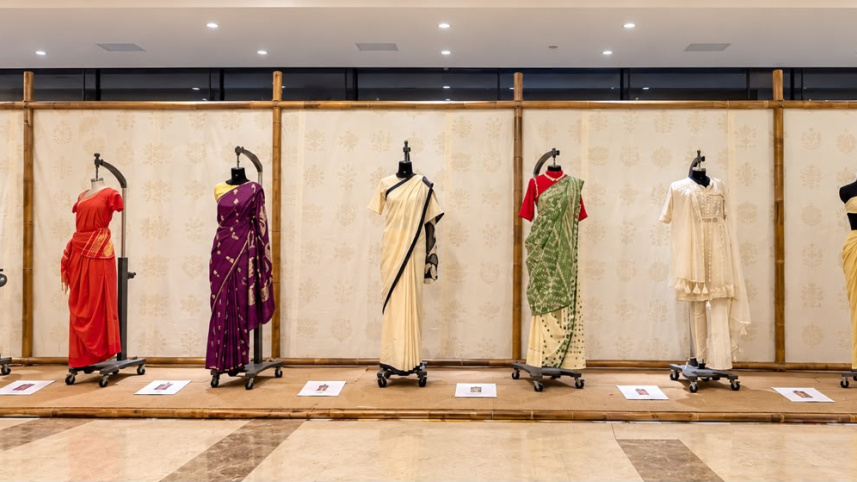
Design In Bangladesh Week 2026 opened on 6 October at the United Convention Centre in Dhaka. It brought fashion, textile, and business communities together around one pitch: Bangladesh could be known for designing clothes, not just sewing them. For three decades, the country had been the world's second-largest garment exporter by volume, yet almost none of that recognition had attached to Bangladeshi design, only to Bangladeshi labour.
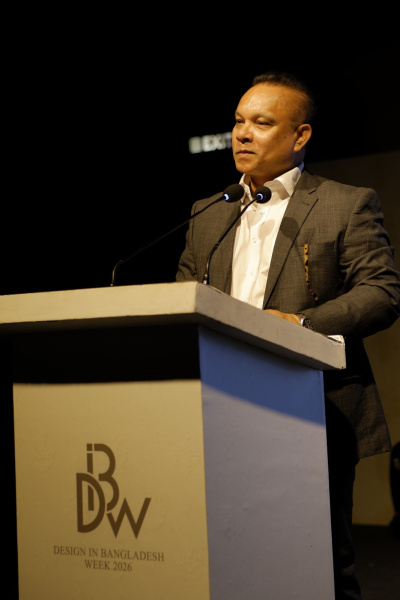
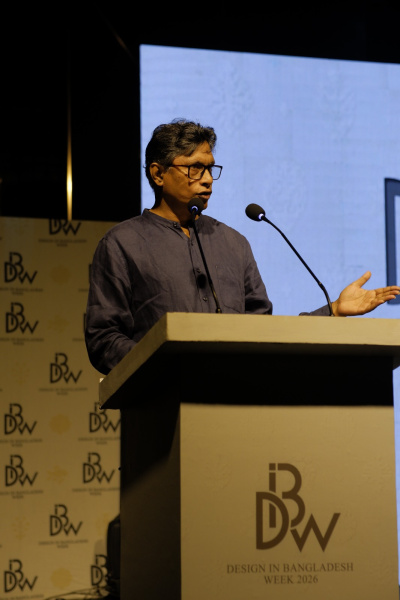
Founded by Rokaiya Ahmed Purna and backed by the Export Promotion Bureau, the two-day event was organised under the banner "3D in BD": Discovered, Designed, and Developed in Bangladesh. Dr S M Ziauddin Hyder, the prime minister's special assistant on health affairs, attended as chief guest. Alberto Giovanetti represented the Swiss embassy, and heritage expert SK Saifur Rahman also addressed the gathering.

"Creating Value Through Design. Elevating Bangladesh Globally" was less a slogan than the argument of the week. A shirt made in Bangladesh for a few dollars could sell abroad for many times that under someone else's label, and most of the markup went to the brand that designed it, not the factory that cut and stitched it.
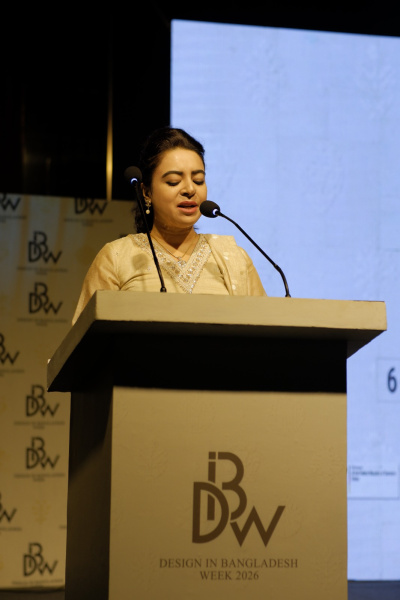
Rokaiya Ahmed Purna put it plainly in her opening address: "For decades, Bangladesh has shown the world that we can produce. Now we want the world to recognise that we can discover, we can design, and we can develop too."
The opening ceremony included a 100 Designers Showcase, with 100 designers presenting in a single morning, from emerging student talent to established names. Organisers framed design not as fashion alone but as a full value chain, running from research and development through production and branding to domestic and international markets. The programme also highlighted "One Village, One Product" as a way to link local craftsmanship with quality, branding and market access.
The university behind the talent
One institution kept surfacing: the BGMEA University of Fashion & Technology (BUFT). It handled talent acquisition for the week, and organisers gave special recognition to its Fashion Club, Heritage Club and Photography Club for their contributions.
On the runway, BUFT's presence was just as visible. Hridika Nusrat Kuntala, a fashion designer and Assistant Professor at BUFT, presented MajestyClo, a collection that brought heritage into contemporary fashion.
For an industry whose main trade body runs its own fashion university, that was a telling detail. The people training the next generation of designers showed their work on the same stage as the professionals.
The afternoon shifted to a panel, "Vision Towards Designed in Bangladesh: Building a Global Creative Export Economy." It brought together Saifur Rahman and Susan Vize, UNESCO's representative in Bangladesh, who also addressed the audience before the runway segment.
The week's first show, "Beyond the Boundaries," followed, featuring collections by Humayra Azbi Jinas, Nafisa Tasnim Zamana, and Kuntala, plus a classical performance by Kakon. The pairing of panel and runway, discussion followed immediately by spectacle, became a pattern across both days.
Day two opened with a panel on building a sustainable creative export economy through heritage, fashion, technology, and innovation.
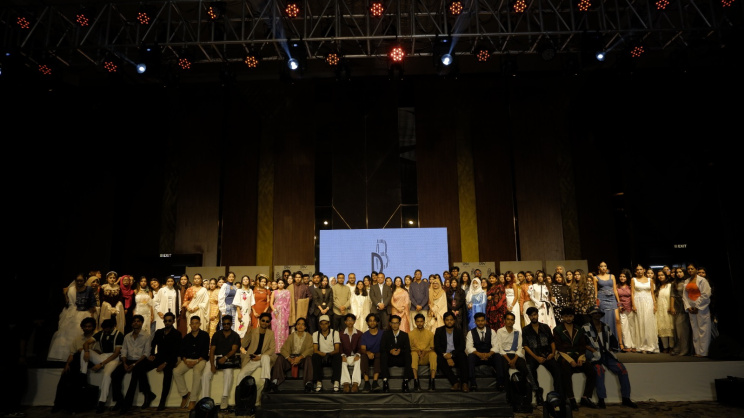
A midday keynote followed from Odditi Chowdhury, founder and managing director of Learn Light, titled "The Threads of Transformation." The second show, "The Untold Story," ran that afternoon. The week closed with a gala night that doubled as the closing ceremony, where the networking mattered more than the ceremony itself: the handshakes after the applause, not the applause.
Running in parallel that evening was "Design After Dusk," an invitation-only runway event. Its dress code, "A Touch of Bangladesh," asked guests to bring contemporary elegance with a local accent. The capped guest list made it the one part of the week built for exclusivity rather than scale, a deliberate counterweight to day one's 100 designer sprawl.
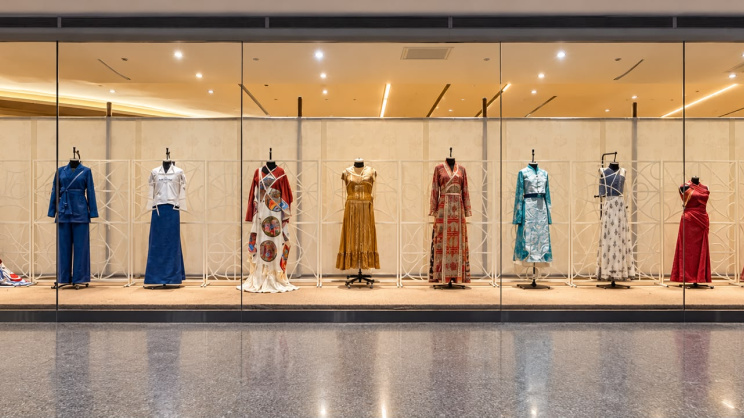
The Designer Discovery Pavilion ran throughout as a standing exhibition space. It was worth the detour for anyone trying to spot designers doing interesting work without a publicist. That was often a better measure of where Bangladeshi fashion was headed than the main stage, which tended to favour names that already had an audience.
The partner list was broad for a first edition: United Convention Centre as venue partner, Spellbound Communications Ltd. on execution, and BUFT on talent, alongside BSCIC, TAAT Board, Learn Light, Canvas, and Textile Focus.
 For all latest news, follow The Daily Star's Google News channel.
 That backing suggested a recurring fixture rather than a one-off. Whether a two-day showcase would change how international buyers saw Bangladeshi design was a harder question, and no first edition could answer it alone. What it could do was put a stake in the ground, loudly enough that the next edition had something to be measured against.
Photo: Courtesy
Comments