


How Parisa Faiza’s quarantine experiment sparked a maximalist movement
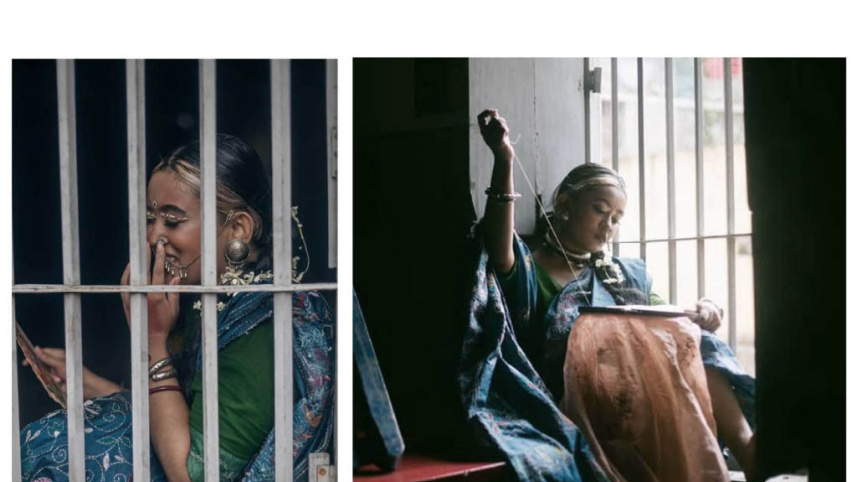
You do not need a massive budget or formal credentials to transform an ordinary space. Parisa Faiza proves that architectural principles, repurposed hardware, and bold textures can turn everyday scrap into magazine-worthy sets.
It started as many things did, during quarantine, when sudden free time led Parisa Faiza to alter the background of her room. Passion for the arts made her create a different world, and she wanted a setting that would tell a story in the photographs she posted on social media. The attempt to do so would not only make her known to younger audiences, but bring her work to the attention of people in the industry, despite her not being an official part of any such institution.

Parisa Faiza first became viral with decorated sunglasses which spelt the words “Shut up aunties!” The prop would only be the start, for eventually she would be designing entire room-sized spaces, both within the confines of her own home and for events like Arka Fashion Week.
This accomplishment is of course not a relatable experience, but her interest and start were, for it was an intrigue in movies that inspired what came to be her maximalist DIY set designs.
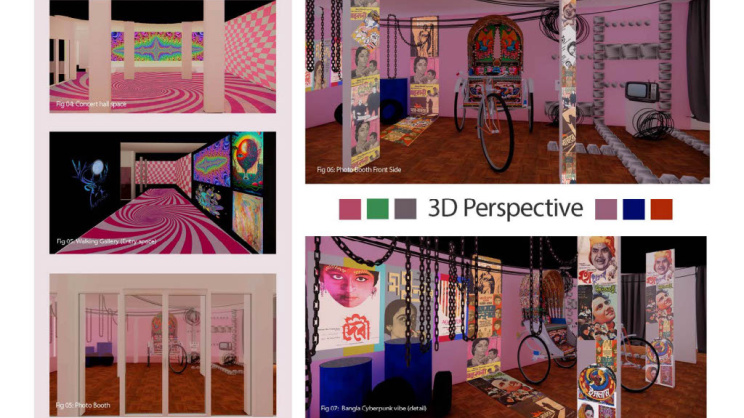
“When I would watch movies and tv shows as a child, and I watched a lot of them, I would often be interested in the aesthetic, whether the costumes, set design or some other element”, says Faiza.
She would realise then that set design was an area of deep interest for her. However, this path is unusual, and it is something Faiza herself had to contend with.
She states, “I come from a conservative family, and so I had to choose a middle ground that would help me stay creative while also not cause anxiety to my parents”.
She would go on to study architecture at BRAC University, both for the aforementioned reasons and because she found the fictional life of Ted Mosby, an architect and protagonist of the show “How I Met Your Mother”, appealing for what looked like good work-life balance.
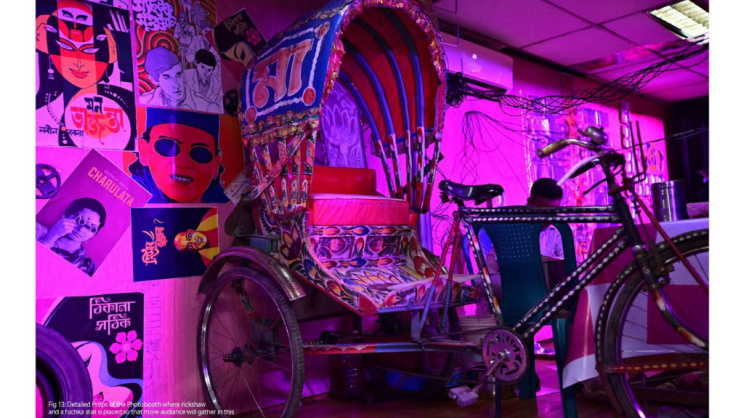
As a student of architecture, she would learn the principles of colour, hierarchy and spacing in the classroom, but it was consistent practice and a willingness to keep trying that led to the creation of her unique backgrounds which are so unlike the background designs we see in this country.
Her search for material led her to a shop named “Modern” in New Market, “Awal” on Elephant Road and garages and small shops near her home at Shantinagar.
She knew these few stores that cater to the needs of architecture students from her formal education, but it was her scrappiness that gave her the idea to ask people employed in the latter places to store car parts and other material for her instead of throwing them away.
Saving money from tuitions and change for transport, she would find herself paying Tk 100 for material tire shops and bazaars often throw away. Sometimes, her items would include foam board sets costing Tk 20. At other times, it would be items in her own home. These would be altered-by spray paint or otherwise, and find their way into her designs, such as the steam punk inspired photoshoot.
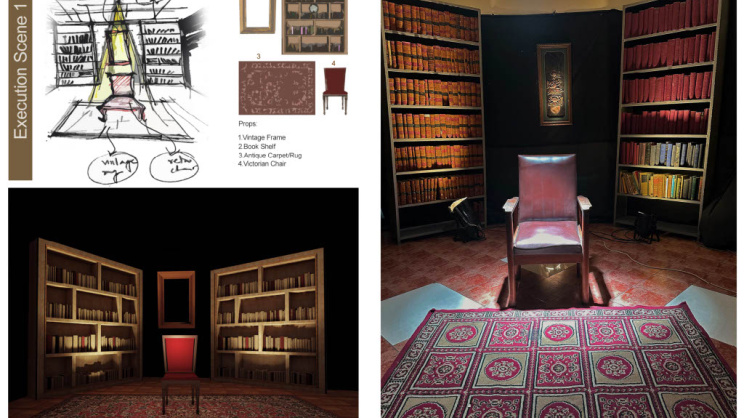
The information regarding her process is incredibly transparent. This lack of gatekeeping likely comes from her own experiences of hurdles being faced in Bangladesh's creative ecosystems, and also the beliefs people hold regarding maximalist designs.
Parisa Faiza mentions how one famous set designer she met told her that one can learn on the job. For those interested in film production, this might be a bit surprising, especially if one looks at the thousands of videos dissecting the careful planning of today's famous directors and their works.
“There is not”, Faiza emphasises, “A need for institutionalisation of the field.” Instead, she believes there needs to be the care and scope given to this field that many even in the media industry regard as not worth the funds it might actually require.
“Most of the interior designers and set designers in Hollywood and Bollywood are students of architecture”, she explains. The benefit is not formal qualification, but knowledge of architectural principles that enrich designs, with the knowledge being something that can be disseminated outside the halls of academia.
The stereotypes of what Bangladesh, and in turn what Bangladeshis are supposed to look like, constitute the other group of obstacles.
 For all latest news, follow The Daily Star's Google News channel.
 Faiza mentions the negative comments she has heard about her makeup and the restrictions imposed on children from childhood.
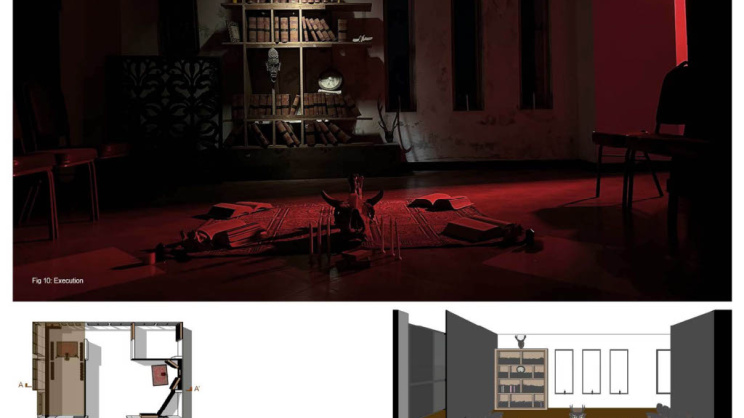
We discuss not only how art classes in schools and even outside make students draw the same hut and hay bunch in a village, but the blind import of Western minimalist aesthetic in the designs of the many stylised modernist buildings popping up in Dhaka city.
Despite the use of western aesthetics in her own work, Parisa’s cognisance regarding her Bangladeshi roots is noticeable when she talks about the Western minimalism permeating the Bangladeshi cityscapes.
“Bangladesh itself is maximalist. It’s not just the art on rickshaws, the lines of flower shops, or the many food stalls on our streets. Just think about a single lamppost. How many posters does it have attached to it? And the wires around them? There really are parts of Bangladesh you won’t find anywhere else, and it’s our loss that we don’t use it.”
The statement is revelatory of not only how much observation goes into the work, but also the lost potential of what aesthetics in Bangladesh could look like.
One has to think why there aren’t more attempts to innovate and explore.
Parisa Faiza mentions one reason, “I am an adult now, but even I am affected by the intense shaming that I faced for the work I put out. Now think how this would affect a teenager trying something new”.
She, however, is not pessimistic.
“I know I have potential. And I know how far I can go with a bit of support”, she states.
Photo: Courtesy
Comments