


Dhaka women are modern until Brown Aunty Syndrome kicks in
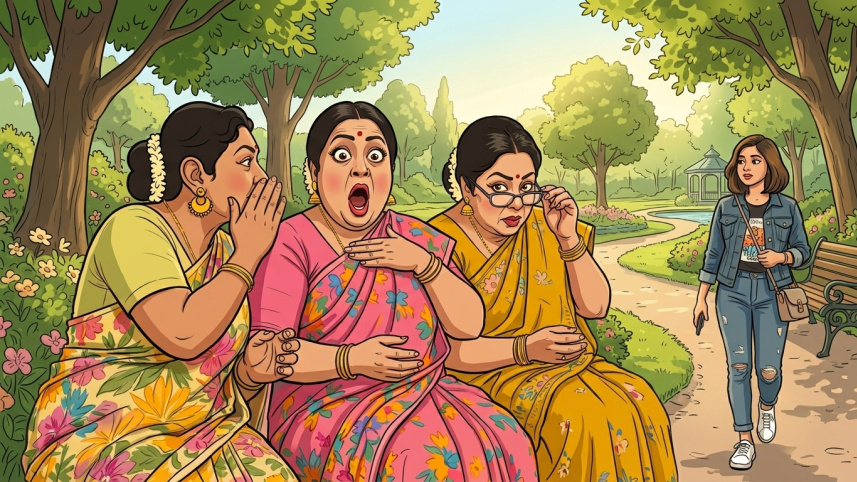
The brown moms and aunties of Dhaka — which includes me — have been on my mind lately. As I flipped through old photographs of Dhaka’s socialites, I found myself comparing them.
The conclusion was simple: Dhaka ladies are cosmopolitan and plugged into global trends, yet still tethered to brown aunty syndrome. They meditate, sip organic teas, and quote Western magazines, but continue to gossip about weight gain and saree choices. It’s a culture of contradictions — progressive on the surface, but influenced by a brown script passed from mother to mother, judging every generation as it unfolds.

Brown aunty syndrome is a cultural shorthand in South Asia, especially Dhaka, for women who look cosmopolitan yet remain bound to inherited habits of gossip and judgement. Modern on the surface but conservative underneath, they pass down a script fuelled by the refrain “what will people say.”
I vividly remember our mothers having tea in the afternoon with a sister-in-law or at their mother’s house. Socialising also meant parties with husbands at office dinners, clubbing and weddings. Crisp, starched sarees, sleeveless blouses, and trips to Mayfair for shaggy or pageboy cuts embodied a sense of style and freedom.
Those old afternoon get-togethers had magic: cards, housie, knitting on lawns, sewing, learning shorthand or typing, even picking up a new language. Yet the black-and-white photographs expose a gaze quick to criticise anything that strays from its own codes. These women — modern, graceful, and daring in ways that sometimes outshine us — also revealed prejudice beneath the sophistication.
The list stretches to young, accomplished women who believe they’re modern and inclusive, yet still whisper about a friend’s witch vibes. This fashionable mysticism blends bohemian fashion, spirituality, gothic chic and global wellness trends. Others embrace slow living or belong to an artsy crowd draping cotton saris, critiquing films and literature, and quoting New Yorker essays.
I admit, despite being conscious of what is right and wrong, I am a brown aunty too. Anything that doesn’t sync with my way of living, the brown aunty instinct kicks in — gossiping, judging, prescribing — and I am not being sarcastic.
The black-and-white frames capture a daring modernity that isn’t linear. Those women created cultural scripts that still resonate, carrying a magic of belonging that today’s compartmentalised, digitalised socialising struggles to match. Yet they also share the brown aunty syndrome, creating societal pressures, giving in to comparison culture, and getting obsessed with “what will people say.”
But we do not recognise that we are those people, and it’s time to stop being them. The legacy of grace and elegance across generations of Dhaka ladies is undeniable — but so too is the condemnatory, ingrained reflex of disapproval.
 For all latest news, follow The Daily Star's Google News channel.
Comments