


Why Tantibazar silver still drives Old Dhaka’s jewellery trade
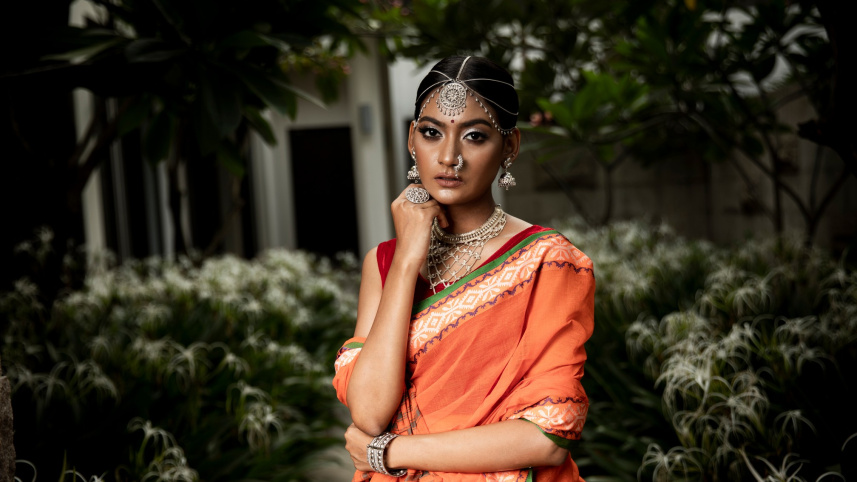
Neel Paul does not look up immediately when someone enters the workshop. His hands remain steady, bent over a thin strip of silver, filing its edge with precision born of repetition rather than instruction. When asked how long he has been in this business, he answers, “Thirty years… more than that now,” after a pause, without breaking rhythm.
This is a common scene in Tantibazar, tucked within the dense fabric of Old Dhaka. The word “tanti” may suggest weaving, textiles, or threads. However, the bazaar has long shifted its identity. It is now a centre of gold and silver, where they are stocked, traded, negotiated, and constantly recalculated. And though gold draws attention, it is the silver that sustains the system.

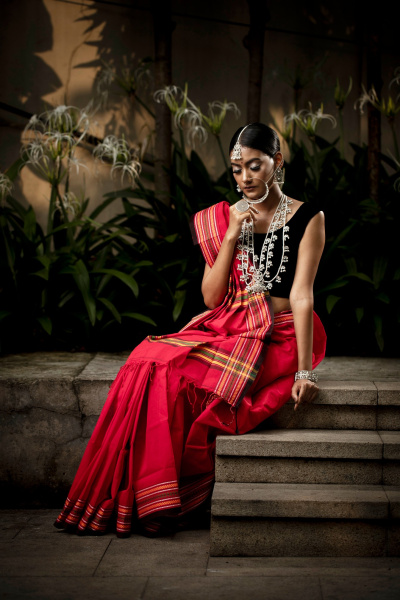
Purchasing silver at Tantibazar: What buyers need to know
Tantibazar’s name carries its past. Once associated with weavers, the area evolved as Bengal’s textile economy declined. Historical accounts trace how gold and silver entered the region through trade tied to Muslin and silk. When that system weakened, many weaving families transitioned into jewellery-making.
Today, most businesses here are run by Hindu families who have remained in the trade for decades. Shops like Sarkar Silver House are often identified among the oldest, representing continuity rather than reinvention.
“There is one very common design that sells very well; it’s called the Komol Nupur,” says a representative from Sarkar Silver House, referring to a lotus-inspired anklet available in multiple versions, including smaller ones for children.
The silver market is broader. It is not limited to investment but is also tied to affordability.
“Who usually uses silver?” the representative asks, before answering his own question. “Generally, the middle class.” This shapes demand. When prices rise, sales slow. “In that situation, jewellery is a luxury… our business is a bit slow right now.”
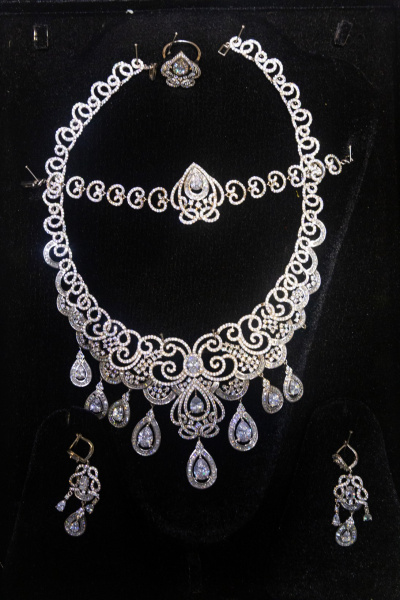
Buying silver jewellery in Tantibazar requires attention to detail.
“Tk 5500 to 6200 or more,” a representative from Comilla Silver Store says when asked about the silver’s current general price per bhori. But this is not a fixed number. “There are categories here.”
Purity is the first distinction. “Hallmarked silver carries a slightly higher price, often “Tk 130 to 150 higher” than regular rates. Lower-purity silver contains alloys, which reduce both price and durability. “The ones that have alloys, the price decreases step by step.”
Appearance is another factor. “Silver is naturally white. It will turn black after you use it for a while,” he explains. Tarnishing is not a flaw. It is a natural reaction.
Making charges adds another layer. These are rarely fixed. They depend on design complexity, labour, and negotiation. In a market like Tantibazar, pricing is fluid. It responds to conversation as much as calculation.
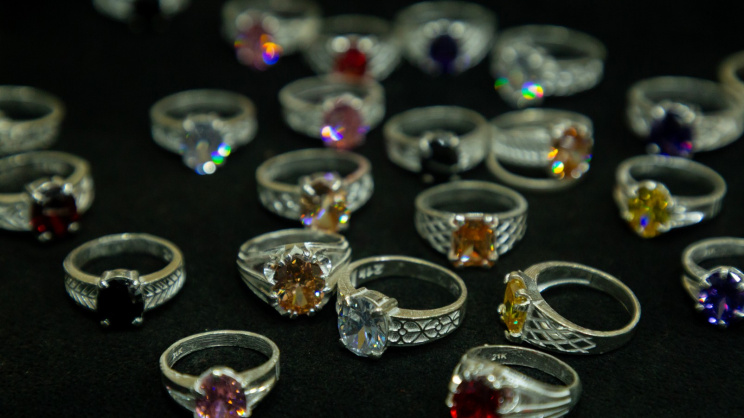
Wholesale networks and market pressure
Tantibazar operates beyond individual buyers. A significant portion of its business is wholesale.
“Those in the surrounding areas mainly buy wholesale,” a shop owner notes. Jewellery produced here travels across Bangladesh, reaching smaller markets and shops.
Margins are often narrow. “We sell it by keeping our usual margin of Tk 50 or 100.” Stability depends on volume.
But the system is vulnerable. Price fluctuations in gold and silver create an immediate impact. “Almost 80 to 90 per cent of businessmen are currently suffering a loss,” he says. Inventory purchased at higher rates becomes difficult to sell when prices drop.
“Business is business,” he adds. “Sometimes there’s profit, sometimes there’s loss.”
 For all latest news, follow The Daily Star's Google News channel.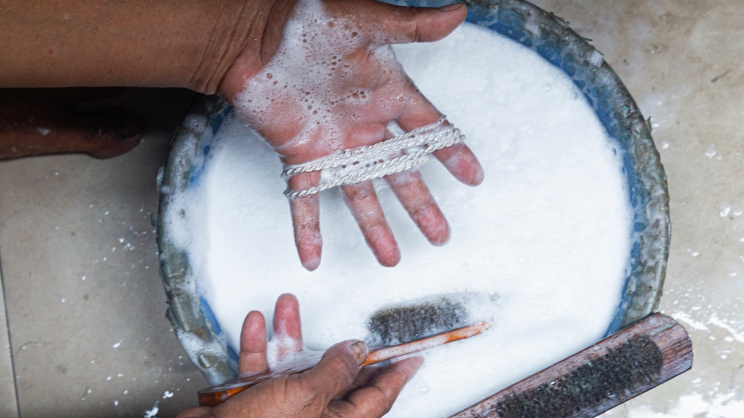
Inside the workshop: The four stages of craft
The structure of Tantibazar separates the act of making from the act of selling.
Workshops are hidden, often cramped, while showrooms are open and well-lit. When asked about the process, one craftsman redirects the question. “If you go inside, you’ll get a better idea.”
The jewellery displayed in shops is only the outcome of a structured process. It unfolds in four stages.
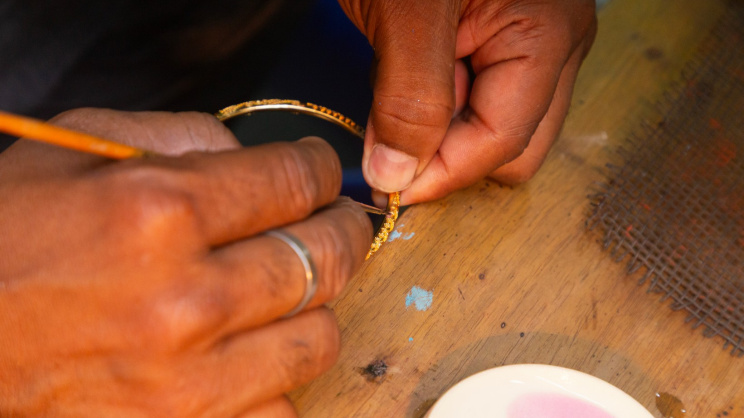
The first is melting. Raw gold or silver is heated and reshaped into sheets or wires. The second stage involves initial design, where form and proportion are defined. The third stage uses dies –tools that allow intricate designs to be replicated with consistency. The final stage is finishing, known as Meenakari, or Minakari, where polishing, filing, and colouring complete the piece.
Different workers handle each stage. The process is collective, not individual.
Sujon, who has been part of this system for over two decades, works at the final stage. “I’ve been here for 21 years,” he says, seated at a compact workstation. His role is specific. “Colouring is done here… Meenakari.”
The work requires precision. “By colours, I mean a liquid colour applied on jewellery, like resin,” he explains. What appears decorative from the outside is technically demanding. “Yes, it is delicate work.”
Training follows informal lines. “The person I learned it from has passed away,” he says. Not a formal instructor. “He was my maternal uncle.” The craft moves through families, through observation, through repetition.
Reading beyond the surface
For those entering Tantibazar to buy silver, the experience can be both straightforward and misleading. Prices may seem transparent, but they are layered.
Purity, weight, making charges, and design all contribute to the final cost, and not all of them are immediately visible. It helps to ask directly about Hallmark certification, to understand whether the piece contains alloys, and to clarify making charges before committing to a purchase.
Observing the finish, whether the joints are secure, and whether the detailing is consistent, can reveal more than the price itself. Tarnishing should not be mistaken for poor quality; in many cases, it confirms authenticity. Most importantly, negotiation is expected.
A buyer who understands how silver is priced and made is not just purchasing an object, but navigating a system – one where knowledge often determines value as much as the metal itself.
Comments