


An evening of craft, culture, and contemporary style
Fashion events often begin with clothing and end with photographs. The recent event, hosted by ISHO, felt different. While the evening showcased contemporary style, it also highlighted the stories, crafts, and people that continue to shape Bangladesh's creative identity.
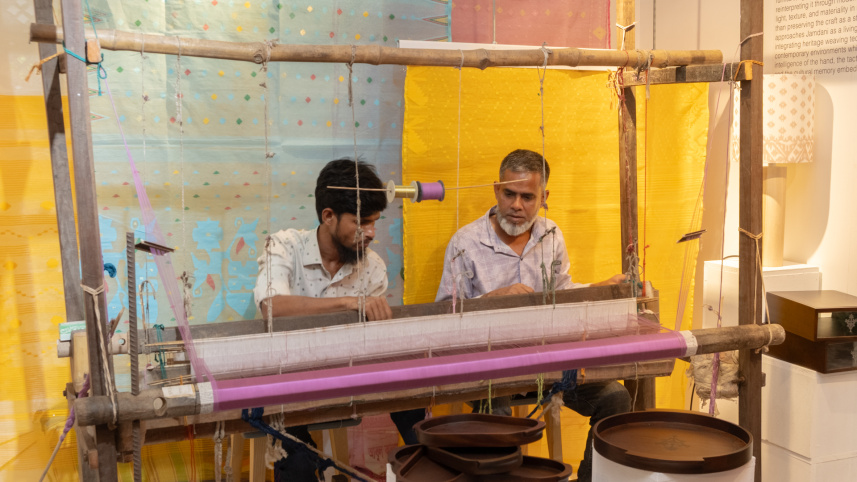
Held at ISHO Banani on 21 May, 2026, the event brought together designers, architects, artists, entrepreneurs, weavers, and cultural practitioners under one roof. Jamdani artisans worked at their looms, artists displayed their craft, jazz music filled the space, and guests arrived dressed in outfits that reflected their own interpretations of modern Bangladeshi style.

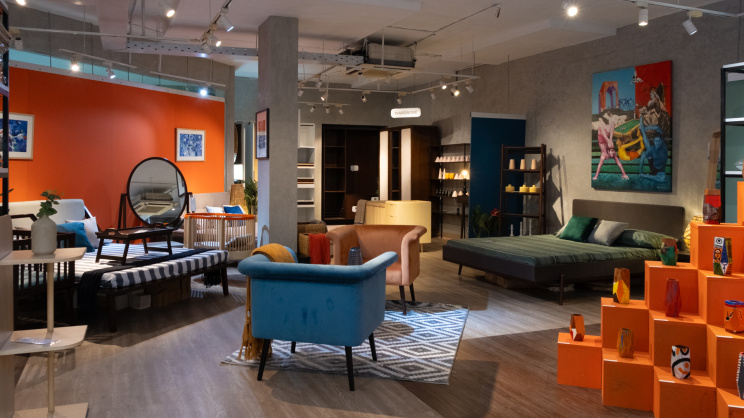
The venue itself quietly reinforced the evening’s theme. ISHO's furniture collections, known for their contemporary silhouettes and functional design, provided the backdrop for a celebration deeply rooted in Bangladeshi culture. Rather than competing with the cultural elements on display, the furniture complemented them – styled with Jamdani-inspired cushion covers, creating a visual dialogue between modern design and traditional craftsmanship. Much like the guests who paired heritage textiles with contemporary outfits, the space showed how furniture can adapt to diverse lifestyles while still reflecting cultural roots.
Dressing for the weather
One of the strongest themes of the evening was practicality. Dhaka's summer heat influenced many fashion choices, proving that comfort and style do not have to compete.
Model and designer Azim Uddula embraced breathable fabrics and relaxed tailoring. "I'm wearing a white shirt and a linen jacket from my brand AZ BYAZIM because the weather is very hot," he explained, pairing the look with trousers and loafers. His outfit reflected a growing demand for natural fabrics that remain polished without feeling restrictive. Similarly, motivational speaker Don Sumdany donned an all-black ensemble.
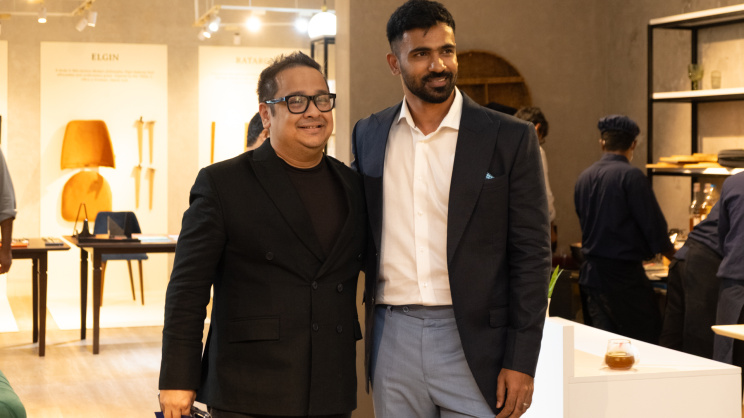
Others brought their own interpretations of that balance. Popular actress Azmeri Haque Badhan arrived in a jade green silk shirt with black pants, a look that felt crisp and controlled without trying too hard. Nazim Farhan Choudhury, Managing Director of Adcomm Ltd, wore a lungi and fatua, a choice that stood out precisely because it carried ease without apology.
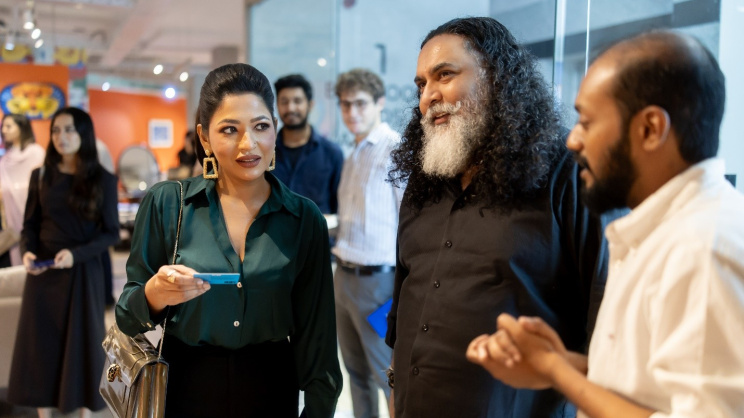
Arthy Ahmed, dance teacher, activist, and recipient of the Ekushey Padak 2026, wore a cotton saree, proving yet again that simplicity, when worn with assurance, can carry as much weight as anything more elaborate.
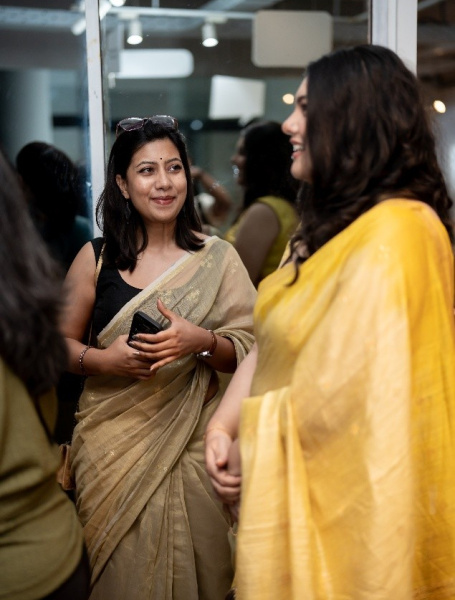
Architect Sudeshna S Chowdhury approached dressing from a similar perspective, wearing a piece by designer Afsana Ferdousi with her favourite jeans and Stella McCartney sneakers.
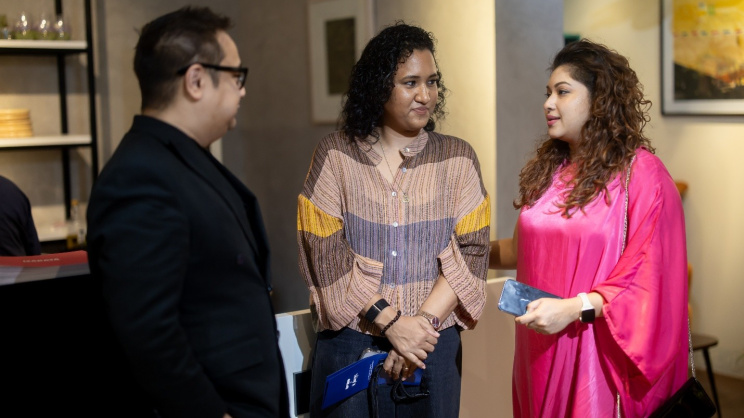
That said, few outfits captured the balance between heritage and practicality as effectively as the one worn by Samaha Subah, founder of SIZ.
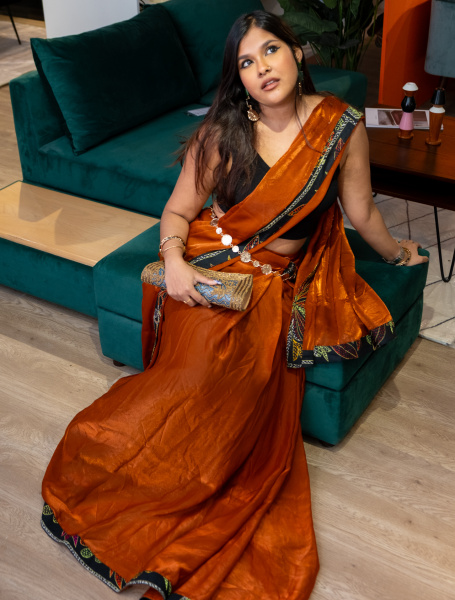
Subah arrived wearing one of the brand's signature instant sarees. "It has hooks and elastic in it, so you just have to pin it, and then you can wear it in a few seconds," she said with a laugh. Featuring the brand's signature Nakshi Kantha border, the saree represented a growing design movement in Bangladesh: making traditional clothing easier to wear without sacrificing cultural identity.
Folk art finds new forms
The event's creative energy extended far beyond clothing.
Artists Anika Raisa Amin and Shakil Mridha, both connected to Bangladeshi folk-art traditions, demonstrated how cultural motifs continue to evolve across disciplines through rickshaw art.
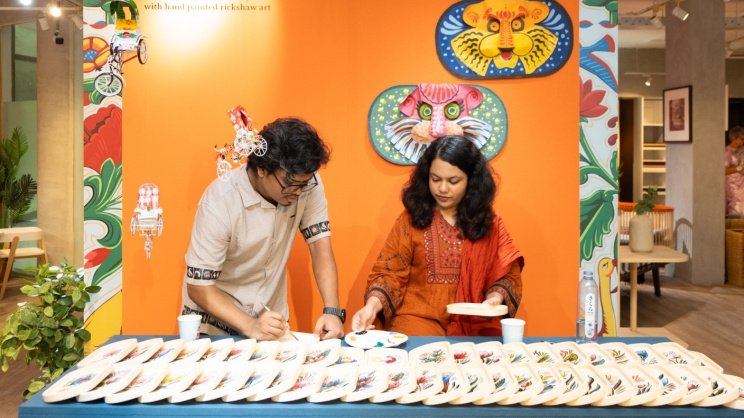
Shakil explained that much of his work focuses on folk practices and everyday Bangladeshi life, including women's traditional activities and craft traditions. The event, he felt, naturally aligned with those interests because it celebrated local creative expressions.
 For all latest news, follow The Daily Star's Google News channel.
 For Anika, whose background spans graphic design, fashion, and education, rickshaw art became a source of inspiration through research. "I saw how cinema posters were transformed into rickshaw paintings," she said.
When artisans become the centre of attention
Perhaps the most meaningful style statement of the evening came not from designers or influencers but from the Jamdani artisans themselves.
Among them was Rafiqul Islam, who travelled from Rupganj. His connection to Jamdani spans generations. "My grandfather used to do Jamdani work, then my father, and now we carry it onwards," he said. "We've been involved in Jamdani work for three generations."
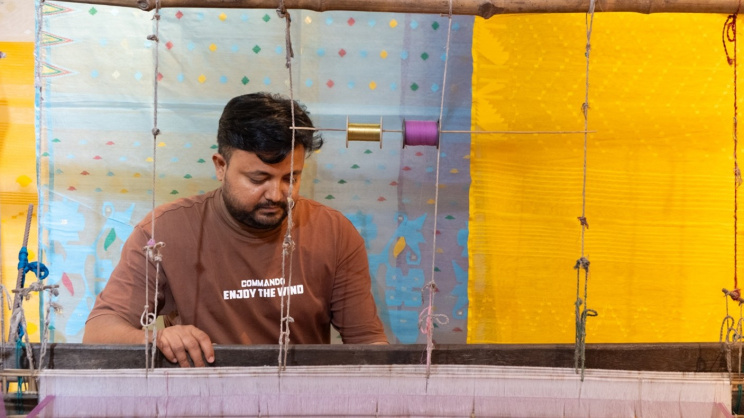
Watching artisans weave live reminded guests that fashion begins long before a garment reaches a showroom. Rafiqul emphasised the importance of inviting weavers to events like these. "It's very important," he said. "The work is very delicate. It is done entirely by hand. Our knowledge and wisdom need to be shared because this isn't possible through machines."
In a room filled with contemporary fashion, his words served as a reminder that innovation often depends on preserving older skills.
The language of personal style
The evening also revealed how guests are increasingly using fashion to engage with local textiles and craftsmanship in practical ways.
Designer Tasfia Ahmed chose a summer dress crafted from cotton check fabric, enhanced with hand block print details. Describing the piece as "lightweight, breathable, and effortlessly flattering," she highlighted its versatility.
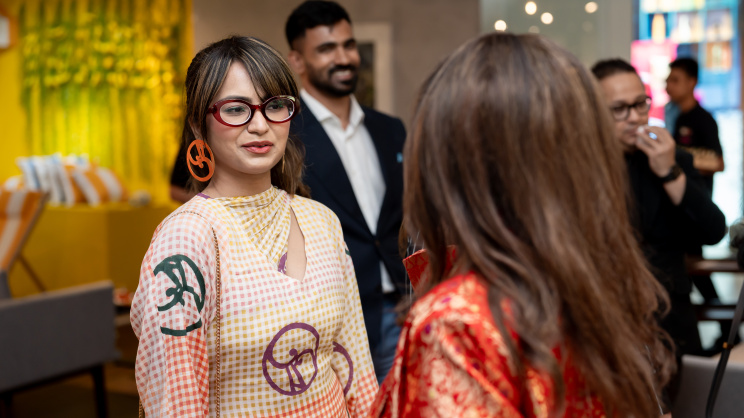
Similarly, designer Ezmat Naz Haque, of Rima Naz, opted for a locally crafted cotton co-ord set featuring check prints and raw silk stripe detailing.
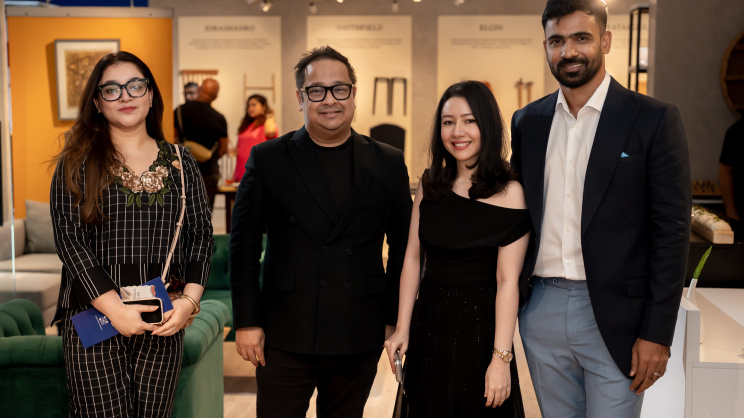
Tanwy Kabir, founder of Canvas, approached the evening with a similarly thoughtful perspective. Choosing black as her preferred colour, she wore a piece developed through her ongoing work with Mirpur Katan fabric. The outfit formed part of a larger effort to explore how Katan can be diversified and reimagined in different forms.
Likewise, Moureen Zahir, founder of MAIA, wore a design from her own label. Her presence at the event reflected the growing number of independent Bangladeshi brands building identities through craftsmanship rather than mass production.
More than a fashion gathering
What made the evening memorable was not a single collection, performance, or installation. It was the interaction between them.
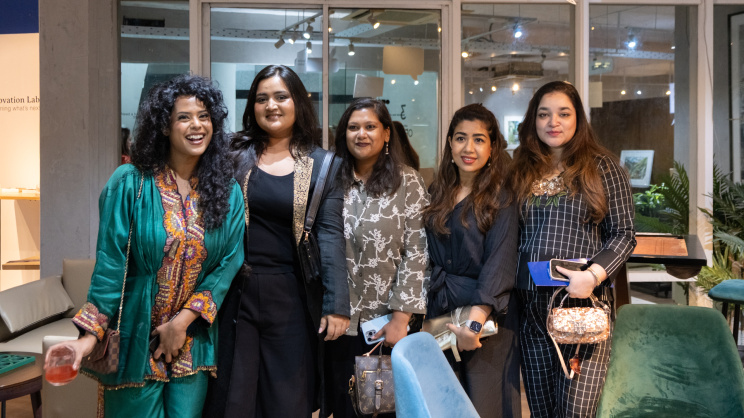
A Jamdani artisan could speak with a fashion designer. An architect could discuss materiality with a textile entrepreneur. These encounters demonstrated that a single aesthetic does not define Bangladeshi style. It is shaped by collaboration between people working across different creative fields.
In many ways, the event offered a snapshot of where Bangladeshi design is heading: rooted in tradition, open to experimentation, and increasingly focused on making culture part of everyday life rather than something reserved for special occasions.
Photo: Silvia Mahjabin, Shourav Kabir
Comments