


What it takes to become Miss World Bangladesh

The crowning moment lasts only a few seconds. A name is announced, the winner steps forward, and a crown is carefully placed on her head as cameras record the celebration. Yet the decisive work has already happened elsewhere: in training rooms, during repeated rehearsals, through difficult interviews, and on days when contestants must manage exhaustion without letting it affect their performance.
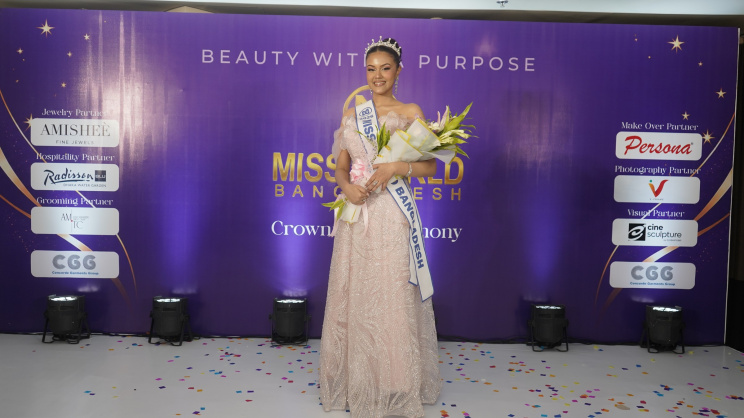
When Samanzar Sayeed was crowned Miss World Bangladesh 2026 on 11 July at Radisson Blu Dhaka Water Garden Hotel, she became the visible face of that process. Swagata Saha Oishi was named First Runner-Up, while Labiba Manzur became Second Runner-Up. The Top Five also included Aisha Rahman and Jukta Bhowmik.

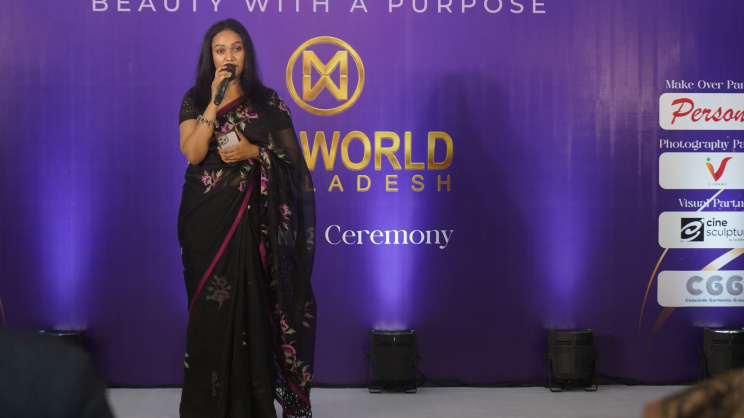
For Azra Mahmood, National Director of Miss World Bangladesh and Founder and Managing Director of Azra Mahmood Talent Camp (AMTC), restoring trust in the national franchise was the priority after she secured its official licence in 2025.
“Credibility, first and foremost,” she asserts, adding, “I wanted every contestant, every partner, every viewer to feel this platform is run with integrity and purpose, not just glamour.”

Rebuilding the platform
Beauty pageants have long attracted a mixture of fascination and criticism. Supporters view them as platforms for confidence, professional opportunities and advocacy. Critics question whether competitions can genuinely empower women while continuing to assess their appearance, movement and public presentation.
Mahmood does not attempt to dismiss that tension. Instead, she argues that the answer lies in changing what contestants are taught and what they are expected to demonstrate.
“We rebuilt the training structure, brought in real grooming and mentorship through AMTC, and made ‘Beauty With a Purpose’ the actual centre of what we do, not a tagline,” she explains.
The change she describes involves placing communication and social awareness alongside conventional pageant skills. Contestants still need to understand posture, stage movement and visual presentation, but those abilities are treated as only one part of their preparation.
“By putting substance on the same stage as style,” Mahmood explains, “Our delegates are trained in leadership, public speaking and social advocacy, not just walking a runway.” For her, public perception of pageantry begins to change when a titleholder demonstrates she can use her visibility intelligently.
“When people see a titleholder talking about youth mental health with the same confidence she wears a crown, the perception starts to shift on its own,” she says.

Grooming beyond the runway
The term “grooming” can sound deceptively simple, suggesting lessons in makeup, styling or catwalk technique. In practice, the programme requires contestants to become aware of how they speak, behave, listen and respond under scrutiny.
Media training is a central part of the process.
“They learn interview skills, public speaking, social media presence and how to handle the press with poise,” Mahmood elaborates. “Beyond that, we focus on confidence-building, leadership and social responsibility projects, so they leave equipped for real life, not just a stage.”
The distinction matters because a national representative cannot depend entirely on prepared statements. At an international competition, she may be asked about her advocacy, her country, her personal experiences or a social issue with little time to organise her thoughts. She must answer clearly without sounding mechanical, remain diplomatic without becoming vague, and reveal enough of her personality to be memorable.
Mahmood identifies integrity, empathy and purpose as the essential qualities of a titleholder.
“She has to carry herself with grace, yes, but she also has to be someone who listens, who cares about her community and who represents our country’s values with honesty,” she clarifies. “Talent and beauty fade from memory. Character doesn’t.”
 For all latest news, follow The Daily Star's Google News channel.
 The discipline of showing up
The preparation did not take place in isolation from the contestants’ academic and professional lives. Many continued attending university, working, tutoring or managing other responsibilities while completing rehearsals, grooming sessions, interviews and advocacy work.
For Samanzar Sayeed, Miss World Bangladesh 2026, the process demanded a carefully structured routine. A biochemistry and biotechnology graduate who received summa cum laude honours, Sayeed was also working as a research assistant at her university while preparing for the competition.
“My days often began at 7 AM,” Sayeed recalls. “I had to manage my responsibilities as a research assistant alongside training, mentoring sessions and preparation for the pageant. It required discipline because I was not only learning how to perform on stage. I was trying to understand the entire process and the responsibility that came with representing Bangladesh.”
Sayeed applied the same research-oriented approach to selecting her social cause. Rather than choosing a subject simply because it sounded relevant, she carefully developed her project, Hygiene for Health Bangladesh, an initiative focused on hygiene education, sanitation and preventive healthcare.
“I wanted to work on an issue that affects people’s everyday lives but is often overlooked or not discussed properly,” she says. “Hygiene is not only about personal habits. It is connected to health, dignity, education and access to accurate information. I wanted to create a project that could help people understand these connections.”
Similarly, Labiba Manzur’s experience illustrates what that reality can look like. As a fourth-year architecture student, she was already managing studio work, site visits, assignments and demanding deadlines. She also tutors students.
“Almost every day, I would go straight from university to training, then head home to tutor my student before spending the rest of the night working on my assignments,” Manzur Shares.
Swagata Saha Oishi also identifies consistency as the hardest part of the training process.
“There were a lot of things going on simultaneously,” she says. “Becoming physically exhausted, mentally pressured or emotionally pressured is very common.” According to Oishi, the challenge was learning not to measure her progress against everyone around her.
“You need to stop comparing yourself or your progression with others, and you have to focus solely on your improvement every day,” she asserts.
Building queens without breaking people
The language of pageantry often celebrates resilience, but constant pressure can easily be presented as a virtue in itself. Mahmood is careful to distinguish resilience from neglect of contestants’ well-being.
“It’s intense, physically and emotionally,” she says. “These young women are training, rehearsing and giving interviews, often while balancing studies or jobs.” Her responsibility, she argues, includes ensuring that ambition does not become harmful.
“I make sure they have real support systems around them. Resilience is part of what we teach, but so is self-care,” she says.
The finale of Miss World Bangladesh produced one winner, two runners-up and a set of official photographs. Samanzar Sayeed will now represent Bangladesh at the 73rd Miss World Festival, scheduled to take place in Vietnam from 9 August to 5 September 2026. The final is due to be held in Nha Trang as part of Miss World’s 75th-anniversary celebration.
That said, the more substantial outcome may take years to assess. It will be found in whether the contestants continue their projects, whether their confidence survives beyond the stage and whether the organisation can turn its declared values into lasting work.
The crown may be the first thing audiences notice — nevertheless, the women they become after wearing it will remain the most important story.
Photo: Silvia Mahjabin/Courtesy
Comments