


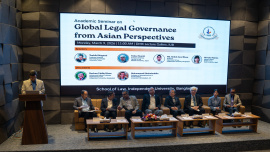
IUB holds seminar on global legal governance
18 March 2026, 00:44 AM
Law & Our Rights

Your Advocate / Kazi’s jurisdiction and the validity of marriage
18 March 2026, 00:00 AM
Law & Our Rights
Law Opinion / The Reciprocal Trade Agreement with the US: Legal Grounds for Bangladesh to Withdraw
18 March 2026, 00:00 AM
Law & Our Rights

Law Letter / On the right to emergency healthcare
18 March 2026, 00:00 AM
Law & Our Rights

Gender and Law / Threats of tech-facilitated gender-based violence
11 March 2026, 00:00 AM
Law & Our Rights

Rights and Recognition / Recognise women’s labour that run the economy
11 March 2026, 00:00 AM
Law & Our Rights

Law Opinion / In defence of a criminal defence lawyer
4 March 2026, 00:00 AM
Law & Our Rights
Legal Philosophy / Why the State doesn’t define good and evil
4 March 2026, 00:00 AM
Law & Our Rights
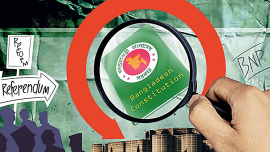
Law Opinion / Navigating questions revolving the July Charter and constitutional reforms
25 February 2026, 00:00 AM
Law & Our Rights
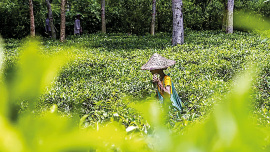
Rights Watch / The chain of oppression of our tea-workers
25 February 2026, 00:00 AM
Law & Our Rights

The rise of tech-facilitated intimate partner violence in Bangladesh
Tech-facilitated intimate partner violence (TF-IPV) is the act of threatening, stalking or abusing a current or former partner through the misuse or abuse of technology.
25 November 2025, 18:00 PM
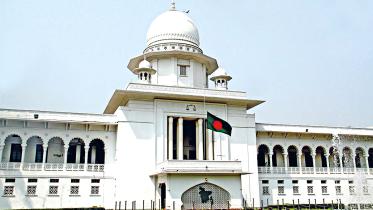
Consultation with the Chief Justice in appointing SC judges
Article 95(1) of the Constitution of Bangladesh mandated the President to consult the Chief Justice (CJ) when appointing Supreme Court (SC) judges.
18 November 2025, 18:00 PM

The draft Telecommunication Ordinance 2025
For decades, Bangladesh’s digital network has operated under the constant threat of arbitrary executive interferences. Access to the internet could be severed without notice or remedy whenever there emerged any political tension within the country.
18 November 2025, 18:00 PM

New data laws in Bangladesh: A critique
Bangladesh has entered a new phase in its digital governance story with two Ordinances, namely, The Personal Data Protection Ordinance 2025 (PDPO) and the National Data Management Ordinance 2025 (NDMO). Their appearance, almost devoid of public discussion, invites reflection: are we witnessing the long-delayed codification of digital rights, or the rise of a data-centric State?
18 November 2025, 18:00 PM

Progressive evolution of guardianship laws in Bangladesh
A “guardian” is someone who takes care of a child, looks after the child’s property, or both, according to Section 4(2) of the Guardians and Wards Act, 1890. However, under Muslim law, guardianship is divided into two types based on function: Waliyat alal Nafs and Waliyat alal Mal.
13 November 2025, 18:00 PM

The curious case of S Alam and our investment treaty regime
The S Alam group has recently lodged an arbitration claim against Bangladesh at the International Centre for Settlement of Investment Disputes (ICSID). This event is significant for our investment law regime. The claim was made under one of our older Bilateral Investment Treaties (BITs) with Singapore from 2004.
13 November 2025, 18:00 PM

Death by negligence and our legal rights
The recent Farmgate tragedy, in which a man lost his life after being struck by a bearing pad falling from the Metrorail infrastructure, comes as a timely reminder of how public safety is too often sacrificed to negligence.
4 November 2025, 18:00 PM
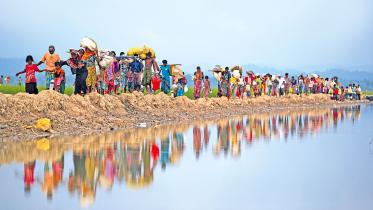
Transitional solutions for refugee protection through the lens of the Rohingya crisis
Around the world, many people are forced to leave their houses, country of origin and cross borders to find dignity and safety from conflict, persecution and gross violation of human rights.
4 November 2025, 18:00 PM

Preventing land-related fraud through digitalisation
In our country, land-related disputes and fraudulent practices have become very common. Such fraudulent practices not only deprive individuals of their legitimate ownership of property but also erode public confidence in the legal and administrative system. Safeguarding the people against such activities are therefore both a legal and ethical imperative.
29 October 2025, 18:00 PM

Int’l Day of Care and Support
Care work consists of two overlapping activities: direct, personal and relational care activities, such as feeding a baby or nursing an ill partner; and indirect care activities, such as cooking and cleaning.
29 October 2025, 18:00 PM
Approaching the university ward quota debate: Rajshahi University in context
Rajshahi University has been thrown into turmoil. Following the anti-discrimination movement in Bangladesh last year, Rajshahi University cancelled the ward quota, which paved the way for easy undergraduate admission for the children of academic and administrative staff.
29 October 2025, 18:00 PM

Artificial Intelligence and the court
Artificial Intelligence (AI) is revolutionising human functions across different industries.
21 October 2025, 18:00 PM

Protecting our climate-induced displaced population
Every year, thousands of families from coastal districts such as Bhola, Satkhira, Barguna, and Khulna are forced to abandon their homes not because of war or persecution, but because of rising tides, eroding riverbanks, and increasingly violent cyclones.
21 October 2025, 18:00 PM
Referendum and July Charter: A constitutional reckoning for Bangladesh
In the crucible of Bangladesh’s political evolution, the July National Charter 2025 has emerged as a transformative document- one that seeks to fundamentally recalibrate the nation’s democratic architecture.
21 October 2025, 18:00 PM
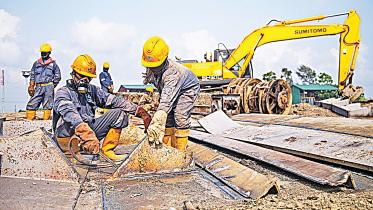
The costs of Bangladesh’s shipbreaking industry
The ship-breaking industry in Bangladesh has been a source of national pride for decades, and it has also been potential source of environmental disaster too at the same time.
14 October 2025, 18:00 PM
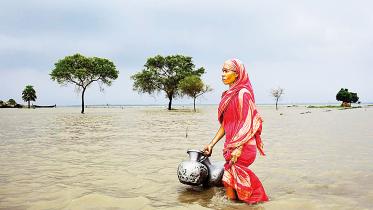
Addressing climate-induced displacement in Bangladesh
Climate change is acknowledged as a critical factor in human migration around the world. It causes a significant amount of displacement in countries like Bangladesh.
14 October 2025, 18:00 PM

Trademark law and the curious case of Sattar Buksh
Recently, a local café in Pakistan named Sattar Buksh, known for its branding, which resembled that of the global coffee giant Starbucks, has been making headlines for “winning a trademark battle” against the corporate giant. However, the dispute never actually made its way to court.
7 October 2025, 18:00 PM

The enduring crisis of administrative corruption
One of the enduring maledictions that plagues Bangladesh is bribery and corruption, which is prevalent across sectors, including our judiciary.
7 October 2025, 18:00 PM

Significance of reforms around arrest processes
Bangladesh has recently introduced section 46A to the Code of Criminal Procedure (CrPC), 1898, a reform aimed at ensuring transparency, accountability, and fundamental fairness during the process of arrest.
7 October 2025, 18:00 PM
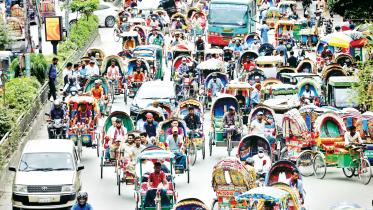
Regulating battery-run rickshaws
Battery-run rickshaws are the blind spot for the laws governing the streets in Bangladesh, and we might be suffering all the more for it. In this piece, I will attempt to discuss the relevant legal framework and give my views on what ought to be done.
4 October 2025, 18:00 PM
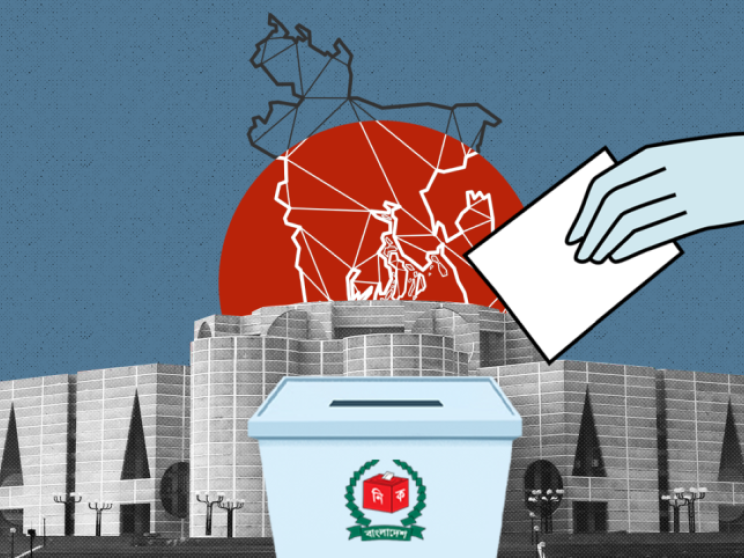
41 election petitions challenge Feb 12 national polls
22 March 2026, 12:33 PM
Feb 12 polls: EC publishes party-wise popular vote counts
5 March 2026, 22:02 PM
National Election 2026
10 killed, 476 injured in post-election violence: Odhikar
5 March 2026, 14:12 PM
National Election 2026
EC publishes election results of all polling centres
4 March 2026, 17:54 PM
National Election 2026
EC revises referendum vote count, turnout slightly adjusted
26 February 2026, 19:58 PM
National Election 2026