


Threats of tech-facilitated gender-based violence

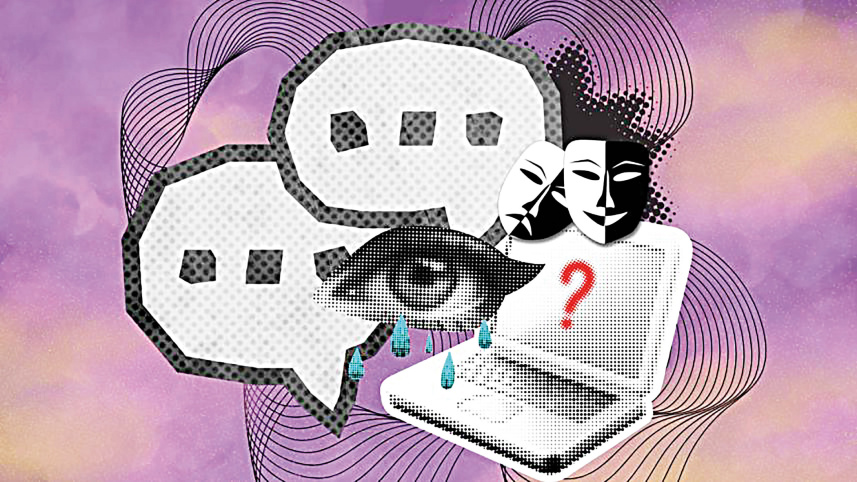
Technology-Facilitated Gender-Based Violence (TFGBV) is a new form of, often cross-border, gender-based violence. According to the International Centre for Research on Women, TFGBV refers to actions by individuals that cause harm to another person because of their gender identity, among others, or by pushing harmful gender stereotypes, using the web or digital devices. The most common forms of TFGBV include the use of technology to harass, hack, share sexually abusive images, and disclose private information or contents without consent of the person shown therein with an intention to annoy, harass, extort, etc. Other violent or severe forms of misogyny may also constitute TFGBV.
It needs to be noted here that TFGBV is not confined to targeting women but extends to those who do not fit the traditional gender norms. However, women who are public figures, journalists, activists, and young adults are among the most targeted groups. Although it takes place on digital or online platforms, its effects extend to both public and private spheres and may sometimes even create life-threatening situations. Additionally, such abusive contents in digital spaces can spread alarmingly fast and may remain out on the internet permanently. Since the internet allows people to stay anonymous or pseudonymous, the abusers generally escape accountability, and the culture of impunity thrives.

Technology facilitated gender-based violence silences women online and decreases their involvement in democratic processes, public and political life, and leadership positions.
TFGBV causes serious financial, emotional, social, mental and privacy-related harms. The survivors often lose income, especially those whose financial livelihood depend on social businesses or whose professional lives are linked to social media. They also face additional hurdles getting jobs or face expulsion from educational institutions due to no fault of their own, and in worst cases, are even ostracised from society. Furthermore, stress, anxiety, depression, post-traumatic stress disorder, and even suicide attempts are some common psychological consequences. In fact, a survey by the Economist Intelligence Unit showed that 92% of women reported that online violence negatively affects women’s well-being.
On the other hand, TFGBV silences women online and decreases their involvement in democratic processes, public and political life, and leadership positions. A report published by PBS news showed that most deepfakes are sexual in nature and are made against women. Such TFGBV not only affects women’s digital rights, such as privacy, speech, and security, but is also a key barrier to achieving gender equality. Furthermore, the targeted and organised character assassination of female political figures and journalists, as we have seen in recent times, greatly discourages women from entering or remaining in politics, activism and journalism. In fact, we currently have only 7 women out of 300 directly elected Members of Parliament and only 1 woman out of 25 ministers. This clearly reflects how women’s voices in politics are being silenced and sidelined.
Because TFGBV is transnational in nature, gaps in cross-border jurisdiction issues and a lack of explicit recognition of the term in the laws hinder accountability. Although the Convention on the Elimination of All Forms of Discrimination Against Women did not initially recognise online based violence against women, it is now specifically included in CEDAW’s General Recommendation No. 35 (2017) (general recommendations are authoritative treaty interpretations). Nonetheless, there has been a lack of statistical research contributing to a regulatory vacuum, and a large number of cases remain unreported. In fact, survey data by the Economist shows that most women are often unaware of available mechanisms to report harmful online activity.
Moreover, there is neither a legally binding obligation on platforms regarding prevention, management and rapid removal of harmful material nor financial liability/accountability mechanisms for failure of such act. Moreover, unfortunately, in many countries, including Bangladesh, online abuse is often viewed as insignificant or distinct from ‘real’ violence. However, the Cyber Security Ordinance 2025 under section 25 criminalises the use of digital platforms to create, share, or threaten to share sexually exploitative or blackmail-related content, including AI-generated material, with the intent of harassing others. The Personal Data Protection Ordinance 2025, in the same light, criminalises the unauthorised use or disclosure of personal data, whereas defamation and obscenity (potentially also prone to misuse) are punishable under the Penal Code 1860. Yet, in my view, these fragmented laws fail to properly recognise TFGBV without a unified definition.
In conclusion, despite its severity, ill-equipped regulatory and institutional mechanisms to address this complex gender-based violence leave survivors highly vulnerable. It is crucial to remember that survivor-centred and rights-focused legal reforms are necessary to combat TFGBVs. Additionally, gender-sensitive education centering on early prevention and technological accountability with safety and rights-by-design measures are essential as well.
The writer is intern at Law Desk, the Daily Star.
 For all latest news, follow The Daily Star's Google News channel.
Comments