


The Reciprocal Trade Agreement with the US: Legal Grounds for Bangladesh to Withdraw
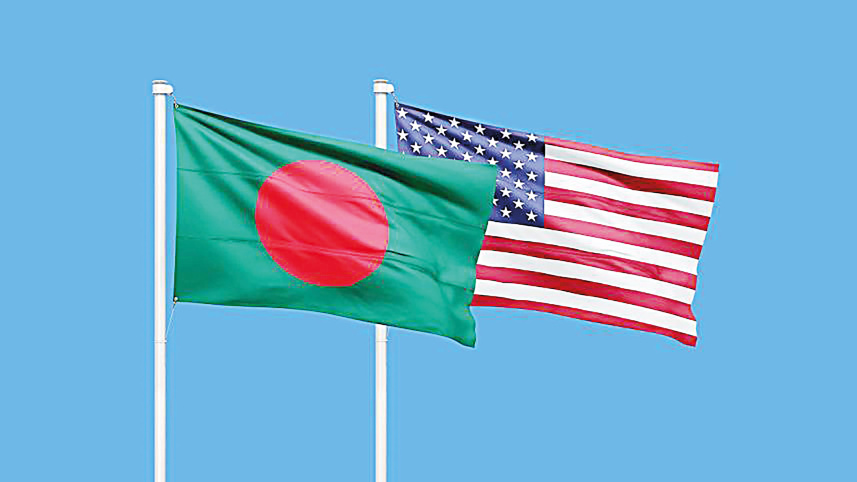
The Agreement on Reciprocal Trade between the US and Bangladesh concluded on 9 February 2026 has become a cause of concern in Bangladesh. This Agreement is criticised as highly discriminatory, militating against the net economic benefit and strategic interests of Bangladesh. The Centre for Policy Development (CPD) is dismayed as the Agreement serves only the US trade interests and recommends that Bangladesh should withdraw (Daily Star, 28 February 2026, 5 March 2026). Similar criticisms and recommendations may also be found in ‘The US-Bangladesh Reciprocal Trade Agreement: Geopolitical Realignment, Asymmetric Obligations and the Imperatives of Balanced Trade’ Dacca Institute of Research and Analytics, February 2026. This write-up suggests some legal grounds for lawful withdrawal, should Bangladesh decide to pursue this option under section 6(5-6) of the Agreement.
Under the Vienna Convention on the Law of the Treaties (VCLT) 1969, a treaty is void if it conflicts with a peremptory norm of international law (jus cogens) (VCLT Articles 53, 64). The right to self-determination is one such norms, having both political and economic aspects as defined in the UN International Covenants on Human Rights (Art.1). Political self-determination entitles the people to freely determine their political destiny. Economic self-determination entitles the people to freely pursue their economic development. A plain reading of the specialised studies mentioned before reveals the marginalised economic plight of Bangladesh under the Reciprocal Agreement. Trade-induced gains for Bangladesh are riddled with mandatory conditions, restrictions and sanctions that are set to hamstring its free economic developmental pursuits.

Apart from its stultifying effects on the Bangladesh economy shown in specialised studies on the Agreement, any lay reader of its terms and conditions cannot avoid developing a feeling that the negotiators from both sides had a common goal of making the Agreement to benefit the US. This goal has been achieved at the expense of the net trade-induced economic gains and economic sovereignty of Bangladesh. The GATT/WTO provides tariff concessions under the Generalised System of Preferences (GSP) for developing and least-developed countries to improve their exports for economic development. Bangladesh received this GSP tariff concessions in the US, which the US eventually suspended in 2013. Bangladesh has been requesting for the restoration of GSP since 2015 but remains unheeded. The Reciprocal Agreement fails to address this vital trade interest of Bangladesh. Its reciprocity merely camouflages asymmetric trade relations and economic strangulation of Bangladesh. These features violate the constitutional requirement that Bangladesh should base its treaty relations ‘on the principle of respect for national sovereignty and equality’ and to determine and build up its own economic system ‘by ways and means of its own free choice’ (Art. 25). This Agreement was concluded in strict confidentiality under the guise of ‘non-disclosure treaty’ to avoid public knowledge and scrutiny. It was the US, not Bangladesh, that first brought this Agreement to the public domain. Indeed, the Agreement falls far short of the newly elected BNP government’s policy of ‘Bangladesh first’ in which ‘national interest’ will guide the foreign policy of Bangladesh (Dhaka Tribune, 27 February 2026 and Daily Star, Dhaka, 4 March 2026).
The Reciprocal Agreement fails to address the vital trade interest of Bangladesh. Its features violate the constitutional requirement that Bangladesh should base its treaty relations ‘on the principle of respect for national sovereignty and equality’ and to determine and build up its own economic system ‘by ways and means of its own free choice’ (Art. 25).
Besides, the fundamental change in circumstances under which a treaty was signed entitles the affected party to withdraw from, or terminate, the treaty (VCLT Art. 62). President Trump imposed his so-called ‘freedom tariffs’ on almost all states. Facing high tariffs, some states negotiated special tariff deals to remain accessible in the US market. As it seems, Bangladesh, motivated by its exports to the US market at a concessional tariff rate, negotiated and signed the Reciprocal Agreement. The US Supreme Court has recently declared Trump’s tariffs illegal and at present, US tariffs stay at 10-15% on foreign products. Contrarily, the Reciprocal Agreement imposes 19% tariff on Bangladesh products, which is higher than the current 15% maximum tariff in the US. The US Supreme Court decision and the new US tariff regime has fundamentally altered the consideration and circumstances that had led to the Reciprocal Agreement, thereby making the negotiation comparatively more onerous for Bangladesh. Had these changes been known or foreseen at the time of making the Reciprocal Agreement, Bangladesh would not have signed it. The changes in the US tariff regime are fundamental enough to justify a withdrawal or termination.
Moreover, under the VCLT, the negotiators must ‘produce appropriate full powers’ accreditation, or if an intention of ‘full powers’ can be obtained from the state practice or other circumstances of the representing state (VCLT Art. 7:1). A treaty negotiated and signed without appropriately accredited full powers ‘is without legal effect’ (VCLT Art. 8). The VCLT also notes, non-compliance with ‘internal law of fundamental importance’ (meaning the Constitution in our case) in treaty-making invalidates a treaty if the manifestation of non-compliance is objectively evident (Vienna Art. 46).
Notably, the authority in ‘carrying on of any trade or business and the making of any contract’ is vested with the Executive (Article 144, Bangladesh Constitution). Since treaty implementation requires a domestic parallel legislation, Article 145A requires that treaty made with foreign countries ‘shall be submitted to the President, who shall cause them to be laid before Parliament’. In light of recent claims made by the President regarding his non-involvement in the treaty-making process (Kaler Kantho 23 February 2026; The Daily Star 23 February 2026), it appears that Bangladesh negotiated and concluded the Reciprocal Agreement sidestepping these constitutional requirements. In any case, the treaty-making process that the interim government followed in making the Reciprocal Agreement does not exist in the Constitution. Hence, it may be argued by invoking Articles 7 and 8 of the VCLT that the treaty is inconsistent with the Constitution, rendering it “without legal effect”.
The Reciprocal Agreement provides for withdrawal after 60 days from the letter of withdrawal (s.6:5). If Bangladesh serves a withdrawal notice, the Agreement allows the US to reimpose its ‘freedom tariffs’ (s. 6:4) which is now illegal, and this sanction of reimposition does not exist anymore. This option of withdrawal appears rather easy for Bangladesh as it has not exchanged written notification for ratification as necessary for a treaty to entry into force (Vienna Art. 12, 16).
Alternative to the withdrawal under section 6(5) of the Reciprocal Agreement is the judicial option. Bangladesh or concerned NGO/s, businesses or citizen/s may file a writ with the High Court Division seeking an order of invalidation of the Agreement relying on the above grounds, particularly for non-compliance with the constitutional treaty-making process, violation of the supreme national law, and undermining the national interests, of Bangladesh.
The writer is Emeritus Professor of Law at Macquarie University, Sydney, Australia.
 For all latest news, follow The Daily Star's Google News channel.
Comments